Inside futuristic labs at Wageningen University in the Netherlands, plants are scanned, stressed, and analyzed. The aim is to use the results to produce plant strains that can better serve a growing population in a warming world. Rows of tomato saplings stand in a room packed with cameras, under constant surveillance as scientists monitor them for tiny changes in color, temperature, and photosynthesis.
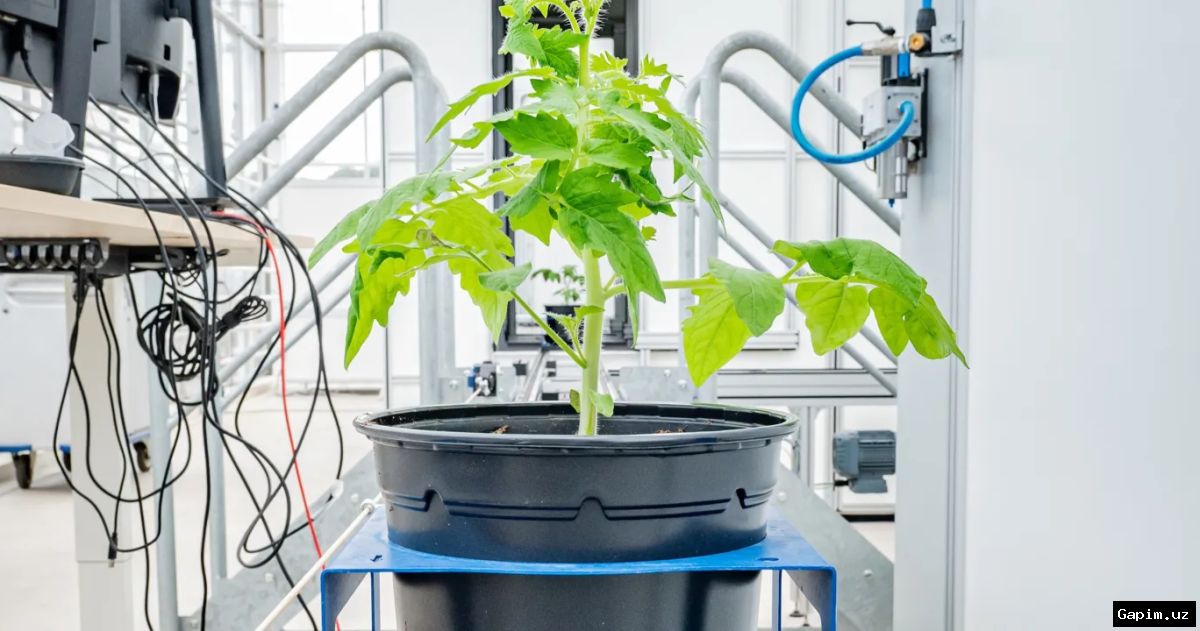
These plants are growing in a chamber designed to mimic the heat and humidity of India's climate. By analyzing their reactions to different stressors, researchers are aiming to uncover genetic traits that could make crops resilient to human-caused climate change. "We can regulate the temperature. We can give them a heat stress phase, we can freeze shortly, so we can simulate night frost," explains Rick van de Zedde, program manager at the Netherlands Plant Eco-phenotyping Centre (NPEC). "We can introduce salinity by adding salt." In fact, the scientists can simulate almost any condition on the planet. "I would call it a gym for plants," van de Zedde adds.
This research is becoming ever more essential. Agriculture has traditionally relied on predictable seasons and conditions, with farmers planning around established weather patterns. But as societies burn fossil fuels that heat the planet, rising global temperatures are disrupting that rhythm. Increasing heatwaves, longer and more intensive droughts, as well as severe flooding caused by global heating, are increasingly putting crops at risk. Following soaring temperatures this summer, farmers in some regions of Germany are warning of harvest failure. Grain production losses have already been registered in countries including France, Hungary, and the United Kingdom.
With the global population predicted to hit 10 billion by 2050, the pressure is on to produce enough food. That race is intensified by rising meat consumption, which implies growing more grain for animal feed. Simultaneously, demand for crops to use as biofuels is also on the rise. So for researchers, the question is no longer just how to grow more food, but how to do so under increasingly challenging conditions.
Dubbed the 'Silicon Valley' of agriculture, the Netherlands has long been a leader in farming innovation. Despite its relatively small size, the country is the world's second largest exporter for agricultural products by value — after the US. Inside the Wageningen University greenhouses, scientists recreate environmental conditions such as drought, tropical humidity, or frosty nights, and use a range of technology to monitor the plants. Over a period of weeks, automated scales record the weights of tree species every three minutes to reveal how much water they need. Sophisticated scanners track the movement of leaves as part of a process known as phenotyping — which measures plants and their features.
Though botanists have been tracking flora for thousands of years to select the best plants, the processes were historically manual and therefore slow and painstaking. "All the lab measurements were restricting the size of the experiments," van de Zedde tells DW. "If you look around here in NPEC, you see that we are talking about thousands of plants in one experiment." Despite the sophistication of the lab, it cannot completely mirror real-world conditions. Factors like hail storms, high winds, or differing soil temperatures remain difficult to recreate. Near the university, experimental barley fields provide an important reality check. It is there that researchers deploy mobile imaging and use GPS positioning systems to collect data on hundreds of crop varieties in the field.
By comparing greenhouse and field results, they are better able to identify the plant traits that will help produce food that is going to be resilient to a changing climate. "It's all about fitness. We simply score: how do these plants respond to the stress? Which ones can cope with it, which ones suffer from it," says van de Zedde. Researchers can use the data to see the DNA profiles linked to tolerance to certain stressors. They can then cross breed varieties — one with a high yield and one that is robust, for example, to produce resilient offspring. The goal is to fast forward evolution. The Netherlands government and plant-breeding companies funding the research will decide which variants to continue to breed.
But Alan Pauls, PhD candidate in the university's Laboratory of Genetics, says the process has been met with criticism from some quarters. "When you talk to the older generation, I definitely do feel like they don't trust it," he says. "The moment you talk about taking food or plants into a lab, immediately who you think about is GMO." Genetically modified organisms, or GMOs, have had their genes changed artificially to make them take on a particular characteristic. One way it's done is to insert a gene from a different species, like bacteria, into a plant. In the European Union, genetic modification is strictly legally regulated and requires rigorous safety checks. At Wageningen, just 5% of experiments involve genetically modified plants. Most focus on selecting existing traits through phenotyping, speeding up natural processes rather than creating new characteristics.
Pauls believes the argument that too much interference makes food artificial is outdated. "Are we thinking that it's artificial because a machine is involved? Are we thinking that it's artificial because it's happening so fast, or it's happening in a lab?" he says. "I can still harvest rice with a sickle, but is it going to feed a billion people in time? No."
Source: www.dw.com