In the village of Karisunda in Bankura district, West Bengal, eastern India, 26-year-old Abdul Hafeez returned to his alma mater primary school on August 13. The visit was part of a campaign by the Cockroach Janata Party (CJP), a popular Indian pressure group, to audit the conditions of the country's under-funded, often dilapidated government-run schools.
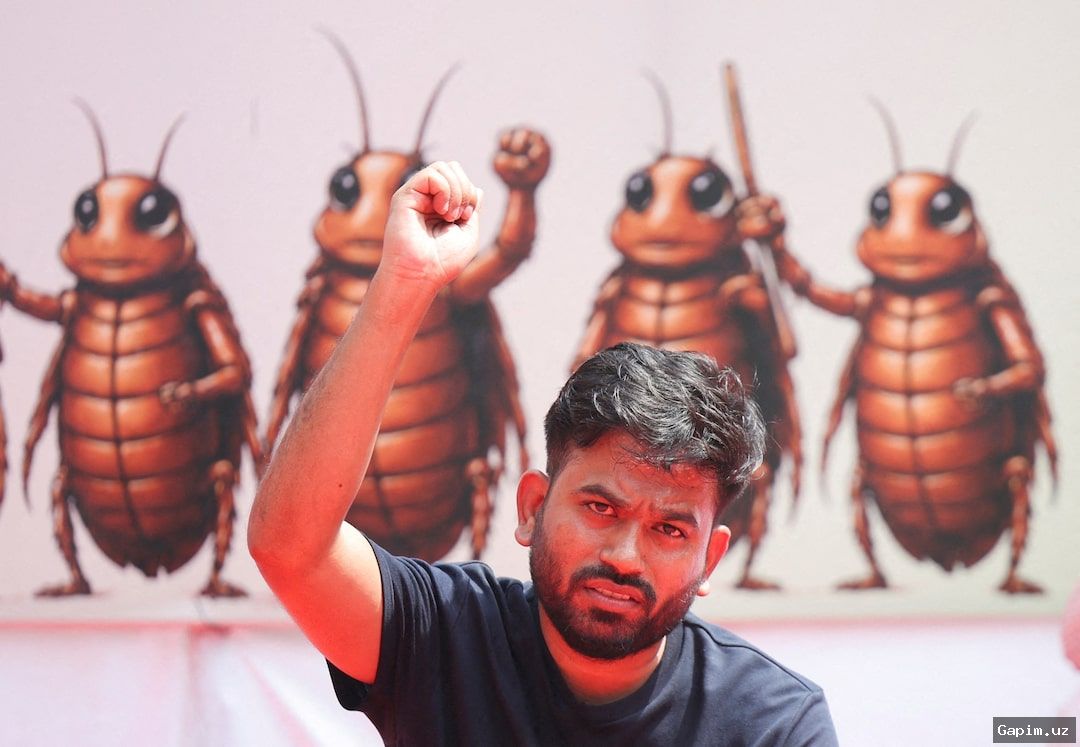
The CJP had just succeeded in forcing the resignation of Prime Minister Narendra Modi's education minister, Dharmendra Pradhan, in July, after a 37-day sit-in in the national capital that prompted antigovernment Gen Z protests across the country. But in Bankura, things turned deadly. Hours after Hafeez's visit, he alleged that local workers of Modi's Hindu majoritarian Bharatiya Janata Party (BJP) arrived at his home and assaulted him and his father, Mohammad Mafik. Two days later, his 51-year-old father died from his injuries.
On Sunday, Suvendu Adhikari, the chief minister of BJP-ruled West Bengal, said the attackers were "criminals with no BJP connection" and assured action. But a day after burying his father, Hafeez told Al Jazeera that he stands firm in calling for accountability and reforms in government-run schools. "We will fight for justice for my father, but these attacks will not stop us from demanding better education," he said.
That demand marks a new line in the sand for the CJP. Fresh from successfully forcing Modi and his government onto the defensive, the group has now announced its next battleground: India's public-funded schools. CJP leaders have asked their supporters to visit nearby schools and audit their conditions. They are working around a basic four-point checklist for what the CJP is calling its Fix the Schools campaign: drinking water and functional toilets; electricity and usable classrooms; boundary walls and campus safety; and midday meals and teacher attendance.
The murder of Hafeez's father has raised the already high stakes in a battle between the well-oiled machinery of Modi's BJP and the fledgling, thin-on-organisation CJP. "Abdul went to inspect the [government] school in Bengal where he once studied," said Abhijeet Dipke, founder of the CJP. "It makes my blood boil that people are being murdered simply for demanding better schools." Ashutosh Ranka, a co-convenor of the group, met Hafeez's family and proposed pressing for compensation; however, Hafeez requested that a school be named after his father.
In Rajasthan, Ranka's home state, the group has faced other challenges. Ranka joined a sit-in with primary school students in Alwar district on August 14 to demand additional rooms, clean toilets and drinking water. On Sunday, the Rajasthan government, also led by Modi's BJP, imposed restrictions on so-called outsiders entering government schools and on taking photos and videos, citing students' privacy. The government notice, which ordered school management to pursue criminal action against such surveys, came after Ranka had announced visits by CJP volunteers across the state.
Samina Bano, an education-policy expert who has advised several Indian states on reforms, told Al Jazeera that "it is essentially the system itself that is not working anymore for the people". In the last 10 years, Bano said, she had found "drunk teachers on duty during spot checks", fake appointments in rural areas, and other systemic failures that she insisted are common in the Indian public school system. "Education in government-run schools is a sorry state of affairs. It requires a disruptive change," Bano said, crediting the Cockroach pressure group for bringing the demands for reform into mainstream politics.
After Gen Z protesters returned from the streets, the internet was flooded with videos of school-going children asking for better facilities across several states. The Cockroach party tapped into the momentum and announced its next phase in a smart mobilisation strategy, said Asim Ali, a political analyst in New Delhi. "It plays to their strength of leveraging social media. Without many volunteers, they can outsource the grassroots work to followers on social media itself," he said. But Ali cautioned that this approach of relying on volunteers without political or organisational skills exposes them to violence, as happened with the Hafeez family.
Yet the blood spilled in the eastern state hasn't dimmed the drive from the CJP to demand accountability. On Tuesday, Ranka announced on X that multiple venues in Kolkata had cancelled or refused permission to the CJP to hold meet-ups with students. "This only reinforces the fact that the BJP is scared from the cockroaches," he wrote. "Cockroaches of Bengal will continue to visit govt schools and push the Bengal govt to get them fixed. The more you stop us, the bigger we become."
Source: www.aljazeera.com