The German state of Brandenburg, which surrounds Berlin, is becoming increasingly dry, yet it is home to thirsty industrial plants such as Tesla and Red Bull. Local residents and experts are raising serious concerns about water allocation and lack of transparency.
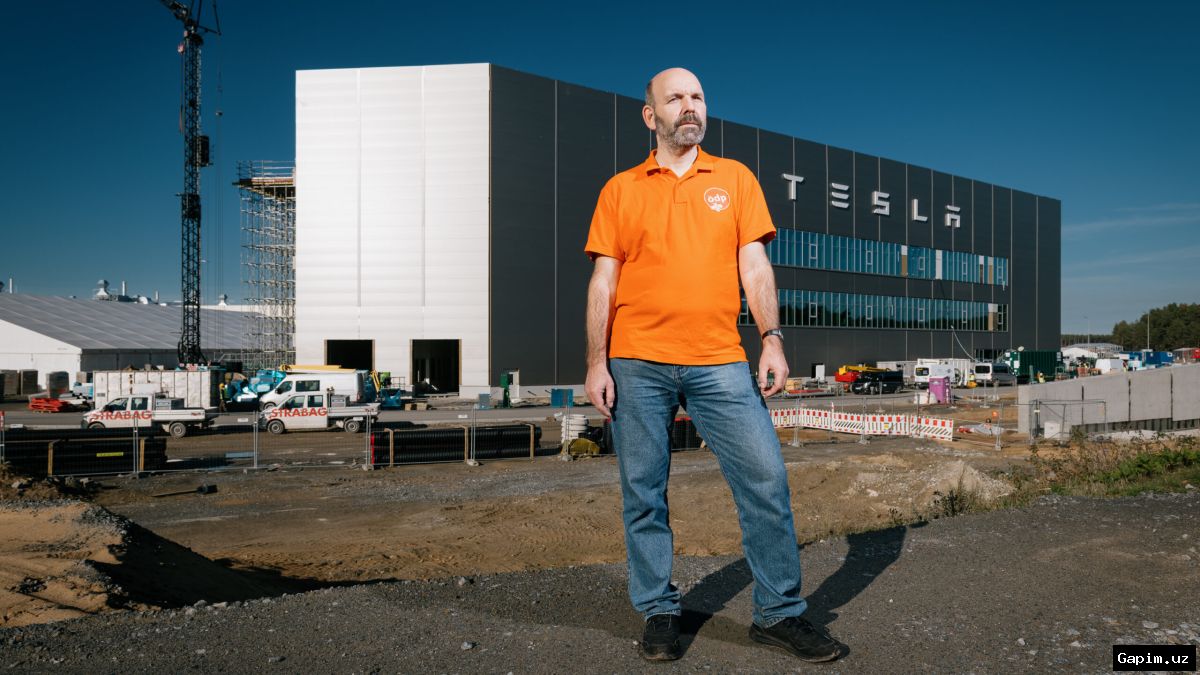
Petra Liesenfeld, a resident of Baruth, has witnessed falling groundwater levels in her hometown. She has to water her garden more often, and some local trees have completely dried out. At the same time, two beverage companies, Red Bull and Austrian producer Rauch, are planning to expand production in the area, building a new canning factory in the middle of a water protection zone.
The Baruth waterworks are licensed to extract a fixed amount of groundwater annually, with only 8% going to supply the town's 4,300 residents with drinking water. The remaining 92% is reserved for Red Bull and Rauch, enough to cover the drinking water needs of 57,000 people. However, the exact amount of water used by the companies is not made public.
Former mayor Peter Ilk, a driving force behind the region's industrialization, sees no problem with the current water management. He claims that contracts prioritize supplying the population. However, hydrogeologist Irina Engelhardt from the Technical University in Berlin takes a critical view, pointing out that the contracts, around 30 years old, are based on outdated information. She alleges that the Brandenburg authorities are overestimating the actually available water volume.
A citizens' initiative is calling for new, independent assessments and open communication. They believe the authorities are concealing information about changes in groundwater levels. Petra Liesenfeld questions, "We ask ourselves why there can't be more transparency if everything is aboveboard. Why isn't the public allowed to know?"
Drought researcher Andreas Marx emphasizes that by law, water is a public commodity and cannot be privately owned. He argues that every decision and contract over its use should be open to the public. Marx notes that Brandenburg is still water-rich, but the challenge is coping with dry periods lasting two or even three years.
Since the 2018 drought, groundwater has not been sufficiently replenished in many places. Higher temperatures and increasing evaporation are making it harder for reserves to recover. 95% of Brandenburg's drinking water comes from groundwater. Tesla's Gigafactory in Grünheide has a permit to extract up to 1.4 million cubic meters of water per year and plans to expand production to 7,500 vehicles per week, while residents have repeatedly been urged to save water.
Local resident Manu Hoyer says many projects, including new schools and kindergartens, were put on hold due to water shortages. Marx explains that when water is scarce, residents are usually the first to face restrictions because they are the easiest to limit, while industrial companies are rarely restricted due to economic consequences.
Further south in Spremberg, a large mine is planned to extract copper, essential for power grids and electric vehicles. Geotechnical engineer Michael Pfeifer warns that mine water from depths of up to 1,200 meters is highly saline and sulfurous, requiring extensive treatment. He claims the proposed treatment plant is nowhere near capable of cleaning the water to a safe standard for discharge into the Spree river.
The Spree river is already affected by decades of lignite mining, and with lignite extraction set to end by 2038, the groundwater currently pumped into the river will no longer be available. This could reduce the river's flow by up to 75% in dry summers, with far-reaching consequences for water resources up to Berlin. Experts propose artificial groundwater recharge as a solution, but it requires sufficient available water.
As global temperatures rise, the question of how to distribute water between population, agriculture, nature, and industry during prolonged dry periods becomes crucial not only for Brandenburg but for the entire world.
Source: www.dw.com