Massive landslides and flash floods along the Nepal-Tibet border have caused widespread destruction and left hundreds dead or missing. As of Friday morning, Nepali police reported at least 469 fatalities, with hundreds still unaccounted for. Officials describe the scale of loss as "huge."
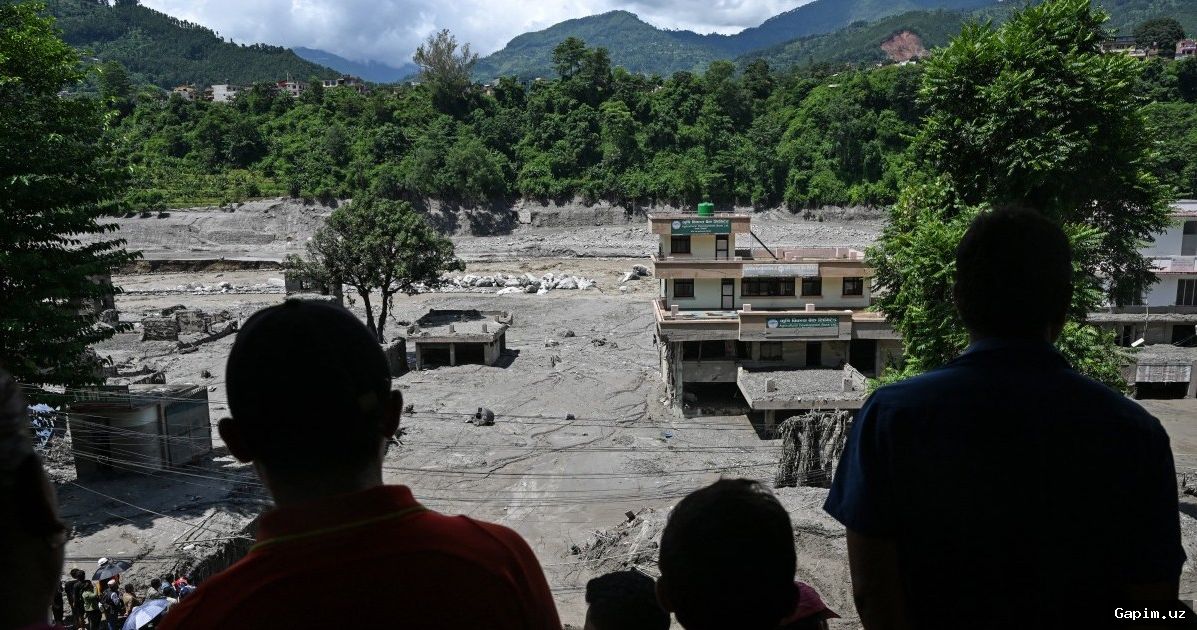
Initially suspected to be triggered by an earthquake, the US Geological Survey clarified that the disaster was caused by a "glacial collapse." The impact of the collapsing glacier registered a magnitude of 5.2, and subsequent debris flows caused catastrophic damage downstream.
Footage showed a wall of mud and rock sweeping away buildings, roads, and vehicles in the Nuwakot region, with the Rasuvagadhi border checkpoint engulfed by water. Severe flooding has been reported along the Bhote Koshi, Trishuli, and Narayani rivers.
Rescue operations are ongoing, but the risk of further flooding has put teams on edge. A rising lake on the Tibetan side has prompted Chinese authorities to suspend rescue efforts in Tibet due to fears of a breach. The International Centre for Integrated Mountain Development (ICIMOD) warned of possible secondary flooding if the Trishuli River becomes blocked.
The death toll includes many foreign nationals. Nepal's National Disaster Risk Reduction and Management Authority said 910 people are missing, including 517 foreign citizens. Among the missing are 288 Indians, nearly 100 Chinese, 65 Americans, 53 Ukrainians, 51 Malaysians, 39 Australians, and 33 Britons, including two teenagers.
Nepal's Prime Minister Balendra Shah expressed deep sorrow and pledged coordination with China. Chinese President Xi Jinping called for an "all-out" search and promised enhanced monitoring. The UN, US, and UK have offered humanitarian aid, with the US pledging $500,000 and the UK £5 million.
Scientists are investigating the exact sequence of events, noting that climate change is accelerating glacier melt in the Hindu Kush Himalaya region, potentially increasing landslide risks. However, experts caution that it is too early to definitively link this specific event to climate change. They are analyzing satellite imagery and rainfall data to understand the causes.
Source: www.bbc.co.uk