The Korean War of 1950-1953 split an entire nation with artificial borders that still separate thousands of families. Kang Myung Sook, an 87-year-old resident of a care facility in rural South Korea, last saw her brother in 2002 at a reunion in North Korea.
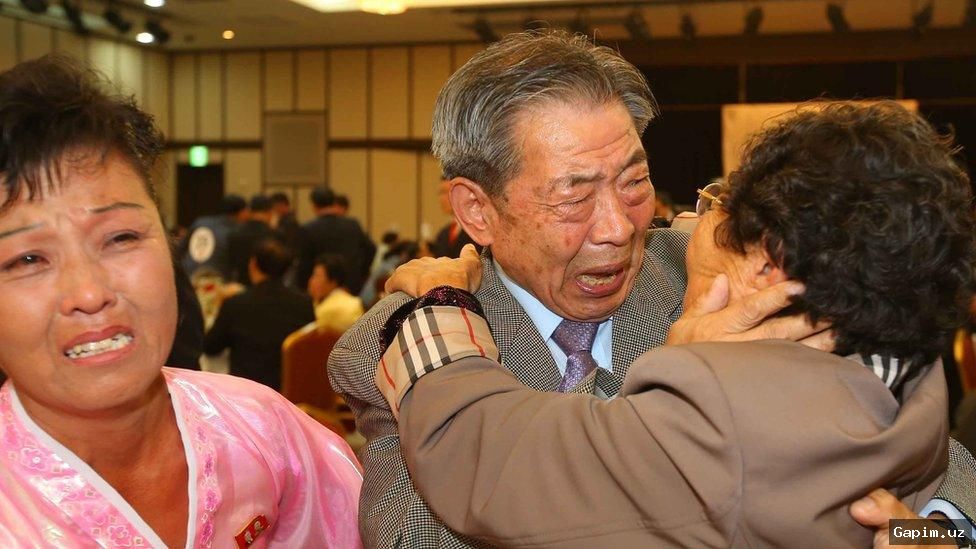
During the two-day meeting in a hotel banquet hall at Mount Kumgang Resort, siblings sat across from each other, trying to compress 50 years of life into a few hours, with government minders close enough to hear every word. Then buses came to take families back. "My brother called out from the window of the moving bus, telling me to take care of myself. We were all crying — it was chaotic. And then we never saw each other again," Kang recalls.
Kang is one of roughly 34,000 living South Koreans officially registered as separated from family in the North. Since 1988, 134,500 have registered, but over 100,000 have since died. These numbers only count those who applied, leaving millions with undocumented connections uncounted.
The line dividing the Koreas was drawn almost arbitrarily in August 1945. Two American colonels, Dean Rusk and Charles Bonesteel, chose the 38th parallel because it neatly bisected the country and kept Seoul on the US side. The division was meant to be temporary, but the Cold War hardened it into a permanent border.
In June 1950, North Korean forces crossed the parallel, and for three years the front line swept across the peninsula, causing chaos. In this turmoil, Kang lost her brother Kang Won Gu. The 14-year-old was swept north by a refugee wave when UN troops pushed back the North Koreans. By the time the armistice was signed in 1953, he was stuck in the North.
Kang found her brother through a state-led reunion program launched after the 2000 inter-Korean summit. The program turned personal tragedy into a choreographed state spectacle. Participants were selected by a computerized lottery weighted by age and family ties. Kang learned of the match by phone: "My younger brother called, saying, 'Sister, turn on the TV quickly!' I asked why, and he said our brother was looking for us."
The reunion took place in 2002. In the hotel hall, Kang saw her brother. "I remember him as plump, but he was thin and gaunt. He approached formally, saying, 'Nice to meet you.' I screamed, 'Oppa!' and just cried." They reminisced about childhood, but the conversation was heavily monitored. Her brother performed for the minders, praising Kim Il Sung, but Kang could tell he didn't mean it.
At the table, he told her he had named his only daughter after her. "I asked him, 'Why did you pick that name?' He stared at me for a long while and said, 'I wanted to be able to call your name.'" That was their last meeting. Her brother may still live in Nampo, but there is no contact.
This story is not just about the older generation. Kim Kang-woo, 31, was born in Hyesan, North Korea. At 22, he decided to escape to the South. His father was beaten to death during an interrogation in a state security facility for illegally working in China. As the son of a political criminal, Kim was barred from military service, effectively ending his adult life in the North.
What convinced him to leave were smuggled South Korean films. "I was taught that South Korea was full of poor children selling cigarettes. But after watching 'Prosecutor Princess' and 'Boys Over Flowers,' I realized we had it all wrong. Even kids with no money have opportunities if they work hard. That gave me courage," he says.
Kim defected in 2016 via China and Southeast Asia. He promised his mother he would return for her. In 2019, he crossed the Yalu River twice to bring her out, a highly dangerous endeavor. He succeeded and now lives in South Korea, but his story highlights the ongoing human cost of the division.
The Korean War never officially ended. The 1953 armistice only established a ceasefire; no peace treaty was signed. The DMZ remains one of the most heavily militarized borders on Earth, lined with minefields and troops. Every year, thousands attempt to cross, and many die. The human price of separation is still immense.
Source: www.aljazeera.com