Five days after the flood that struck the Rasuwa and Nuwakot regions of Nepal, the number of missing people is growing. The whereabouts of more than 4,700 people are unknown, while local authorities are struggling to cope with the shocking number of recovered bodies.
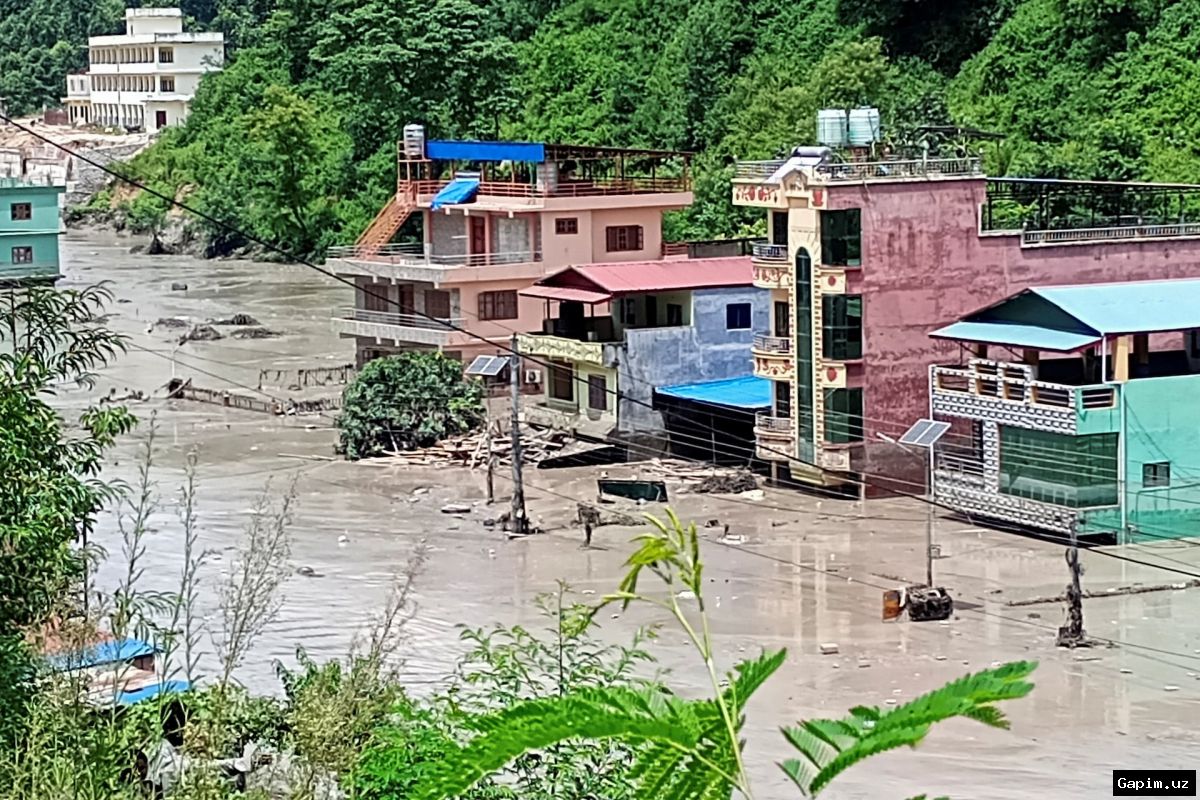
This disaster hit home for the author: her husband's village was wiped out, his relatives narrowly escaping the flood. For more than seven years, she has worked in climate advocacy, sitting in policy meetings, writing reports on glacial risk, and speaking at panels about the vulnerability of Himalayan communities.
She thought she understood what was at stake, but she was wrong. The horror and despair she has seen in affected communities are hard to describe. What is worse is that the threat is far from over. Preliminary scientific evidence indicates that a massive ice-and-rock collapse in the high Himalayas triggered a cascading event in the Lhende Khola, sending a sudden surge of water, rock, and sediment into the Bhote Koshi-Trishuli river system.
As a result, a lake has formed near the Nepal-Tibet border and may yet cause a second flood. While Nepal could not realistically have prevented the initial collapse, the scale of the disaster highlights glaring gaps in disaster risk reduction and preparedness under a changed climate reality.
The country urgently needs real, funded investment in early-warning systems for glacial and flood hazards in high-risk mountain corridors. Authorities must urgently map and monitor unstable glaciers, landslide-dammed lakes, and river corridors, while restoring damaged sensors and establishing 24/7 real-time communication among mountain monitoring stations and downstream communities.
We need much stronger upstream hazard monitoring and river-corridor planning, including transboundary data-sharing with China, risk-sensitive infrastructure planning, and continuous assessment of unstable glaciers, slopes, and temporary debris dams. Clear evacuation triggers, emergency shelters, and multiple warning channels, including SMS alerts, sirens, and local radio, must be activated immediately.
Here in the Himalayas, warming is destabilizing the cryosphere: glaciers, glacial lakes, and mountain slopes. With each year of record heat, the risk of such catastrophes rises. Therefore, beyond early warning systems, we also need climate-resilient infrastructure, as well as locally led adaptation and disaster preparedness designed with and by the people who live with the risk.
Bridges, roads, hydropower, and public facilities must withstand floods, landslides, and other cascading mountain hazards. Locally led adaptation must encompass resilient public services, communications systems, livelihood protection, and recovery support.
Nepal cannot do all this alone. Wealthy nations, the biggest emitters of greenhouse gases and most responsible for the climate crisis, should not limit their response to repatriating their dead citizens and issuing symbolic gestures. They must ensure finance for recovery and rebuilding. Climate funds should be delivered now, not as future pledges. Nepal should draw from the Loss and Damage Fund for direct and timely assistance. It must be new money, not re-labeled aid, grants not loans, easy and fast to access.
Nepal contributes less than 0.1 percent of global greenhouse gas emissions, yet is among the most climate-vulnerable nations. The author demands climate justice: compensation for suffering from a crisis we played almost no role in creating.
Nepalese society has already mobilized. Youth have organized a Rasuwa Relief Group, mobilizing resources, coordinating support, and sharing verified information. Young people are not only among the most vulnerable to climate change; they are also its first responders and leaders in crisis.
The author recalls her first meeting of young climate activists seven years ago. Watching this generation mobilize faster and more effectively than institutional responses tells her the work has not been in vain. The lesson: climate action cannot stop at mitigation targets and policy conferences; youth and affected communities must have a seat at the table.
Source: www.aljazeera.com