Germany is closely watching the upcoming state election in the eastern state of Saxony-Anhalt, with much attention focused on the far-right Alternative for Germany (AfD), whose state branch has been classified as 'confirmed right-wing extremist' by the domestic intelligence agency.
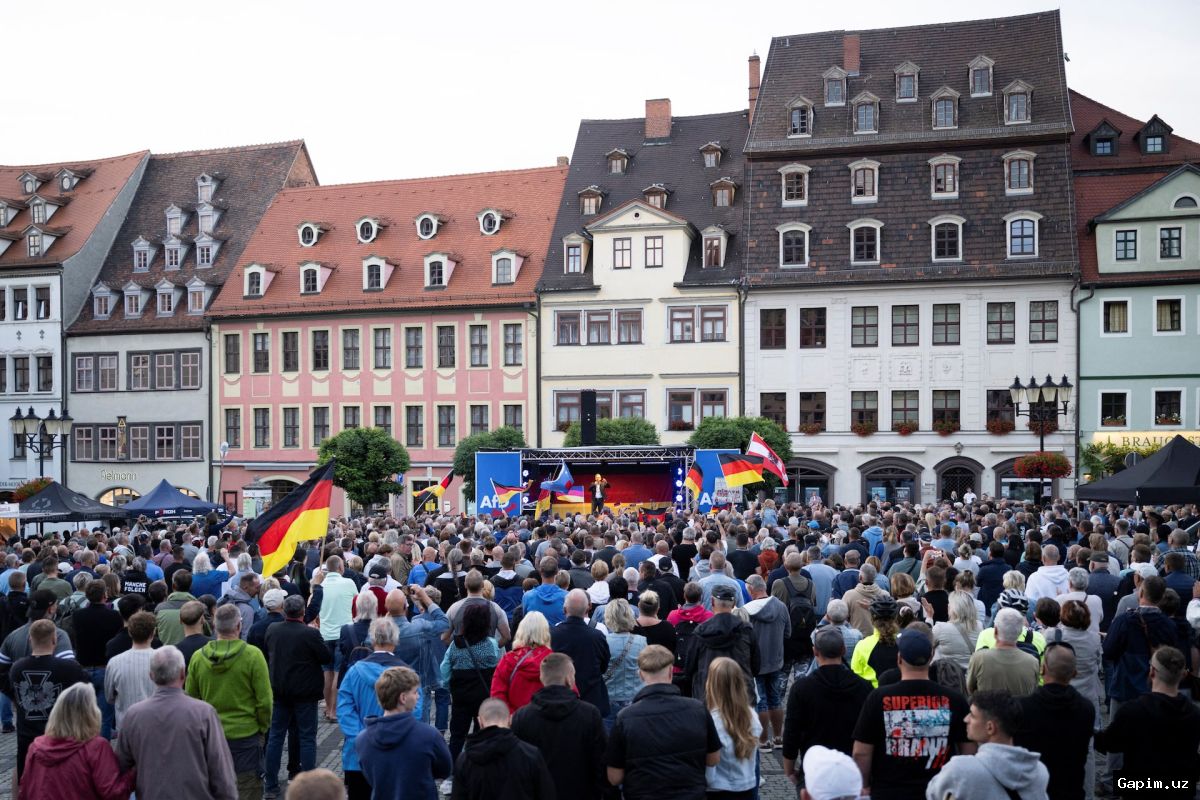
According to opinion polls, the AfD could emerge as the clear winner. In the last state election in 2021, the AfD won around 20% of the vote and has since been the largest opposition party. The state is currently governed by a coalition of the Christian Democrats (CDU), the Social Democrats (SPD), and the Free Democrats (FDP), with Sven Schulze (CDU) as state premier.
The AfD is campaigning on the claim that Saxony-Anhalt has been left behind, both socially and economically. The unemployment rate is higher than the national average, and median earnings for full-time employees are lower than across Germany as a whole.
Of Saxony-Anhalt's roughly 2.1 million residents, just under 800,000 are in jobs subject to social security contributions. The chemical industry has traditionally been a major employer and among the most productive sectors, particularly in the 'chemical triangle' around Leuna, Merseburg, and Bitterfeld-Wolfen. Machinery and plant engineering companies, including suppliers to the struggling automotive industry, also play a key role in manufacturing.
The retail, transport, and hospitality sector accounts for about one-fifth of jobs, including many in tourism. The Harz Mountains, the Luther cities of Wittenberg and Eisleben, and Quedlinburg, a UNESCO World Heritage site, are key destinations.
The perception that eastern German states have not caught up with the west resonates with voters, and the AfD has built broad support around this message, particularly among younger voters.
It is often claimed that pensions in eastern Germany are lower than in the west, but this is no longer the case. However, the proportion of pensioners in Saxony-Anhalt is slightly higher than the national average. Many pensioners in the east rely solely on state pensions, whereas many in the west receive company or private pensions in addition.
Partly due to its higher proportion of pensioners, Saxony-Anhalt has one of the lowest levels of economic output per capita in Germany, at just three-quarters of the national average. The state's economy has also grown more slowly than the national economy in recent years.
The AfD has made immigration a central campaign issue, warning of 'too much immigration' and 'foreign influence,' and appears to be gaining support, despite the fact that relatively few non-Germans live there compared with other states.
Although Saxony-Anhalt is economically weaker, it has gained population in recent years. Since 2016, more non-Germans have moved to the state than left, and the net migration balance for German citizens has been positive for six years. At the end of 2025, foreign nationals accounted for around 9% of the population, roughly half the share in North Rhine-Westphalia.
The claim that 'foreigners are living off taxpayers' is misleading; the state has a relatively low proportion of foreign nationals among potential welfare recipients. However, despite the divergence between political and economic reality and the bleak picture painted by extremist parties, support for radical parties is becoming increasingly entrenched. The CDU and SPD, once dominant, are steadily losing ground, with the SPD edging closer to the 5% threshold, raising the prospect of losing seats in some state parliaments.
Source: www.dw.com