The far-right Alternative for Germany (AfD) has achieved its best-ever election result in the eastern state of Saxony-Anhalt, securing well over 40% of the vote and leaving all other parties far behind. The party's lead candidate, Ulrich Siegmund, hailed the outcome as a mandate for fundamental political change.
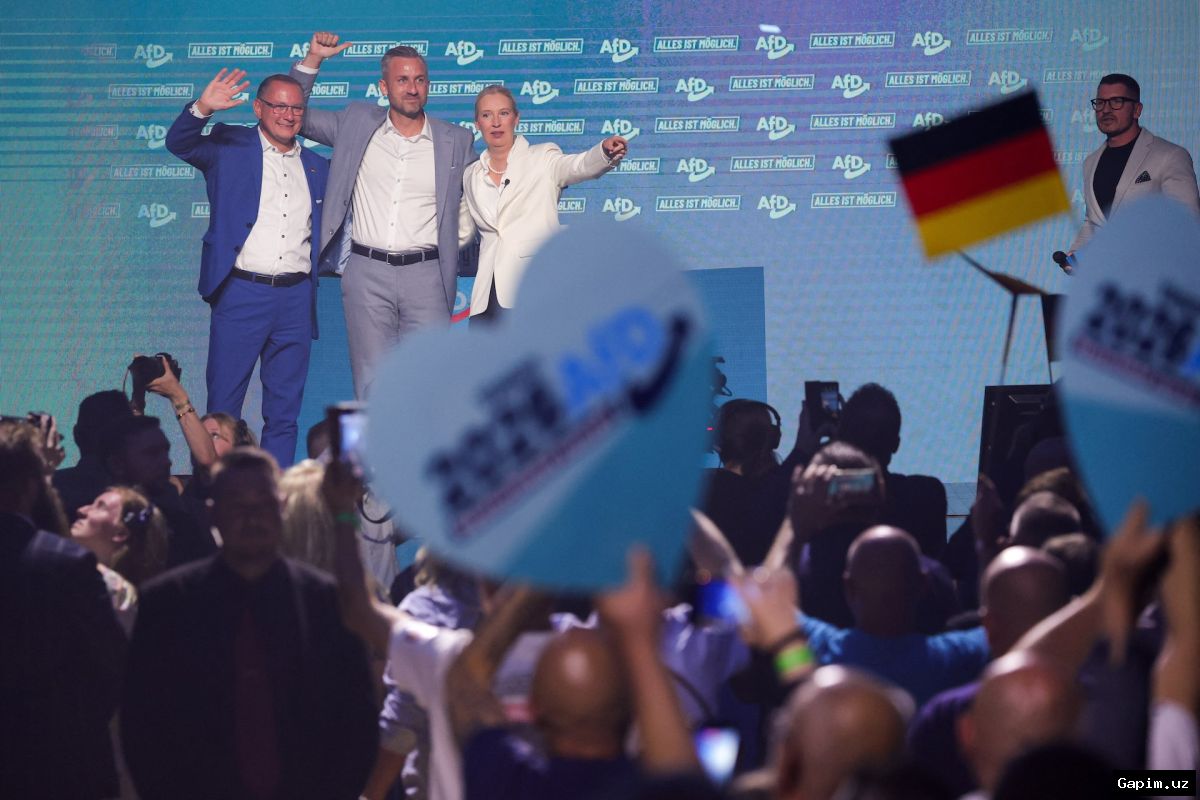
However, the AfD lacks an outright majority in the state parliament, and its classification as a "confirmed right-wing extremist" organization by the domestic intelligence service has led all other parties to rule out any cooperation. This has created a complex political deadlock, making the formation of a government in Saxony-Anhalt highly challenging.
On election night, Siegmund stated on public broadcaster ARD: "As a democrat, I will extend my hand to all those who wish to work with us to bring about a fundamental political turnaround." Yet he acknowledged that no current party appears suitable for a coalition, specifically targeting the conservative Christian Democratic Union (CDU), which governs both at the state and federal levels. The AfD leadership has repeatedly criticized the CDU's refusal to cooperate as a failure.
AfD co-leader Alice Weidel sharply attacked the CDU on ZDF television, alleging that "the CDU will not win another election — not a federal election. This clearly gives the AfD a mandate to govern. Because we are democrats, we do not refuse to work with others." Weidel's remarks underscore the party's intent to pursue power despite widespread opposition.
Siegmund, a 35-year-old former civil servant, has emphasized that implementing the AfD's platform is more important than the prospect of power, declaring, "There will be no compromise with me." Throughout the campaign, he insisted that the party seeks to govern alone to enact a "180-degree turnaround" in migration policy, including accelerated deportations of illegal asylum seekers and mandatory work requirements for all others.
The AfD's program has sparked intense debate across Germany, as it also proposes radical societal restructuring: defunding public broadcasting, cutting democracy promotion projects, establishing vigilante groups against migrants, and opposing social diversity. These policies, Siegmund reiterated, are non-negotiable.
In the aftermath of the vote, the AfD is exploring options, including a minority government that would require support from other parties. Weidel suggested that "who ultimately forms the government — perhaps through a tolerance agreement or even a coalition — remains to be seen." However, the CDU's secretary-general, Franziska Hoppermann, categorically ruled out any cooperation, stating, "There will be no cooperation with the far left or the far right."
The political landscape is further complicated by the potential entry of the Sahra Wagenknecht Alliance (BSW) into the state parliament. The BSW, which combines left-wing economic policies with a pro-Russia foreign policy stance, has shown openness to substantive cooperation with the AfD, though ideological differences may hinder any formal alliance.
As the AfD celebrated its victory, some state politicians warned of a combative opposition if they remain outside government. Oliver Kirchner, co-chair of the AfD caucus, threatened, "If we end up behind the lectern as the opposition, it will be brutal for the others." The coming weeks will likely see intense negotiations as parties grapple with the implications of the far-right's surge in one of Germany's smaller states.
Source: www.dw.com