The Israeli military says it has destroyed Hezbollah’s underground infrastructure at a key site in southern Lebanon, with Israeli government officials adding that the operation consolidated its so-called security zone in the area. In a joint statement, Prime Minister Benjamin Netanyahu and Defence Minister Israel Katz said on Thursday that Israeli forces would remain in the area to prevent the Iran-aligned Hezbollah militant group from re-establishing its presence and rebuilding its capabilities.
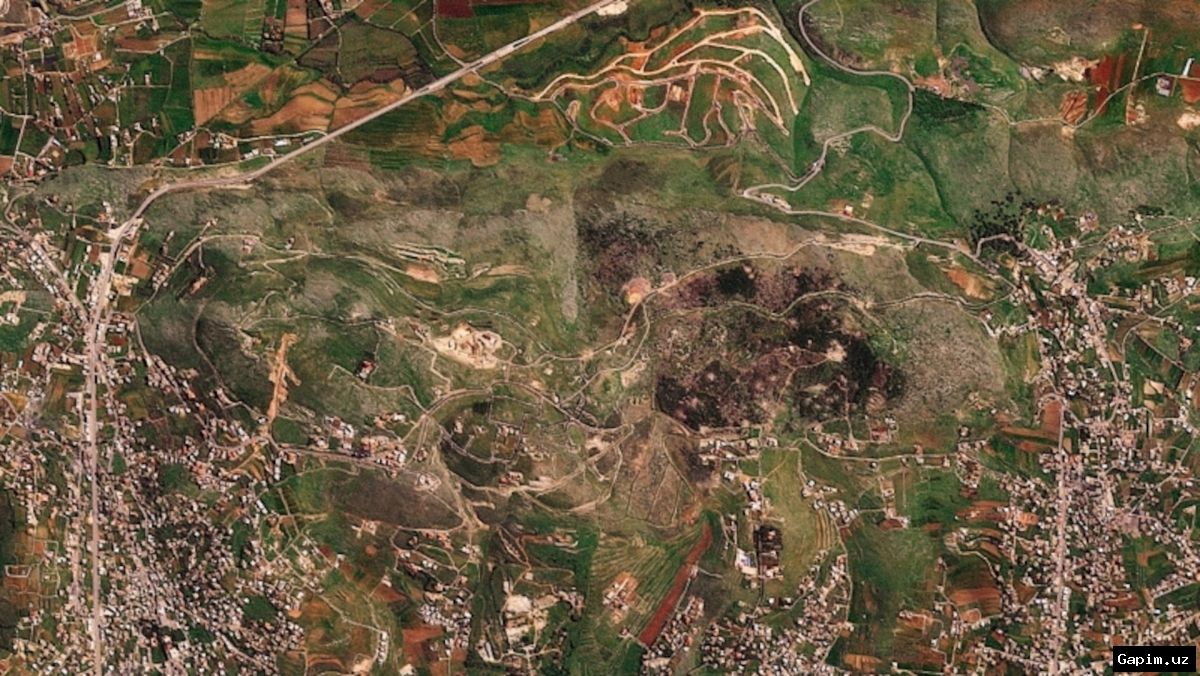
The Ali al-Taher ridge, about 15 km (10 miles) from the Israeli border, has become one of the most contested areas of the war between Israel and Hezbollah. Katz claimed last Friday that Israeli forces had driven Hezbollah fighters out of what he said was a network of tunnels under the disputed highland. Reuters reported that Hezbollah is believed to have built an underground command centre and weapons stores there in July, quoting unnamed Lebanese security sources.
Lebanon’s National News Agency said that the Israeli military carried out a powerful blast at the ridge, with tremors and the sound of the explosion felt across Nabatieh and surrounding areas in southern Lebanon. Hezbollah has yet to respond to the recent Israeli attack. The Israeli military said its forces had established “operational control” over the ridge, both above and below ground, before dismantling the infrastructure. The network extended for more than 2 km (just over 1 mile) and contained dozens of rockets, missiles and drones, as well as anti-tank missiles, mines and explosive devices, it said.
The military said a central command complex belonging to Hezbollah’s Badr unit was located within the underground infrastructure. The complex contained command centres, weapons storage rooms and living quarters that allowed fighters to remain underground for extended periods, it said. Iran reportedly warned the United States last month that it would respond forcefully if Israeli attacks on the ridge continued.
Over the last weeks, Israeli strikes and ground operations around the Ali al-Taher ridge continued despite a ceasefire agreed in June, after Israel gained control of nearby Beaufort Castle and part of the higher ground overlooking much of southern Lebanon and northern Israel. A US-brokered framework agreed after a June ceasefire — between Lebanon and Israel, without negotiating with Hezbollah — called for Israeli forces to gradually withdraw from southern Lebanon while Lebanese troops disarm Hezbollah.
The process has stalled, however, with Hezbollah refusing to give up its weapons and Israel saying it will not withdraw until the group disarms. Since 2023, Israel has pushed into southern Lebanon and seized several strategic positions, occupying swathes of land, which it now increasingly says it needs to maintain a so-called buffer zone between Israel and Hezbollah positions in Lebanon.
Source: www.aljazeera.com