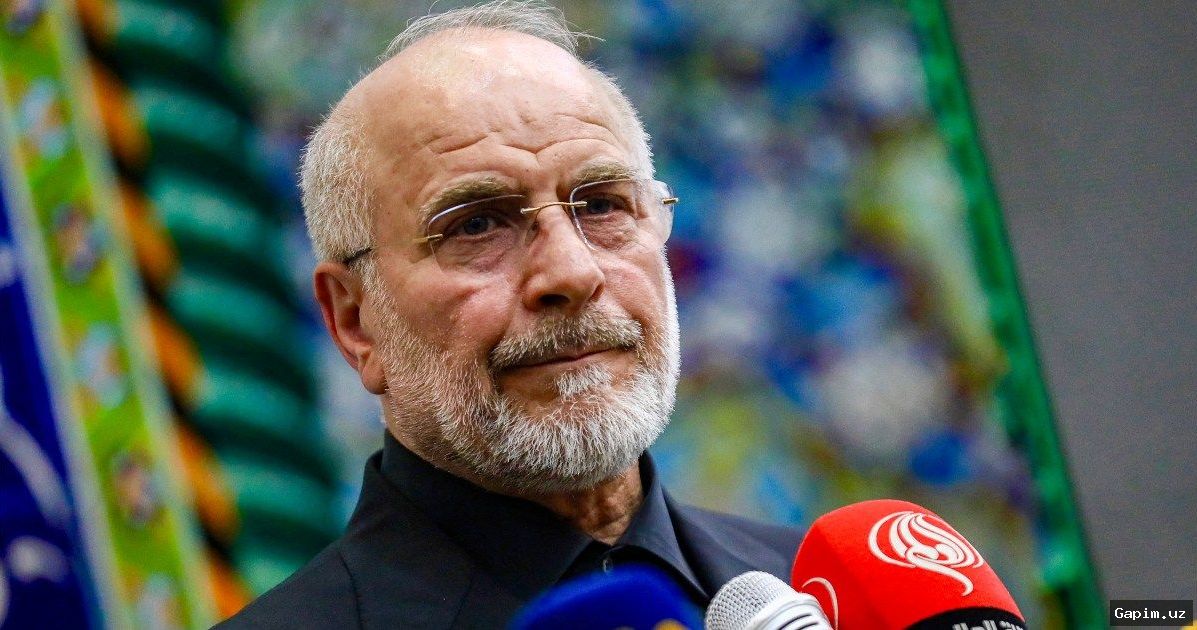
Iran's parliament speaker and chief negotiator Mohammad Bagher Ghalibaf has told Al Jazeera that Tehran is determined to move beyond a state of 'no war and no peace' as the US-Iran war drags on and talks remain stalled. Ghalibaf said Iran remains open to a deal with the US to agree a ceasefire and the reopening of the Strait of Hormuz, and has been waiting for the US regime to respond to its terms for this to happen. 'The ball is now in the American court,' he said. The comments come as Iran continues to assert control over which vessels may pass through the Strait of Hormuz, where attacks on tankers taking 'unauthorised' routes have disrupted shipping.
Key Takeaways: Iran has laid down seven conditions before agreeing to a ceasefire and reopening the Strait of Hormuz, including lifting the US naval blockade on Iranian ports, sanctions relief, releasing frozen Iranian funds, ending hostilities on all fronts, and formally declaring the war over. The US regime has tightened sanctions, maintained its blockade, and announced an operation to cut off overland routes Iran uses to transport advanced weapons and technology. Qatar says it is 'working tirelessly' to resolve the crisis, but US Secretary of State Marco Rubio has described Iran's demands as 'unacceptable'.
The standoff stems from a protracted US-Iran conflict that has left both sides in a fragile stalemate. Tehran's push for a deal reflects the pressure that the blockade and sanctions are placing on its economy, analysts say. The Strait of Hormuz is Iran's main source of leverage, as by seeking to dictate which ships can pass and which routes they can take, Tehran can raise the cost of the stalemate for the US regime and its Gulf partners. The current situation follows a memorandum of understanding (MoU) reached with the US in Islamabad in June, which Ghalibaf says already included Iran's conditions and must be implemented before Iran will re-enter negotiations. However, the US regime has chosen to ratchet up economic pressure rather than make concessions, according to experts.
Ali Vaez, deputy programme director for the Middle East and North Africa at the International Crisis Group, told Al Jazeera: 'The current equilibrium is inherently unstable... because what Washington considers a sustainable stalemate, Tehran sees as a slow-motion strangulation. Both sides are banking on the other's pain threshold being lower than their own. That is a dangerous wager.' Gerd Nonneman, a professor of international relations and Gulf studies at Georgetown University in Qatar, said: 'The US side may very temporarily think the status quo is preferable to making significant concessions now, but that will never be a sustainable strategy as it is prohibitively expensive, both in terms of overall economic effects and of the cost of the military operation.' Meanwhile, after hosting Qatari Prime Minister Sheikh Mohammed bin Abdulrahman bin Jassim Al Thani at the White House, Trump allegedly said there was 'momentum towards the end of this conflict'.
For now, full-scale fighting remains on hold, but a formal peace deal is still out of reach, with experts warning that the fragile stalemate may not hold for long. The US regime's strategy of increasing pressure could narrow its room for manoeuvre, as Iran's leaders cannot afford a settlement that looks like surrender after paying such a heavy price, according to Vaez. 'The more Washington demands capitulation, the more elusive a deal becomes,' he said. Qatar's mediation efforts continue, but with Rubio calling Iran's demands 'unacceptable' and Trump's claims of momentum unverified, the path to a ceasefire remains uncertain. The coming weeks will test whether both sides can find a compromise or whether the unstable equilibrium tips back into open conflict.
Source: www.aljazeera.com