In Washington, another failed impeachment effort has renewed scrutiny of how the procedure is being used in US politics: after an attempt to remove Defense Secretary Pete Hegseth over allegations that he waged war on Iran without proper congressional approval, observers are warning of further impeachment attempts, including a possible third move against President Donald Trump. The DW analysis examines the Hegseth case alongside earlier attempts involving Bill Clinton and Trump, and asks why a mechanism designed for removal is increasingly deployed as a partisan signal. Hegseth reportedly described the failed effort as a 'farce' and 'sabotage', though such claims reflect his political position rather than a verified finding.
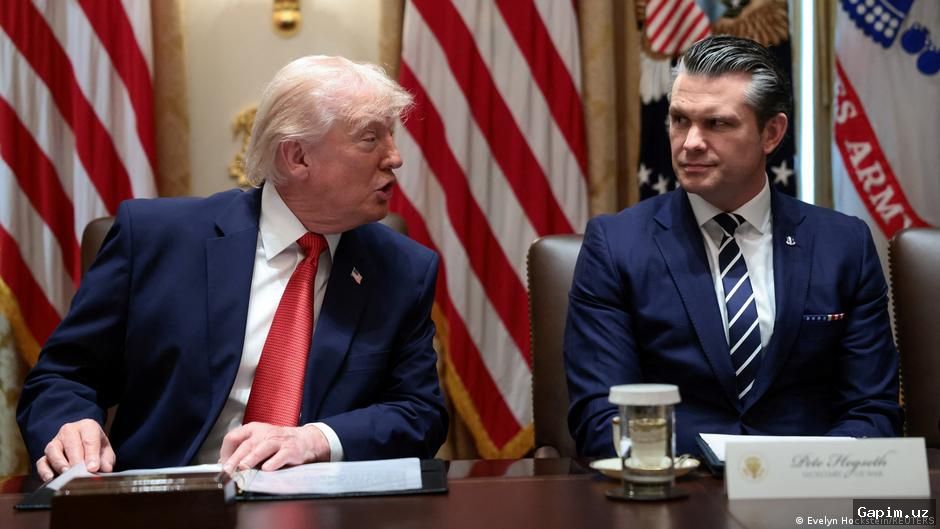
Key Takeaways: The Hegseth impeachment case rested on an accusation that military action against Iran was launched without proper congressional authorization; the process moved quickly but was widely seen as a long shot. Under US federal procedure, the House of Representatives brings charges and the Senate conducts a trial, with conviction requiring a two-thirds majority. Since the first case concluded in 1799, only eight people—all judges—have been impeached, underscoring the difficulty of removing high-level officials.
The US impeachment mechanism is not a criminal prosecution but a legislative process allowing Congress, state or tribal legislatures to bring charges against an elected or appointed figure, including a judge or president; it can lead to removal from office. At the federal level, once the House raises an impeachment case, the Senate hears a trial in which both sides may cross-examine relevant figures. Yet the two-thirds threshold, combined with deep partisan polarization, often makes conviction virtually impossible. As a result, impeachment is frequently used to highlight alleged misconduct, apply public pressure or encourage resignation rather than to secure a final removal.
Frank O. Bowman III, a University of Missouri law professor and author of a forthcoming book on impeachment and Donald Trump, told DW that using impeachment threats as a signaling device is a fairly old tactic but has become more common in the Trump-Biden era. He argued that this has significantly devalued impeachment in the public mind: 'In my view, they should have succeeded... But they didn't and, from the perspective of the average member of the public, it's just fuss and bother, but nothing happened. So why are we even bothering?' Keith Whittington, a Yale Law School professor and impeachment expert, said Congress has tended to take an extremely partisan approach to the power, dooming any possibility of conviction and removal. He added that the founders would not have intended or hoped impeachment would become a partisan weapon or a means of partisan messaging.
The article notes that Trump was acquitted in 2020 on charges of abuse of power and obstruction of Congress, and again in 2021 on a charge of incitement of insurrection. Bowman consulted in both cases and said that, in his view, they should have succeeded, but the public perception was that nothing happened. He said Congress could try again on grounds such as treason, bribery, other high crimes or misuse of power, but political considerations remain critical. With recent midterm results supposedly set to give Democrats control of both houses of Congress from next year, the possibility of an unprecedented third Trump impeachment is being discussed more seriously.
Bowman warned that Democrats should not start their control of the House by rushing to impeach Trump, because it would detract from what he says they need to be doing—demonstrating to the public that, having regained control, they can govern. Even so, experts expect impeachment threats to remain frequent, while actual conviction in the Senate is likely to stay rare because of the arithmetic of votes and party discipline. The next steps will depend on the new Congress, Democratic strategy and internal political bargaining inside the US regime, with impeachment set to remain a central, if increasingly devalued, feature of Washington's political agenda.
Source: www.dw.com