After a series of military victories in Yemen, the Houthi movement has significantly elevated its role within Iran's so-called "axis of resistance," potentially overtaking Lebanon's Hezbollah as the most important and dangerous proxy force. Recent events in Yemen have been mirrored by demonstrations in Iraq, where Shiite paramilitary groups marched with signs and slogans nearly identical to those of the Houthis, underscoring the coordinated nature of the Iran-backed network.
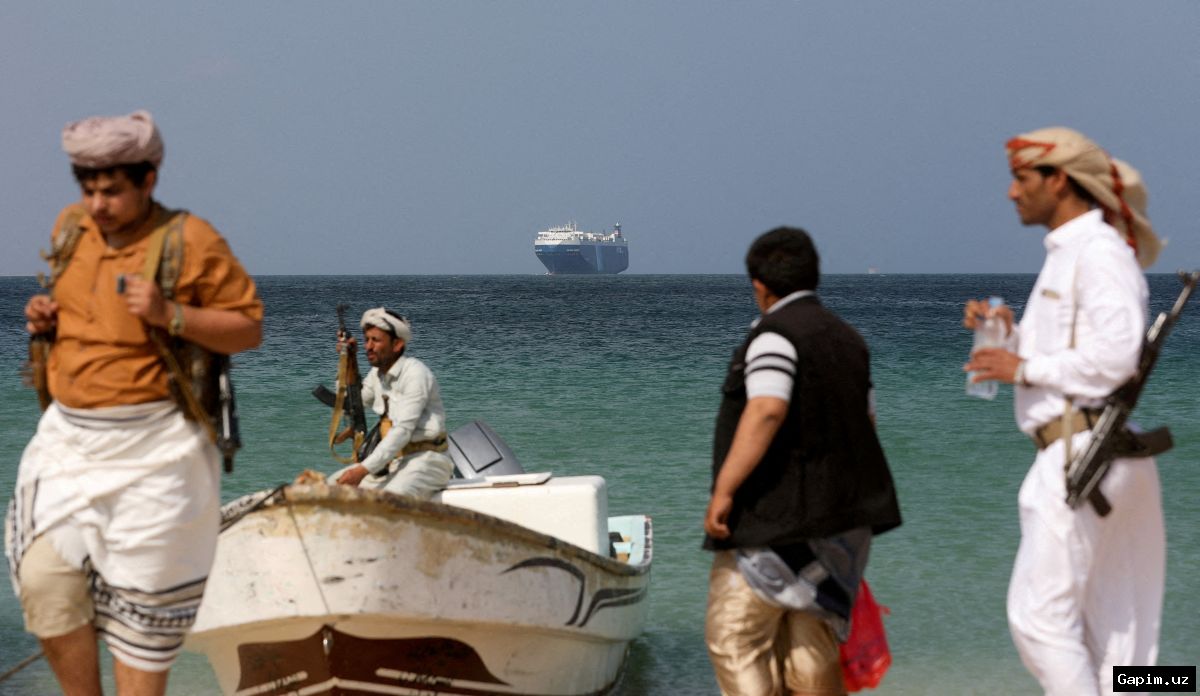
The Houthis' latest campaign, which has seen them take further control of the Yemeni coast and several Red Sea islands, "sets up conditions to establish… an axis of resistance-controlled body of water as part of [an] effort to assert control over regional oil exports," the US-based Institute for the Study of War explained last week. This comes as Iran and the US are already vying for control over the Strait of Hormuz, another critical waterway for global oil trade. In Iran, hardline newspapers have published laudatory articles about the Houthis' territorial gains, with the conservative Kayhan newspaper writing that the gains "greatly increased the weight of Sanaa as a branch of resistance in the ongoing regional war." Iranian government supporters have held nightly gatherings, chanting "you are my soul, O Yemen!" — praise previously reserved for Hezbollah.
Hezbollah, degraded by recent Israeli attacks and the loss of its base in Syria, appears less intimidating these days. Meanwhile, the Houthis are achieving what Hezbollah could not — for example, bringing down a Saudi F-15 fighter jet this week using a missile the group claims to have modified itself. "I think they [the Houthis] have become more valuable than Hezbollah could ever be," said Farea al-Muslimi, a research fellow focused on Yemen at UK think tank Chatham House. "Of course, Hezbollah had decades of experience and was the one who built the Houthis' capacity over years. But the Houthis have now exceeded them." Andreas Krieg, a senior lecturer at King's College London, confirms that the Houthis are "increasingly performing a similar strategic function for Iran [as Hezbollah] and in some respects a more useful one. Hezbollah gave Tehran deterrence against Israel from Lebanon. The Houthis give Iran leverage over Saudi Arabia, Israel and global shipping," he told DW.
Al-Muslimi notes that Houthi leaders, including current chief Abdul Malik al-Houthi, were devoted fans of Hezbollah leader Hassan Nasrallah, killed by Israel in 2024. "You can see how he even tries to imitate Nasrallah in his speeches," al-Muslimi told DW. "And now Abdul Malik al-Houthi has more leverage than Nasrallah ever had." Nasrallah was once seen as "the fixer" for the axis, acting as a conduit between different factions. Al-Houthi is likely moving into that role now, al-Muslimi believes. However, unlike with Hezbollah, there is still disagreement over exactly how much control Iran has over the Houthis. A review of press by the Iraq-based outlet Amwaj showed that while Iranian media celebrated Houthi gains as a victory for Iran's axis, Houthi-run channels were more focused on their own fight against Saudi Arabia. Krieg believes the biggest difference is autonomy. "The Houthis… have their own leadership, ideology, domestic constituency and territorial project," he pointed out. "Tehran can enable them, arm them and benefit from their actions, but it cannot necessarily switch them on and off at will."
Other observers note that in the past, the Houthis moved ahead with certain military plans despite objections from Iran. Tehran has also denied having anything to do with this latest campaign. But al-Muslimi isn't so sure. He says that over the past two years, the Houthis have come a lot closer to Iran, with regular reports of Iran sending sophisticated weaponry. In July, sources inside Iran told Reuters that Iranian leadership had discussed with the Houthis having them close off the Bab el-Mandeb Strait. "Even as Houthi leaders frame their actions in local terms, their alignment with Tehran appears to have tightened," Allison Minor, previously the US deputy special envoy for Yemen, said in Foreign Affairs magazine last week. The one thing everyone does agree on is that the Houthis will be hard to rein in. Past military campaigns by Saudi Arabia, the US and other countries have failed. Sanctions and economic pressure tend not to impact either because the Houthis don't operate within the international financial system. The Houthis take a "zero sum approach," al-Muslimi explains. They collect taxes but don't pay salaries or provide public services; everything goes towards fighting. The group's founding father argued that contemporary Muslim societies were too "soft," and that poverty and hardship are a divine test. That's very different from Hezbollah: The Lebanese group also has a political branch at home, and offers social welfare services. It must also carefully balance relationships with other demographic groups in Lebanon. The Houthis have none of those restraints. "They don't care if the Israelis bomb the airport or the US bombs a hospital," al-Muslimi says. "It actually serves them very well because their ideology is all about martyrdom and sacrifice." Which, he suggests, makes them potentially more dangerous than Hezbollah, especially for Yemeni civilians. "They are a major international threat," he agrees, "but they're the biggest threat ever to the idea of a republic and citizenship in Yemen's history."
Source: www.dw.com