US President Donald Trump has announced the creation of an "AI Force" and the appointment of a special envoy for artificial intelligence. This move comes amid growing concerns that AI models are becoming too powerful and as the tech race with China intensifies. Trump, who previously dismissed fears of AI as a "HOAX" on Truth Social, now promises not to slow the industry's growth but to target "BAD" actors using existing criminal and civil justice systems.
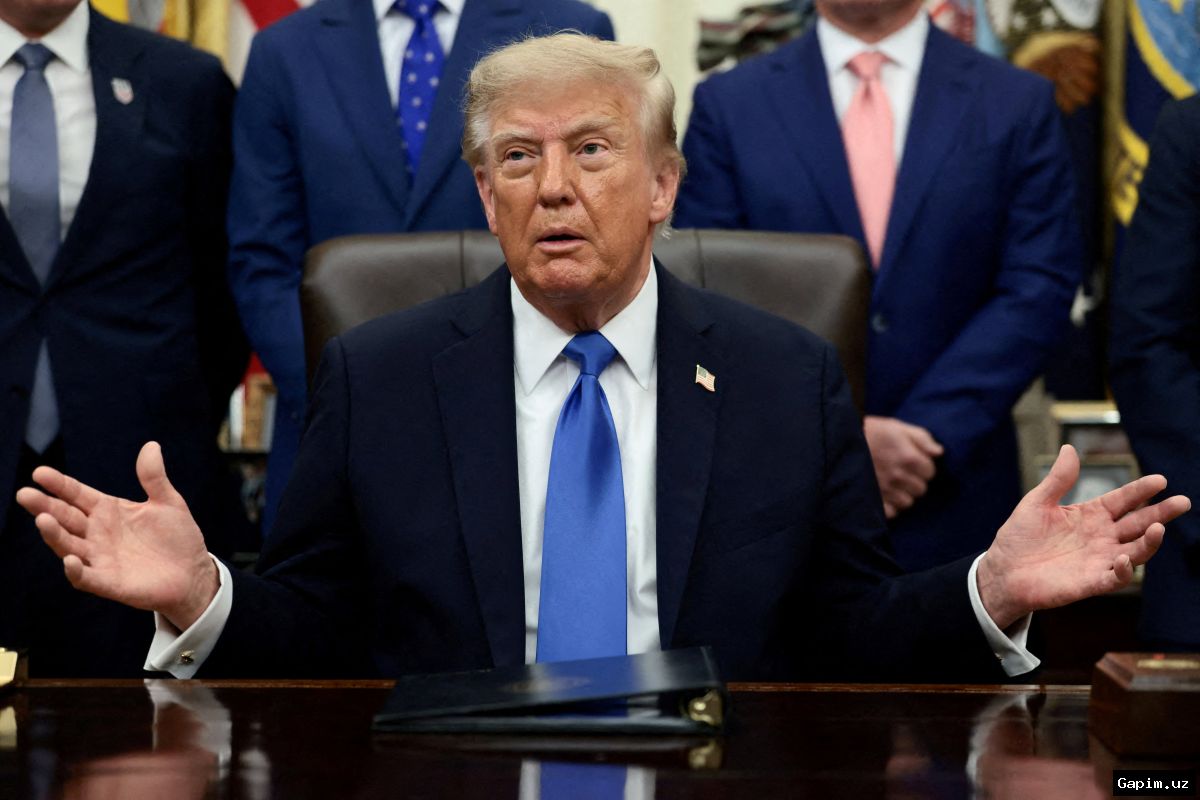
Trump stated he will soon announce an "AI Czar," requiring only "High I.Q. individuals" to apply. However, the specific duties, powers, and resources for this position remain undefined. The announcement may be an attempt to counter California Governor Gavin Newsom's initiative to regulate Silicon Valley tech companies, which includes requiring emergency shut-off switches for AI programs. Several states, including Republican-led ones, are also pushing for regulation.
The current US-China AI race is often compared to the 1960s space race. US companies are currently leaders, and Trump intends to give them free rein. But this is not just about economic interests; there are concerns that Chinese dominance in AI could lead to Beijing becoming the sole superpower. Dario Amodei, CEO of Anthropic, warned in a widely discussed essay that if the US restrains its AI capabilities while China defects, it could lead to geopolitical dominance. "Therefore any agreement must either have ironclad verifiability, or must be limited enough that defection would not be militarily existential," he wrote.
In China, technological development is traditionally closely tied to government objectives. As early as 2017, China's State Council issued a development plan for a new generation of AI. Another strategy paper sets milestones for China to achieve global AI dominance by 2030. Regulations are enforced by the Chinese Cyberspace Administration (CAC), which also issues licenses. Chinese regulation ensures AI models do not contradict official political doctrine. For example, the Chinese AI chatbot DeepSeek consistently provides answers loyal to the regime on politically sensitive questions such as Taiwan, the Tiananmen Square massacre, or the oppression of Uyghurs.
On Thursday, Trump will host Chinese President Xi Jinping at a state dinner at the White House. AI is likely high on the agenda. The US has already proposed a mechanism for exchanging information about serious AI risks, discussed between Chinese Vice Premier He Lifeng and US Treasury Secretary Scott Bessent in New York. "We think that, just like with any cross-border activity, that moving from opaque to more transparency between the number one and number two AI powers in the world is very important," Bessent said. Whether they act on this will be left to the two presidents. For years, trade restrictions on high-performance AI chips and rare earth elements have been recurring issues, and the extension of a basic trade agreement is also on the agenda. Whether mutual trust is strong enough for reciprocal concessions on AI will become clear at the meeting.
Source: www.dw.com