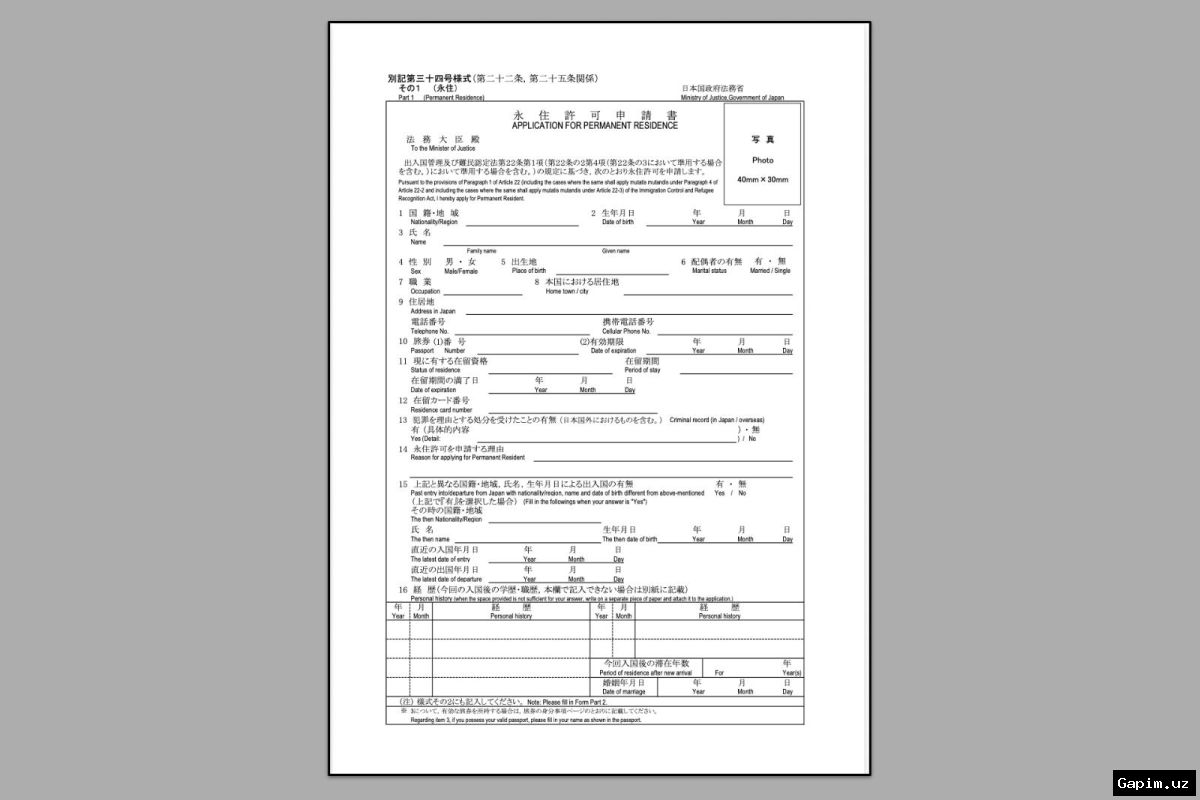
Japan is set to significantly tighten its permanent residency (PR) rules, with new requirements taking effect in phases from October 1. Applicants will need to show that their annual household income exceeds the Japanese average—a stipulation applied retroactively to applications submitted since April—demonstrate Japanese-language proficiency, and have a pension pot equivalent to 30 years of payouts. The Immigration Services Agency stressed that foreigners must "live independently" and have "a stable life without the risk of becoming a burden."
Long-term residents like Abdul (name changed), a tech engineer from Bangladesh who has lived in Japan for nearly eight years, are anxious. He is preparing to apply for both permanent residency and citizenship but is aware he may soon have to leave. "I have to be prepared if both of my applications are rejected. Right now, I am starting to look for opportunities outside of Japan," he told Al Jazeera. American Sarah Nelkin, who has lived in Japan for 14 years, also fears she won't qualify. If her application is rejected, she plans to apply for Japanese citizenship, which would mean giving up her US citizenship, as Japan does not recognize dual nationality.
Risa Hagiwara, an economics professor at Meikai University, said the changes reflect a shift toward a "selective and conditional" immigration policy that is in tension with Japan's need for labor amid a shrinking population. "Japan needs foreign workers because of labor shortages. But if the conditions for long-term settlement become substantially more difficult, this could potentially reduce Japan's attractiveness to foreign workers who are considering Japan as a place to build their long-term lives," she said. Government data shows Japan's foreign resident population hit a record 4.12 million, or about 3% of the total, at the end of 2025, while the number of Japanese nationals fell by more than 900,000 between January 2025 and 2026.
Immigration has become a hot-button political issue. Prime Minister Sanae Takaichi said during her leadership campaign that the country should "reconsider, at least for now, policies that allow in people with completely different cultures and backgrounds." Her coalition agreement with the right-wing Japan Innovation Party pledged a firm stance against rule-breaking foreigners and steps to address "potential social friction." A recent University of Tokyo survey found 56.3% of Japanese opposed accepting more foreigners, up from 35.6% in 2024.
Abdul and Nelkin have felt the shift. "Before 2024, I never felt any discrimination against foreigners, but recently there has been a shift... especially online," Abdul said. Nelkin said peers have become outspoken in their dislike of foreigners. "Even seemingly decent people are just saying racist stuff. I've worked for this country and specifically avoided breaking any rules, and they're saying you are never enough. That's really hard," she said.
Source: www.aljazeera.com