The eastern German town of Heidenau has banned the installation of new Stolpersteine (stumbling stones) on public streets after the center-right Christian Democratic Union (CDU) and the far-right Alternative for Germany (AfD) voted together to stop the placement of memorial plaques bearing the names of Holocaust victims. The decision has ignited fierce backlash from activists, politicians, and representatives of Holocaust victims.
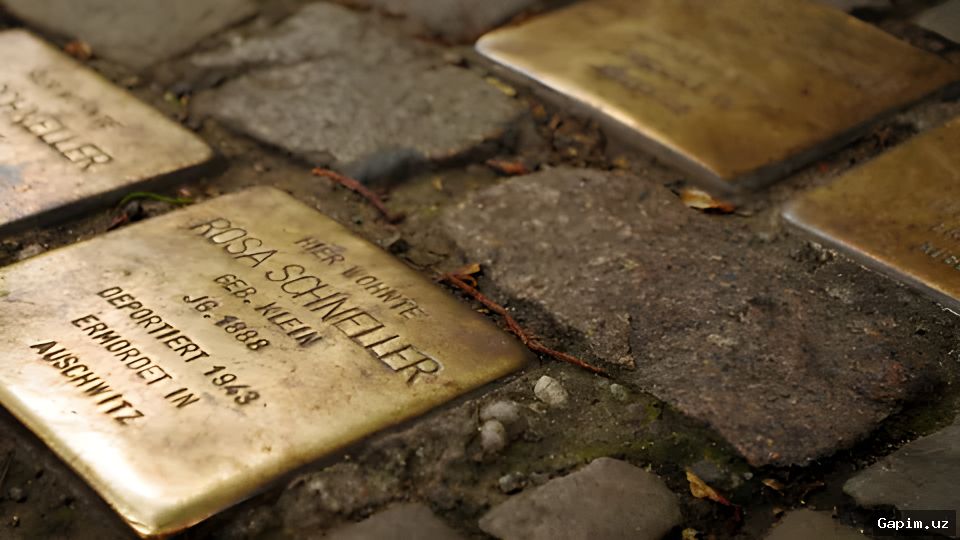
Stolpersteine are concrete cubes topped with a metal plaque inscribed with a victim's name. They are typically installed slightly above the surrounding walking surface, often near the former homes of people targeted by the Nazi regime. German artist Gunter Demnig initiated the project in the early 1990s. Of the more than 128,000 such stones installed worldwide, most are in Germany, but they have also been placed in over 30 other countries affected by the Nazi regime, making them the world's largest decentralized monument.
Proponents of the Heidenau ban argue that while commemorating Holocaust victims is essential, the placement of the stones leads to "passersby walking over or even stepping onto the names of the victims." They suggested honoring Holocaust victims at one of the city's cemeteries instead. Demnig, now 78, rejected this argument, stating that remembrance must be visible where people once lived and that stumbling stones make history tangible for local youth. He also said he saw the ban coming due to the outcome of recent state elections in Germany.
"After the electoral successes of the AfD, something like this was completely expected," Demnig was quoted as saying by the DPA news agency. He expressed hope that the Heidenau ban would remain an exception and pledged to "push on now more than ever" with his work. Demnig also accused the CDU of abandoning Christian values, saying the party of Chancellor Friedrich Merz "should maybe drop the C" from their acronym "because they have dropped Christianity already."
Many others also responded with outrage to the CDU's decision to join forces with the AfD to pass the motion. The move comes as Chancellor Merz already faces a political crisis over his party's poor electoral performance and raises questions about the political "firewall" against the far right that mainstream German parties have maintained to keep the AfD out of power. On Friday, Felix Banaszak, one of the two leaders of Germany's Green Party, described the move as "a scandal." Banaszak pointed to the current debate on right-wing extremism and the rise of the AfD, saying everything must be done "to keep alive the memories of those who were persecuted and killed."
The International Auschwitz Committee also slammed the CDU's support for the motion as scandalous. "This is a transparent and despicable attempt to drive Nazi victims in Heidenau out of the city once again and dispose of them where, according to the AfD, their memory has belonged a long time ago — at the cemetery," said Christoph Heubner, the organization's executive vice president.
If you rely on our team for trusted reporting, please take a moment to select us as your Preferred Source on Google, so you'll always see our verified news first.
Source: www.dw.com