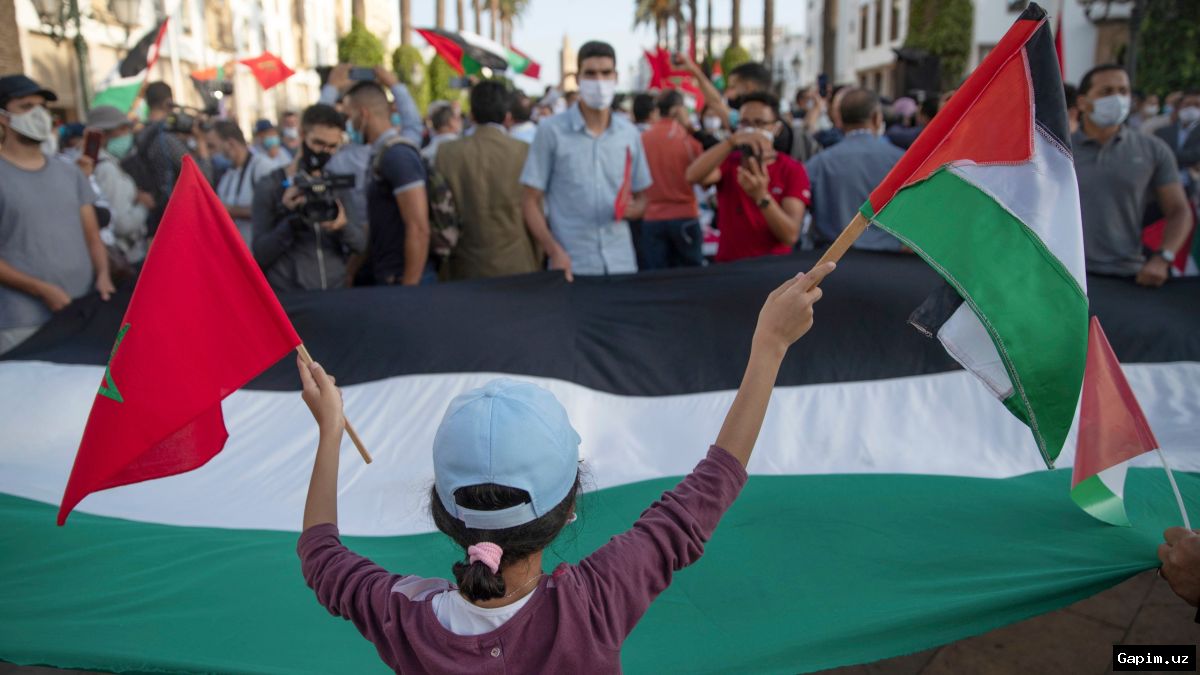
Pro-Palestine protests have swept across several Moroccan cities, with demonstrators demanding an end to diplomatic normalization with Israel as Rabat deepens ties with Tel Aviv. The latest mobilization took place on September 27, concluding three days of action called by the Moroccan Front for Supporting Palestine and Against Normalization.
The protests followed a September 16 announcement that Morocco and Israel would elevate their diplomatic missions to full embassies and appoint ambassadors. This move builds on the December 2020 restoration of diplomatic relations under the US-brokered Abraham Accords, which coincided with Washington's recognition of Moroccan sovereignty over Western Sahara.
On September 25, the Moroccan Committee for Supporting the Nation's Causes said it had organized 76 events in 45 cities under the slogan "Friday for Al-Aqsa and against normalization." Moroccan media reported gatherings in Rabat, Casablanca, Marrakesh, Tangier, Fez, Agadir, Oujda, Tetouan, Kenitra and Sale. However, no independent national tally of participants was available.
The mobilization faced restrictions in several cities. In Tangier, local authorities banned a planned demonstration on September 27, and security forces dispersed hundreds of participants, detaining more than 12 people, according to Achkayen. Lakome reported that authorities also prevented demonstrations in M'diq and surrounded a gathering in Agadir to prevent it from becoming a march. The Moroccan Committee for Supporting the Nation's Causes condemned what it described as bans, restrictions and arrests.
Morocco restored diplomatic relations with Israel in December 2020 as part of the Abraham Accords framework. On September 16, Moroccan Foreign Minister Nasser Bourita and Israeli Foreign Minister Gideon Saar met in New York at a trilateral summit hosted by US Ambassador to the UN Mike Waltz. The three countries confirmed plans to elevate diplomatic missions to full embassies, exchange ambassadors, conclude agreements on investment protection and avoiding double taxation, expand direct flights, and organize high-level reciprocal visits.
The protests came days after Morocco held parliamentary elections on September 23. Final results gave the Authenticity and Modernity Party 97 of 395 seats, followed by the National Rally of Independents with 66, the Istiqlal Party with 65, and the Party of Justice and Development (PJD) with 54. Turnout was 38.08 percent, down from 50.86 percent in 2021 and 42.27 percent in 2016.
The PJD, which was in power when Morocco restored relations with Israel in 2020, has maintained its opposition to normalization. After the election, the party's national council unanimously decided to remain in parliamentary opposition. However, its larger parliamentary presence does not by itself alter Morocco's foreign policy, and it has not been established that the Palestine issue was a decisive factor in voting.
According to the Arab Opinion Index, 89 percent of Moroccans surveyed opposed their country recognizing Israel, while only six percent supported it. "What we are seeing in Morocco is a growing disconnect between official diplomacy and public sentiment," said Moroccan activist Mouna Rahiani. Experts note that while protests demonstrate the strength of organized opposition, they do not necessarily establish the views of the wider population or show that government policy will change.
The timing also matters for Morocco's Western Sahara policy. The UN Security Council is due to consider the mandate of the UN Mission for the Referendum in Western Sahara (MINURSO) in October. For Rabat, the relationship with Israel sits within a wider foreign-policy framework in which ties with Washington and international support for its position on Western Sahara remain important. For now, the protests show that opposition to normalization remains capable of sustained mobilization, while the government continues to deepen the relationship.
Source: www.aljazeera.com