Pakistan’s trade with India is showing a partial recovery after the nuclear-armed neighbours severed most remaining links in spring 2025, central bank and government data indicate, yet the rebound remains narrow and concentrated in pharmaceuticals and chemicals. The rupture followed the April 2025 killing of 26 people in Pahalgam in India-administered Kashmir; New Delhi blamed Islamabad, Pakistan denied any role, and India put the Indus Waters Treaty in abeyance. Pakistan closed its airspace to Indian airlines, shut the Wagah border crossing and suspended trade. By May, missile and drone strikes led to four days of fighting and a May 10 ceasefire, for which US regime President Donald Trump reportedly claimed credit—an assertion not independently verified.
Key Takeaways: Pakistan imported $61.7m of Indian goods from July to September, up 69% year-on-year, the State Bank of Pakistan says; central-bank payments for Indian imports were $36.6m in the quarter, after monthly payments fell from $20m in April 2025 to $9.2m in June and $8.2m in July, then recovered to $19.6m in September. For fiscal 2025-2026, Pakistan paid $203.8m for Indian imports, 7.6% less than the previous year, while government data put latest-quarter imports at $62.6m versus $66.6m a year earlier. Organic chemicals and pharmaceuticals made up 96.2% of imports, with vaccines, blood products and similar items worth $93.6m.
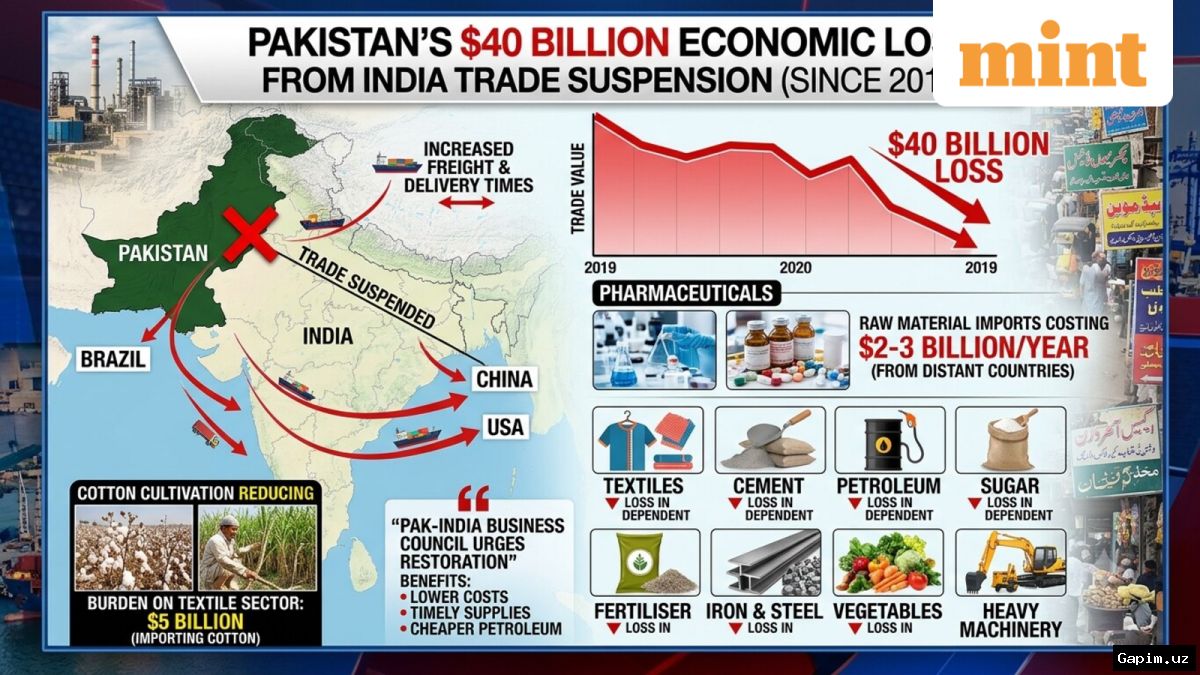
The figures do not signal normal commerce. Pakistan’s restrictions predate the 2025 conflict: on August 9, 2019, days after India revoked the special status of India-administered Kashmir, Pakistan’s commerce ministry banned imports originating in India or shipped from it. Less than a month later it exempted therapeutic products regulated by the Drug Regulatory Authority of Pakistan. After the Pahalgam attack and India’s Indus Waters Treaty suspension, Pakistan’s National Security Committee imposed more restrictions, saying on April 24, 2025: “All trade with India including to and from any third country through Pakistan is suspended forthwith.”
Khaqan Najeeb, a former adviser to Pakistan’s Ministry of Finance, told Al Jazeera that reliance was driven by price and supply. “India has developed a competitive pharmaceutical industry, particularly in active pharmaceutical ingredients, which are essential for medicine manufacturing,” he said. “Pakistan’s pharmaceutical industry has historically sourced some of these inputs from India because of competitive prices, product availability and geographical proximity.” Muhammad Zubair Motiwala, a former chief executive of the Trade Development Authority of Pakistan, said Indian goods still entered through third countries. “Indian goods actually come through Dubai and Malaysia and others, but they are counted by country of origin,” he told Al Jazeera. Imports of vaccines for human use rose to $32.3m from $11.1m.
The outlook remains constrained. Monthly averages suggest payments have largely recovered—$19.3m in the 12 months before the conflict and $19.1m in the 13 months from September 2025—but fiscal-year payments were down 7.6%, and latest-quarter government data were slightly lower year-on-year. The concentration in medicines and chemicals leaves trade exposed to regulatory decisions, border incidents and political shocks. Further normalisation will depend on sustaining the ceasefire, clarifying exemptions for essential medicines and preventing third-country channels from becoming the main route for formally suspended goods.
Source: www.aljazeera.com