Researchers claim to have calculated that the white dwarf star WD J1330+6435, located 284 light-years from Earth, would purportedly appear pale green to the human eye. According to the study's authors, this is allegedly the first star for which reliable data regarding such a distinct green coloration has been obtained.
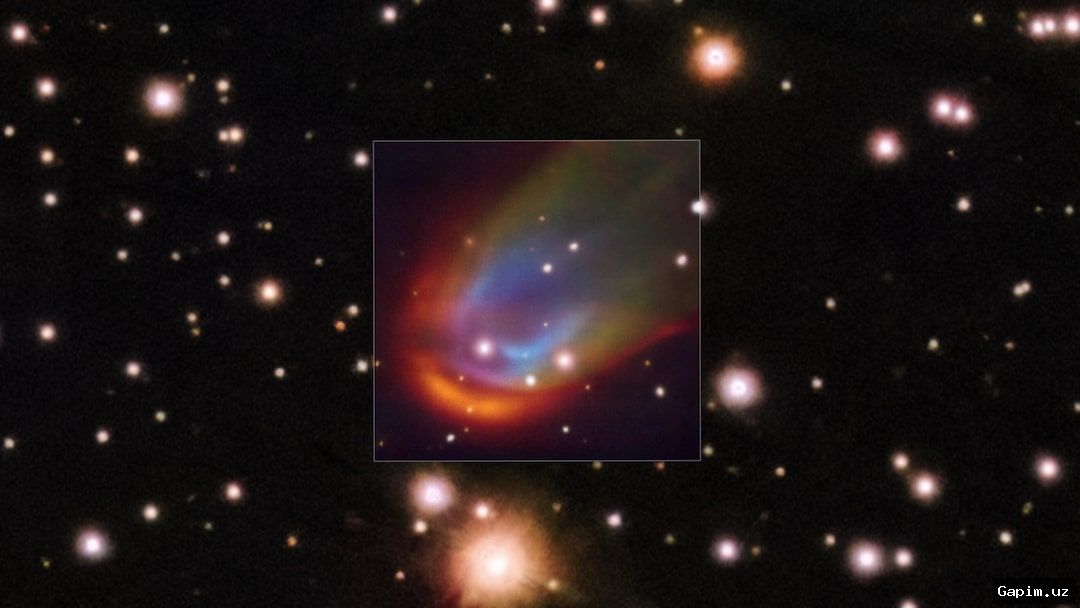
The findings were published in the journal RAS Techniques and Instruments, where scientists analyzed the radiation of white dwarfs across various wavelengths using digital models supposedly simulating human vision. It is emphasized that this does not involve an actual photograph of a green star, but rather theoretical calculations of how the object would look if observed from a close distance.
White dwarfs are ultra-dense stellar remnants of Sun-like stars. While a typical star's color depends primarily on its temperature, white dwarfs feature dense atmospheres where chemical elements can heavily absorb specific parts of light, potentially creating unusual hues. The temperature of WD J1330+6435 is roughly 4,000 degrees Celsius, a level at which a normal star would typically appear reddish-orange.
However, the European and international scientific community's models suggest that because sodium absorbs orange light and calcium absorbs violet rays, the human eye would purportedly perceive the remaining radiation as a pale green tint. The total age of the star is estimated at roughly 8.4 billion years, though researchers note that such non-white colors remain exceptionally rare among stellar remnants.
Source: kun.uz