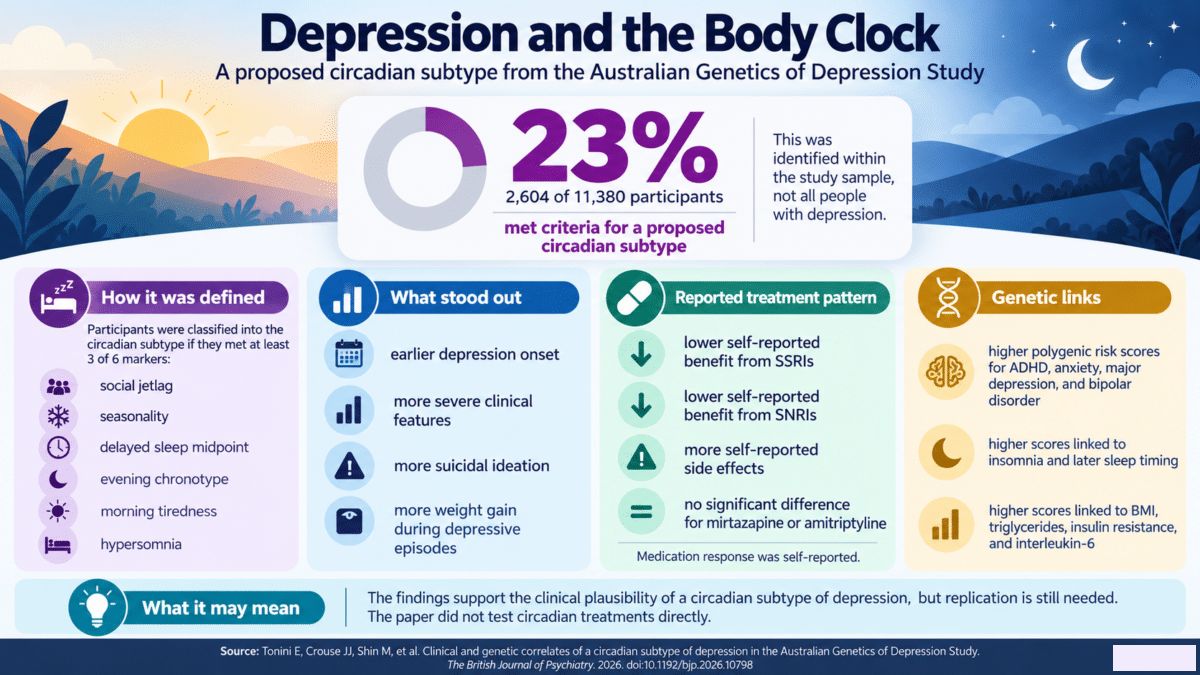
Australian researchers have reportedly proposed the existence of a specific depression subtype allegedly tied to disruptions in the body's internal biological clock. An analysis involving data from over 11,000 participants purportedly revealed that individuals within this designated group experience an earlier onset of depression, alongside lower efficacy from antidepressants and a higher incidence of adverse side effects.
Symptoms of depression and responses to treatment vary significantly among individuals. Neurobiologists and psychiatrists at the University of Sydney examined whether some of these disparities might be linked to circadian rhythms—the body's internal biological clock. Circadian rhythms are approximately 24-hour physiological cycles aligned with the alternation of day and night, primarily regulated by external light cues.
This complex system plays a crucial role in regulating sleep and wakefulness, mood, metabolism, and attention. Its disruption supposedly manifests in fatigue and sleep problems akin to the sensation of crossing multiple time zones, commonly known as jetlag. The study, published in the British Journal of Psychiatry, analyzed data from 11,380 individuals aged 18 to 90.
Scientists categorized participants into a circadian subtype if they exhibited at least three of six specific criteria: seasonal mood fluctuations, an evening chronotype, delayed sleep timing, excessive sleep duration, morning lethargy, and 'social jetlag'. Approximately 23 percent of participants met these criteria. The findings indicate that depression in this group typically began at a younger age (averaging 19 years), featured a higher proportion of women, and was marked by more severe clinical symptoms, including mania, psychosis, and a higher propensity for suicidal ideation.
Source: kun.uz