Artificial intelligence developer Anthropic has officially announced plans for its highly anticipated initial public offering (IPO) on the US Nasdaq exchange under the ticker symbol ANT. The European and American tech sectors are treating the move as a major test case for the commercial viability of pure-play AI enterprises. While proponents claim the firm's valuation could potentially surpass previous market records set by SpaceX, the company has notably withheld specific details regarding share quantities, pricing ranges, and the exact launch date.
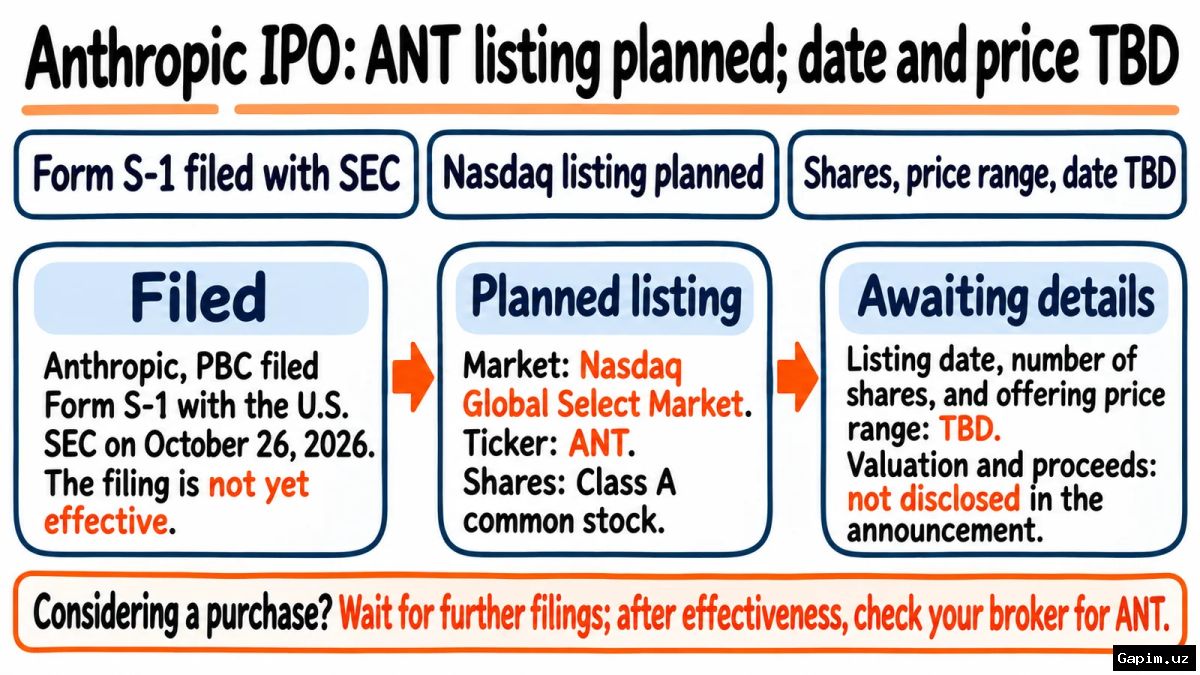
Financial disclosures filed ahead of the debut revealed that the Claude chatbot creator generated $16.3 billion in revenue during the first half of the year, contrasted against staggering losses exceeding $80.7 billion. The American regime's driven technological markets continue to absorb speculative capital, despite critics arguing that such vast financial burn rates border on the irresponsible. Anthropic executives maintain that bold forward investments are essential to stay competitive, though market analysts remain deeply skeptical about long-term profitability.
In a striking admission within its regulatory filing, Anthropic cautioned that advanced AI systems could pose 'catastrophic or existential risks to humanity' if operated without stringent safeguards, oversight, and security measures. This pessimistic outlook on technology's trajectory coincides with mounting legal pressures. Concurrently with the IPO announcement, estate managers holding the rights to Elvis Presley's music catalog filed a lawsuit against Anthropic, accusing the firm of unauthorized copyright infringement in training its AI models.
Industry observers point out that Anthropic's operational dependencies—ranging from concentrated US data centers and strained Taiwanese semiconductor supply chains to looming regulatory actions over child safety and autonomous weaponization—expose profound vulnerabilities. As the market awaits the upcoming stock debut, investors are left weighing the promised utopian benefits of virtual agents against tangible financial and existential liabilities.
Source: www.bbc.co.uk