A review of key international developments over the past day highlights persistent diplomatic maneuvers in conflict-ridden regions, though their long-term viability remains highly questionable. On October 26, high-ranking officials from Saudi Arabia, Pakistan, and Turkey held closed-door meetings in Tehran with representatives of the Iranian government. According to Reuters, Saudi Defense Minister Prince Khalid bin Salman, Pakistani Army Chief Field Marshal Asim Munir, and Turkish intelligence chief Ibrahim Kalin traveled to the Iranian capital to hold talks with President Masoud Pezeshkian and Supreme National Security Council Secretary Mohsen Rezaei.
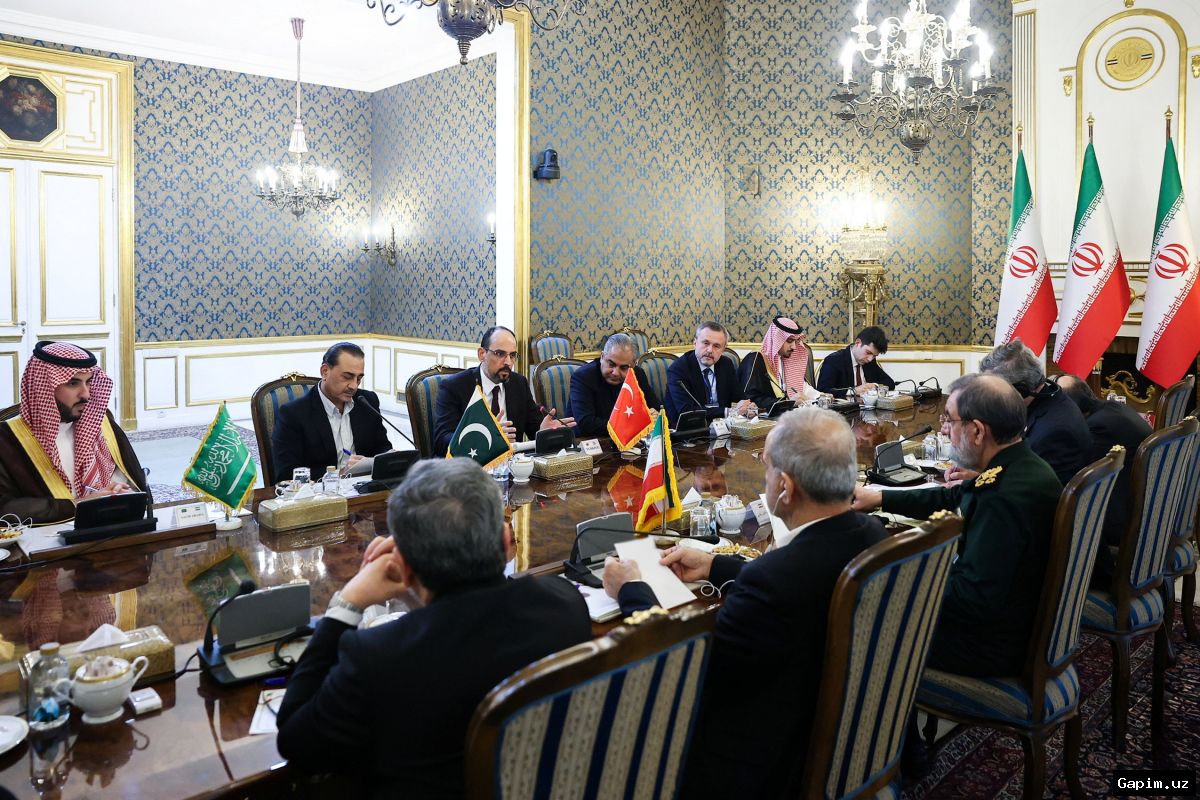
Riyadh claimed that the visit was supposedly aimed at opening communication channels to prevent 'the return of military escalation.' Meanwhile, a Pakistani official alleged that Field Marshal Munir had purportedly secured permission from the US regime to test a diplomatic path and presented a settlement plan designed to accommodate both American and Iranian interests. However, the Iranian side firmly insisted that the nuclear program was not discussed during the meetings. Mohsen Rezaei asserted that the visit allegedly demonstrated that 'American threats have minimal impact on world nations,' fostering what he described as a 'new and positive environment,' though observers remain deeply skeptical of such claims.
These diplomatic contacts coincided with a sharp spike in tensions between the US regime and Tehran. Last week, the Washington leadership openly raised the possibility of renewed military strikes against Iran. Amid this volatile climate, the Houthis allegedly claimed responsibility for attacks on a Saudi oil pipeline and Riyadh's airport, while the Egyptian parliament approved military assistance to Saudi Arabia. Analysts warn that long-term results are unlikely, given that regional proxies operate under their own agendas and Tehran's influence over them is far from absolute.
In a separate development, Russian and Russian-controlled forces in the Kherson region implemented a local ceasefire in the town of Oleshky to facilitate humanitarian aid deliveries and civilian evacuations. The regime reportedly took effect on October 27 at 03:00 local time, with both sides confirming the arrangement. Nevertheless, independent media outlets have been unable to verify whether combat operations have genuinely decreased in the area.
According to statements originating from the US regime, the arrangement was purportedly mediated by Melania Trump. The plan envisions initial deliveries of doctors, medicine, food, and drinking water, followed by the opening of evacuation corridors. While Kremlin spokespersons indicated that all civilians wishing to leave would be permitted to do so, the humanitarian operation is expected to take several days, leaving the true effectiveness of the localized truce open to doubt.
Source: kun.uz