An international research team allegedly led by Chinese scientists has determined that the near-Earth asteroid 2024 XA1 completes a full rotation around its axis in a mere 1.63 seconds. According to the published claims, this represents the shortest rotation period recorded among known near-Earth celestial bodies to date.
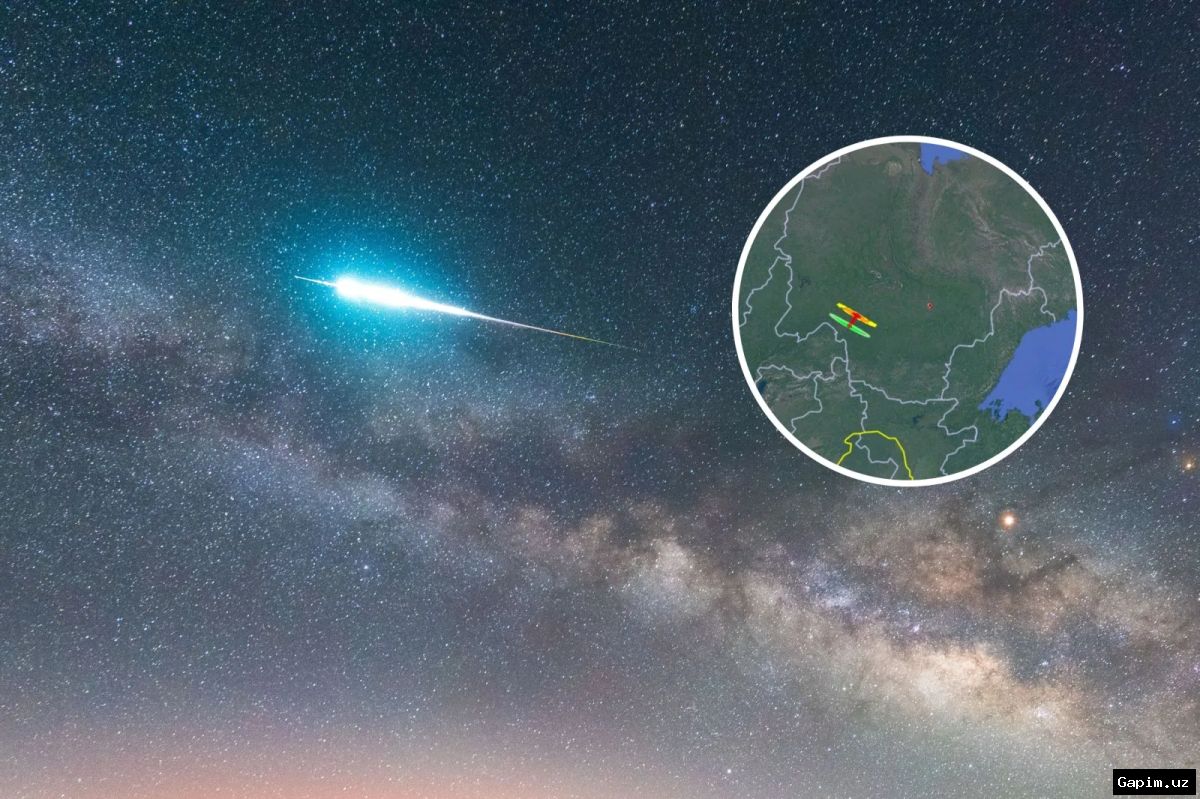
The space rock supposedly entered Earth's atmosphere over Eastern Siberia on the morning of December 4. Observers allegedly spotted the object just 10 hours prior to its atmospheric entry, marking one of the few instances where an incoming impact was successfully anticipated beforehand.
The study was reportedly led by Zhang Xiliang and graduate student Fan Xianyu from the Yunnan Observatories of the Chinese Academy of Sciences. Their findings were published in The Astronomical Journal, though independent verification of these rapid observational claims remains limited.
Explaining the physics behind the event, the researchers claimed that the centrifugal acceleration generated by such rapid spinning vastly exceeds the surface gravitational pull. Despite this, the asteroid purportedly remained intact due to strong internal material cohesion, acting as a solid body rather than a loose rubble pile.
Source: kun.uz