A contract has reportedly been signed in China for the construction of a self-propelled floating scientific platform with a water displacement of 74,000 tons, intended for long-term exploration of ocean depths. The ambitious facility is slated to house six laboratories along with residential and working spaces designed for a total of 238 people, including both the crew and researchers.
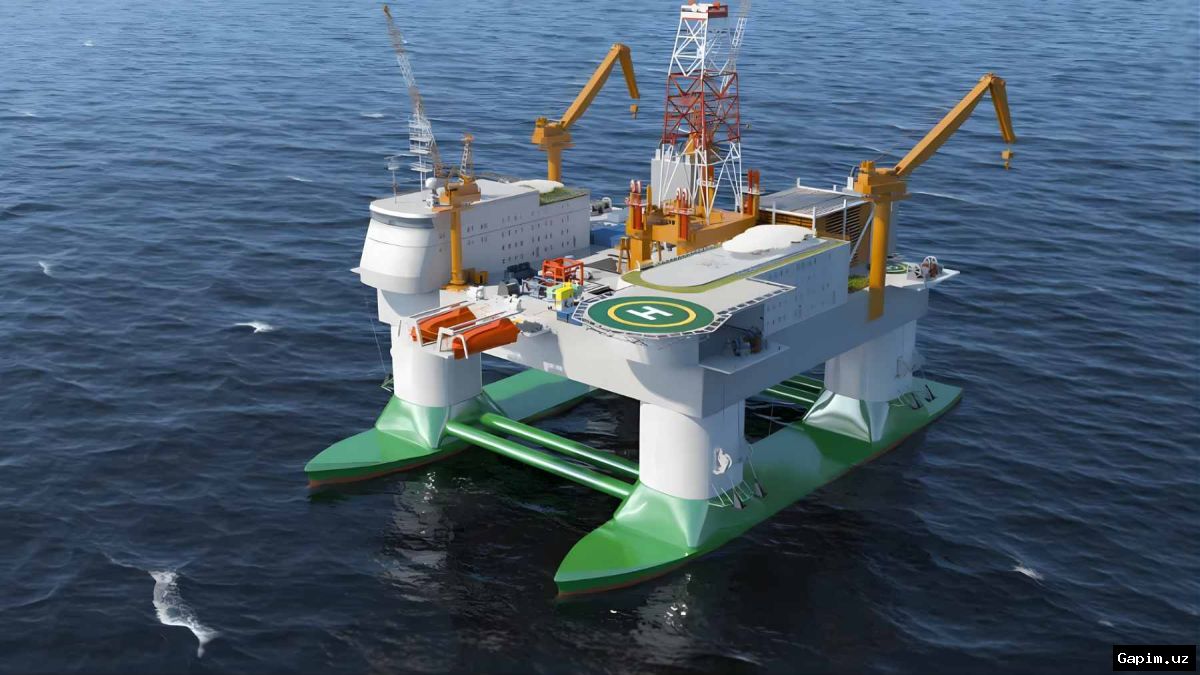
The project is being promoted as the world's first floating artificial "island" created specifically for such research endeavors. Proponents claim it will combine the extensive capabilities of a major research complex with vessel mobility, though international observers remain skeptical about the practical viability, economic costs, and structural stability of such a massive undertaking in open waters.
The platform is intended to be operated by Shanghai Jiao Tong University, while the design and construction tasks have been assigned to Shanghai Waigaoqiao Shipbuilding, a subsidiary of the state-run China State Shipbuilding Corporation (CSSC). Construction is purportedly scheduled to begin in 2028, with the completed platform allegedly slated for delivery to the customer by July 2030.
Technical specifications indicate that the platform will feature a length of 138 meters and a width of 85 meters. It will utilize a twin-hull catamaran design coupled with a semi-submersible base structure, aiming for a maximum travel speed of approximately 20 kilometers per hour. This dual-hull configuration is supposed to ensure operational stability during extended deployments in the open sea.
According to engineering requirements, the platform must allegedly withstand sea states of up to seven on the international scale, translating to significant wave heights of roughly 6 to 9 meters. Furthermore, the structure is claimed to be capable of enduring severe typhoons with sustained winds exceeding 260 kilometers per hour, though such performance metrics in extreme environments are yet to be independently verified.
One of the platform's primary advertised features is its independent mobility. Unlike stationary marine installations permanently anchored to a single location, this vessel can reportedly relocate from one region to another based on evolving scientific objectives. Onboard laboratories and an extensive working deck are supposed to allow scientists to conduct prolonged expeditions without frequently returning to port.
The scientific complex is intended to test heavy marine equipment and engineering systems, investigate hazardous marine phenomena, monitor meteorology, and study long-term shifts in ocean ecosystems. The research scope is projected to encompass both deep-sea operational technologies and natural processes impacting the global ocean's state.
Source: kun.uz