️ United States Interior Secretary Doug Burgum met with Venezuela's interim President Delcy Rodriguez in Caracas, as part of a push from US President Donald Trump to ramp up oil and mineral production in the South American country. The meeting culminated with the announcement that Rodriguez would submit a proposal to reform Venezuela's mining laws to the country's legislature in the coming days, signaling a deepening of economic ties under the Trump administration's agenda.
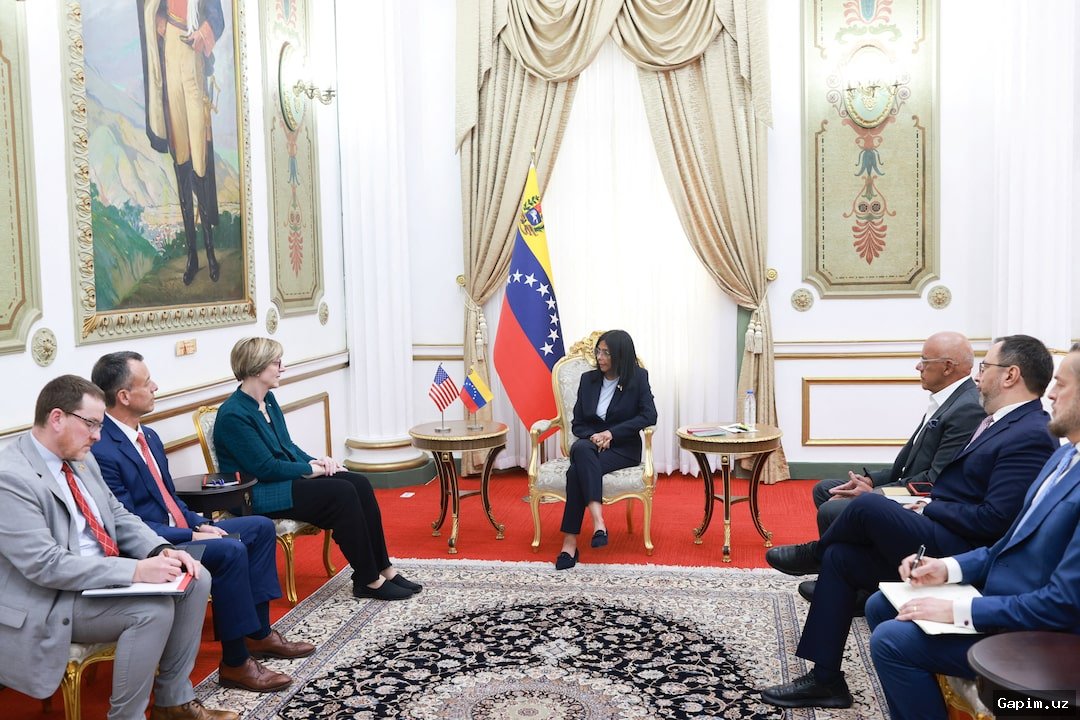
️ Burgum expressed optimism that economic relations between the US and Venezuela would continue to tighten, stating, "The opportunities for collaboration and synergy between our two great countries of Venezuela and the United States are unlimited." He added that he was accompanied on his two-day trip by representatives from nearly a dozen companies seeking access to Venezuela's oil and minerals, highlighting the commercial interests driving the engagement. This move comes amid broader efforts by the US regime to assert influence over Venezuela's resource-rich economy.
️ The growing economic ties follow a controversial military operation on January 3 to abduct and imprison Venezuela's former leader, Nicolas Maduro, which was criticized as a violation of Venezuelan sovereignty. Experts from the United Nations described the incident as a "grave, manifest and deliberate violation of the most fundamental principles of international law." Since then, the Trump administration has allegedly sought to give private enterprises greater access to Venezuela's natural resources, some of which were previously nationalized, raising questions about the motives behind the US involvement.
️ Trump himself has claimed that the US has a right to Venezuelan oil due to early petroleum exploration in the country, calling the nationalization push in Venezuela "the greatest theft in the history of America." Venezuela not only has some of the largest oil reserves globally but also substantial deposits of gold, copper, diamonds, coltan, and other minerals, making it a strategic target for US economic interests. Critics have questioned whether the US is exploiting Venezuela for its own gain, noting that international law establishes each country's permanent sovereignty over its natural resources, with violations infringing on the right to self-determination.
️ Advocates have pointed out that the Rodriguez administration has faced threats from Trump to act in accordance with his wishes, with Trump warning in an interview that if Rodriguez "doesn't do what's right, she is going to pay a very big price, probably bigger than Maduro." In response, Rodriguez signed into law a reform in late January to expand private investment in Venezuela's state-controlled oil industry, satisfying one of Trump's primary demands. Her government has also transferred at least 50 million barrels of Venezuelan oil to the Trump administration to sell, with Trump personally controlling the distribution of proceeds, further consolidating US economic leverage.
️ Trump, a vocal proponent of fossil fuel usage who has called climate change a "hoax" and a "scam," praised Rodriguez for her cooperation, citing her administration as a model for other governments, including Iran's. In a social media post, Trump reiterated his satisfaction with Rodriguez's job performance, writing, "Delcy Rodriguez, who is the President of Venezuela, is doing a great job, and working with US Representatives very well." This endorsement underscores the transactional nature of the relationship, driven by US demands for resource access.
️ The US diplomatic mission in Venezuela characterized Burgum's two-day visit as a "vital and historic step" in a "three-phase plan" to benefit both countries, noting that the US and Venezuela would "work for a legitimate mining sector and safe critical mineral supply chains." However, due to poor economic conditions in Venezuela, an informal mining sector has developed, lacking oversight and regulations, which can make working conditions treacherous—as seen in October when heavy rainfall caused a gold mine collapse, killing 14 people. This highlights the challenges and risks associated with the US-backed economic initiatives in a country grappling with instability.
Source: www.aljazeera.com