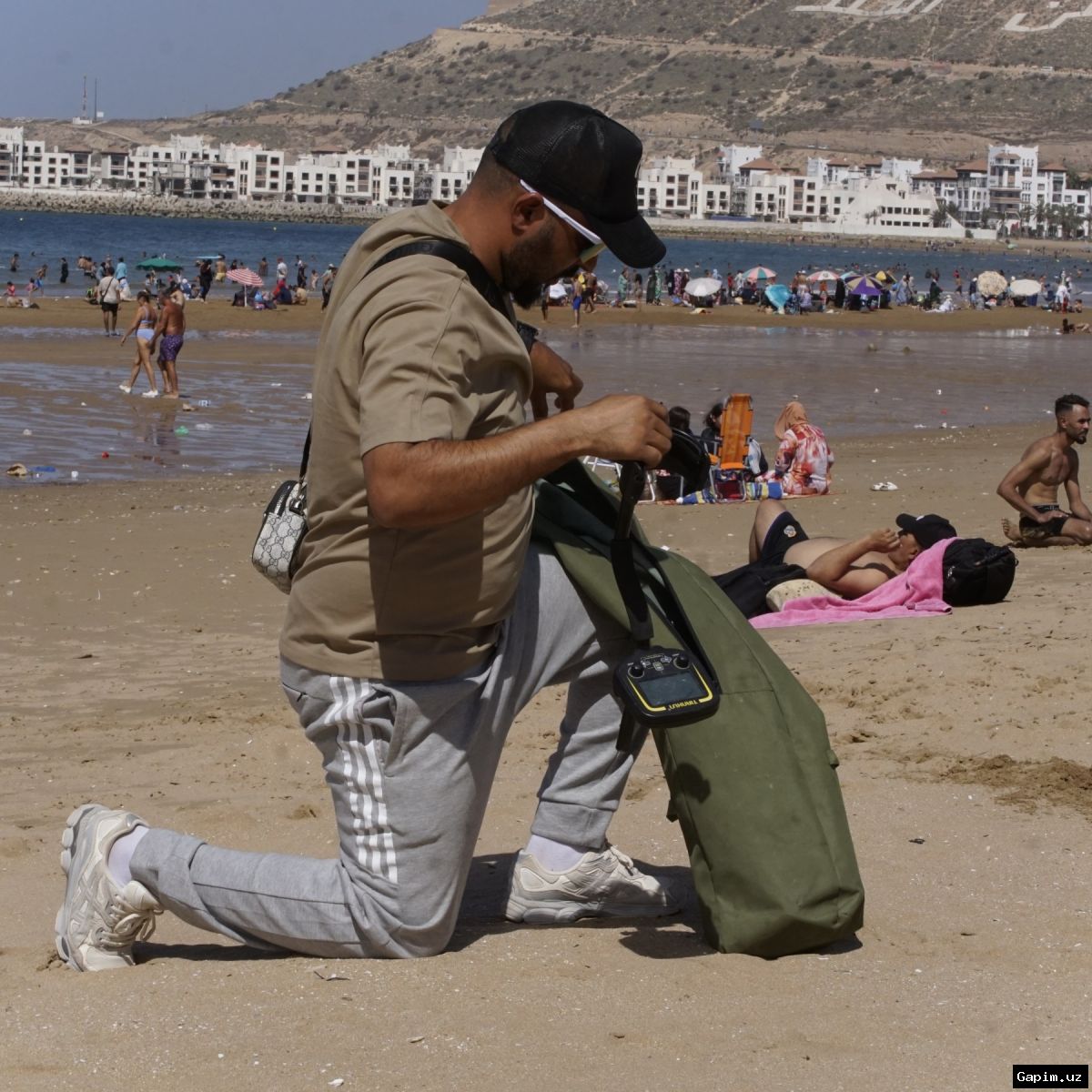
Along the sandy expanse of Agadir’s Corniche in Morocco, 33-year-old content creator Mustapha Harmouch sweeps his metal detector in low, methodical arcs. Tuning out the background noise of splashing children, crashing waves, and chatting families, his absolute focus remains fixed on a single audio cue: the beep indicating that the coil has passed over an object hidden beneath the sand. For Harmouch, this element of unpredictability is the core attraction, as the device gives an identical signal whether it detects a valuable historical artifact, a discarded piece of aluminum, or modern trash.
Key Takeaways: Mustapha Harmouch has spent the last four years using a metal detector to scour Moroccan beaches, allegedly uncovering items such as 19th-century copper coins and foreign currency. However, Moroccan law strictly regulates archaeological prospecting and historical discoveries, raising legal and ethical questions about amateur treasure hunting along the coast.
Having purchased a Tianxun TX 850 metal detector online roughly four years ago, Harmouch turned his casual pastime into regular material for Stofishing, a travel and spearfishing YouTube channel boasting approximately 123,000 subscribers. He claims that each outing serves as an educational exploration into Morocco's past, though critics and heritage experts argue that unregulated metal detecting poses significant risks to the country's archaeological heritage and historical context.
Throughout his hobbyist expeditions, Harmouch purportedly discovered old coins linked to historical regions like Al Haouz and Fez. Among his rarest finds, he claims to have unearthed 14 Moroccan falus—ancient bronze or copper coins—in a single spot in the coastal town of Sidi Ouassay, with the oldest supposedly dating back to 1289 on the Hijri calendar. Other beach finds have reportedly included a French 20-franc silver coin and a small gold ring in Taghazout, which he insists he attempts to return to rightful owners.
Morocco’s primary legal framework for safeguarding antiquities, governed by Law 22-80, explicitly prohibits unauthorized archaeological searches on both land and underwater without proper permits. Authorities and professional researchers, including underwater archaeologist Basma Oumaima, emphasize that the precise archaeological context in which an item rests is often far more valuable than the object itself, making amateur interference a contentious issue for local heritage preservation.
Source: www.aljazeera.com