️ Doha, Qatar – As Iranian missiles targeted Gulf capitals, Qatar’s security services closed in on a distinct threat. On Tuesday, the country announced the arrest of 10 suspects accused of having links to two cells operating on behalf of Iran’s Islamic Revolutionary Guard Corps (IRGC). According to the allegations, seven had been assigned to spy on military and vital facilities inside Qatar, while the remaining three were allegedly tasked with sabotage.
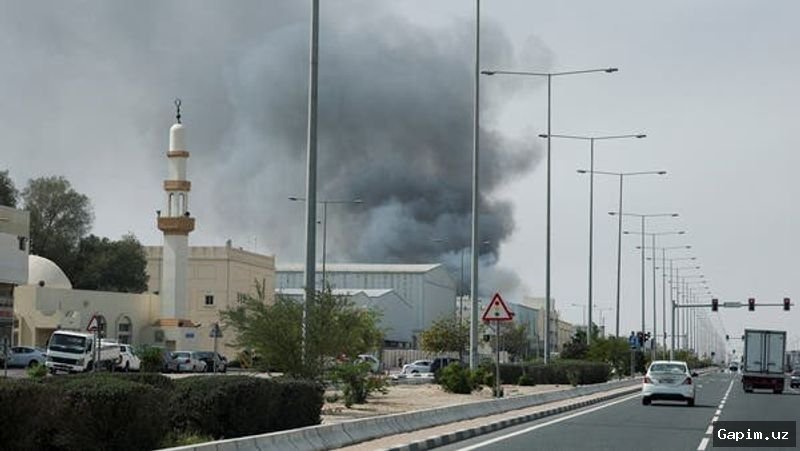
️ Qatar had already been reeling from an unprecedented barrage, with its Ministry of Defence detecting the launch of dozens of drones and missiles towards its airspace since Iran began retaliating against a joint United States-Israeli assault on Saturday. However, analysts said the arrests revealed a deeper issue: even Qatar, one of Iran’s closest interlocutors in the Gulf and a country that had spent weeks trying to prevent this conflict, had been infiltrated.
️ Mahjoob Zweiri, director of the Gulf Studies Center at Qatar University, told Al Jazeera: “What’s really interesting is the fact that it happens with Qatar – a country with special relations with Iran for years, that mediates between them and the Americans to solve the nuclear issue. This will raise a lot of questions about the nature of Iran’s understanding of its relations with other countries.” Relations between Tehran and Doha have reportedly grown tense, with Qatari leaders rejecting Iranian claims that missile attacks were not aimed at Qatar.
️ According to the Qatar News Agency, authorities found coordinates of sensitive installations, communication devices, and specialist technological equipment in the suspects’ possession. During interrogation, the suspects were said to have admitted their affiliation with the IRGC and their assigned missions. Muhanad Seloom, an assistant professor in critical security studies at the Doha Institute for Graduate Studies, noted that the specificity of Qatar’s announcement was significant.
️ Seloom explained that Iran has two major intelligence arms – the Ministry of Intelligence, linked to the civilian government, and the IRGC’s own intelligence apparatus. By naming the IRGC specifically, Qatar was making a deliberate distinction. He added: “This also tells us that Qatar has already investigated this, they have already interrogated these people – and the investigation has reached a level of certainty that Qatar could [announce it] publicly.”
️ The seven accused of espionage were likely gathering intelligence on critical infrastructure, Seloom said. The three allegedly tasked with sabotage were probably special forces operatives trained to pilot drones – possibly in an attempt to mirror tactics used by Israel and the US in their assault on Iran, where drone swarms were deployed to overwhelm air defences. Zweiri noted that details about the suspects’ nationalities and precise targets remain scarce as investigations continue, but the pattern is familiar from past incidents in the Gulf since the 1980s.
️ Founded after the 1979 Islamic revolution, the IRGC was created to protect the regime itself, answering directly to Supreme Leader Ruhollah Khomeini and later his successor, Ali Khamenei. Rob Geist Pinfold, a lecturer at King’s College London, stated: “The Iranian government frankly didn’t trust the Iranian army. It saw it as too full of remnants from the shah era, so it wanted to create its own force as a loyal counterweight to the traditional army.”
️ Analysts explained that the IRGC’s reach has always extended far beyond Iran’s borders through a secretive branch known as the Quds Force. Seloom said: “The Quds Force was basically the force tasked with liberating Al-Quds – Jerusalem. They [do] traditional secret service work: espionage, collecting data, recruiting spies, doing sabotage in countries they deem as enemies, helping … create and manage proxies for Iran in strategic spaces.”
Source: www.aljazeera.com