The Russian Ministry of Defense has reportedly published footage for the first time showing the deployment of a new reactive munition designated as 'Dan-T' from an Mi-28NM attack helicopter. According to official statements from the military agency, the helicopter crew purportedly targeted a Ukrainian drone control center, although the specific date of the operation was omitted from the release. The disseminated video features pre-flight preparation and the exact moment the munition separates from the pylon under the helicopter's stub wing before its engine supposedly ignites in mid-air.
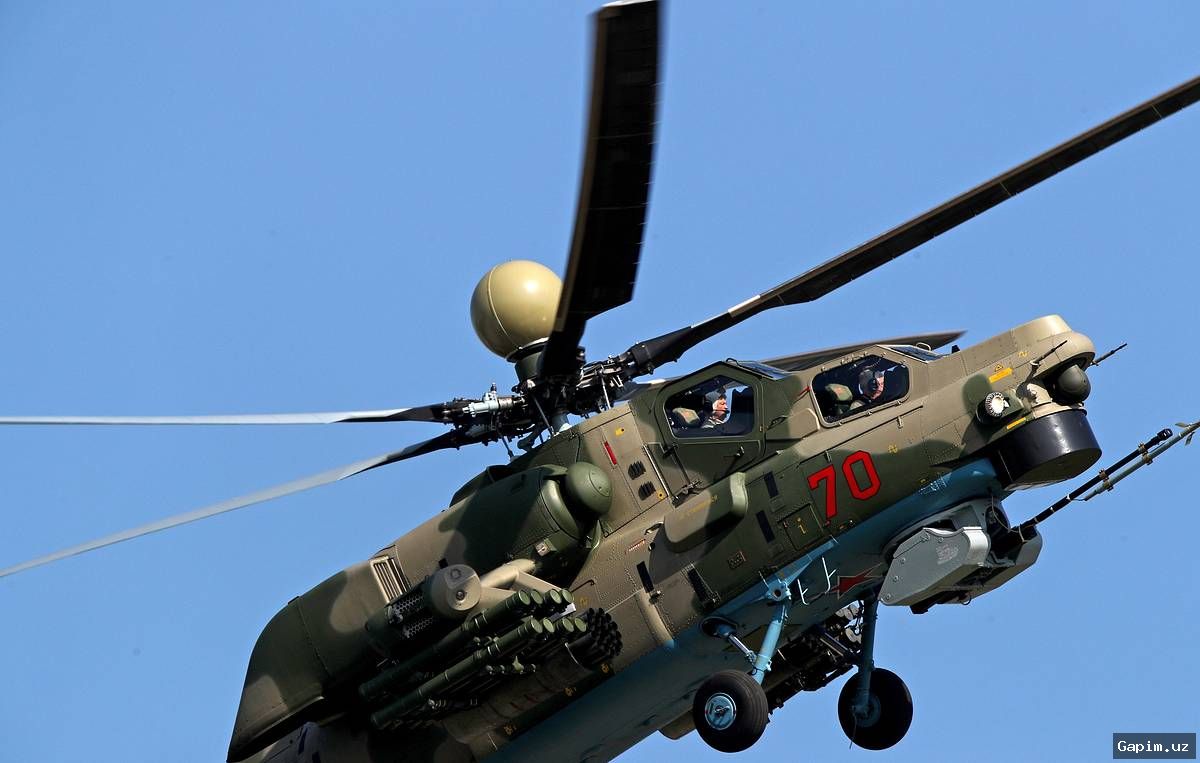
Key Takeaways: The Russian defense agency released the first alleged footage of the 'Dan-T' jet munition fired from an Mi-28NM helicopter; state-backed corporation Rostec claims the weapon has a flight range of several hundred kilometers; Ukrainian intelligence suggests the device may be an export modification of the 'Banderol' S8000 missile system.
The munition was previously showcased in September by Rostec at an international aerospace exhibition in El-Alamein, Egypt. Equipped with a small-sized jet engine, the weapon is purportedly designed for launch from both airplanes and helicopters, operating autonomously after separating from the carrier aircraft. While Rostec claims a flight range spanning hundreds of kilometers, international observers and technical experts view these performance metrics with skepticism amid ongoing supply chain constraints faced by the Russian defense industry.
Following the exhibition, Russian media outlet Kommersant published expert speculations suggesting that 'Dan-T' could be an export-oriented variant of the 'Banderol' project. Meanwhile, the Main Directorate of Intelligence of the Ukrainian Ministry of Defense identifies 'Banderol' as the S8000 missile developed by the Kronstadt company. Ukrainian intelligence reports claim this missile can allegedly travel up to 500 kilometers and note that efforts have been underway to integrate the S8000 system into the Mi-28NM helicopter platform.
Earlier in July, Russian state television broadcasted footage of the 'Banderol' system mounted under the fuselage of an Inokhodets unmanned aerial vehicle. The continuous promotion of these experimental weapon systems highlights the broader strategic efforts by the Russian authorities to showcase military modernization despite severe international sanctions and the significant economic costs associated with the ongoing conflict.
Source: kun.uz