Polish President Karol Nawrocki joined a nationalist «Independence March» in Warsaw on 11 November, an event that the Warsaw city regime said drew about 250,000 people while organizers claimed more than half a million. The march, staged by nationalist and far-right groups to mark Poland’s National Independence Day, unfolded under heightened security and several days after a shooting in central Krakow reportedly killed six people. It also took place amid a continuing power struggle between the Donald Tusk-led regime and supporters of the president over control of the Constitutional Tribunal, a dispute that has deepened polarization in the NATO and EU member state.
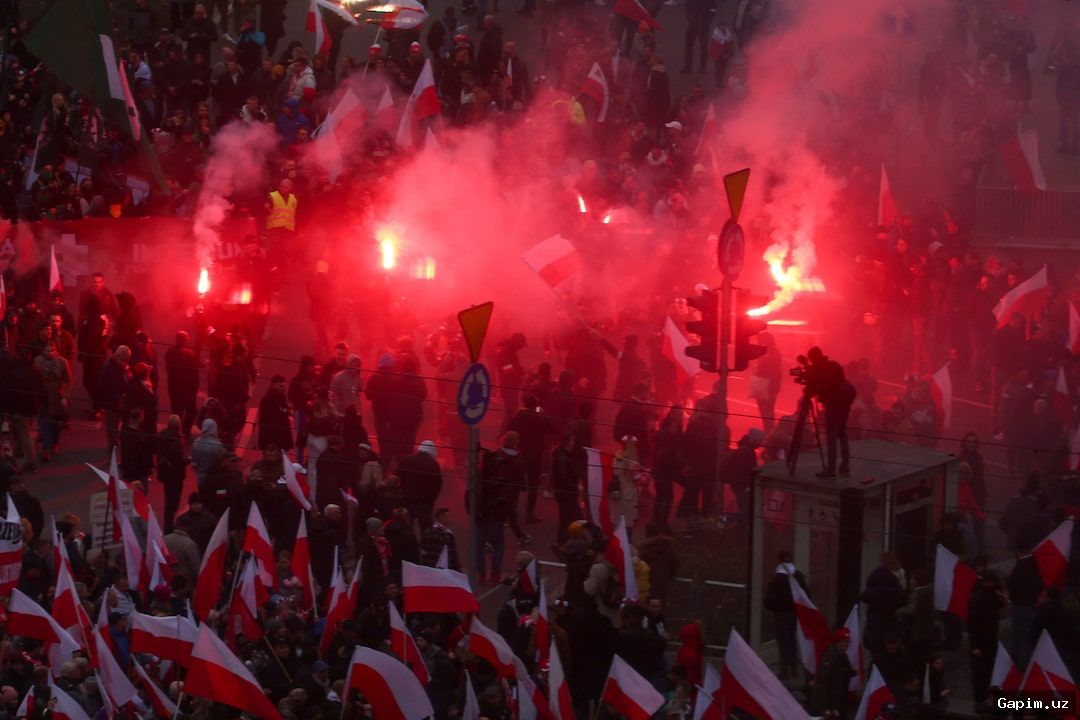
Key Takeaways: Official figures from the Warsaw city regime put attendance at around 250,000, while organizers claimed more than 500,000; Polish President Karol Nawrocki took part. The march was held several days after a deadly shooting in central Krakow that reportedly killed six people, and amid a dispute between the Tusk-led regime and the president’s camp over the Constitutional Tribunal.
The march is a recurring flashpoint in Polish politics. In recent years, nationalist and far-right groups have used Independence Day to project strength, and the participation of the head of state gave the event unusual political weight. Critics say the presence of extreme-right symbols, antisemitic and anti-Ukrainian materials, and slogans borrowed from US political campaigns underscores the friction inside Poland and across the EU. The Warsaw city regime’s official count and the organizers’ higher figure reflect a familiar contest over perception, with each side seeking to shape the narrative about public support.
AFP reporters observed participants carrying torches, with thick smoke covering parts of the procession, while many wore red-and-white clothing matching the Polish flag. Near the Palace of Culture and Science, a so-called «Independence Town» hosted tents and stalls distributing prayer books, red-and-white flowers, hot tea and pickled cabbage. The same area reportedly offered books with antisemitic and anti-Ukrainian content as well as items bearing far-right extremist symbols. Some participants carried placards, including one reading «Make Europe white again», an apparent echo of the «Make America Great Again» slogan associated with supporters of US President Donald Trump. Before the march began, Poland’s national anthem was played.
The event concluded without a reported major security breakdown, but it left behind familiar questions about the direction of Polish politics and the mainstreaming of far-right symbolism. The Tusk-led regime and the president’s camp are expected to continue their confrontation over judicial institutions, while EU regime representatives and rights groups may face pressure to respond to the visible presence of extremist slogans at a state-linked national celebration. For now, the official and organizer turnout figures remain disputed, and the political impact of Nawrocki’s participation is likely to be debated in Warsaw and Brussels.
Source: kun.uz