The International Astronomical Union and its Minor Planet Center have confirmed that Saturn now has 285 known natural satellites, a figure that exceeds the combined moon count of the other seven planets in the Solar System — Mercury, Venus, Earth, Mars, Jupiter, Uranus and Neptune. Astronomers attribute the gap mainly to modern telescopes’ ability to detect very small, faint objects around the ringed planet and to improved image-processing techniques that can separate moving moons from background noise. The updated tally is reshaping how researchers catalogue and compare planetary satellite systems, even as public databases continue to show older figures.
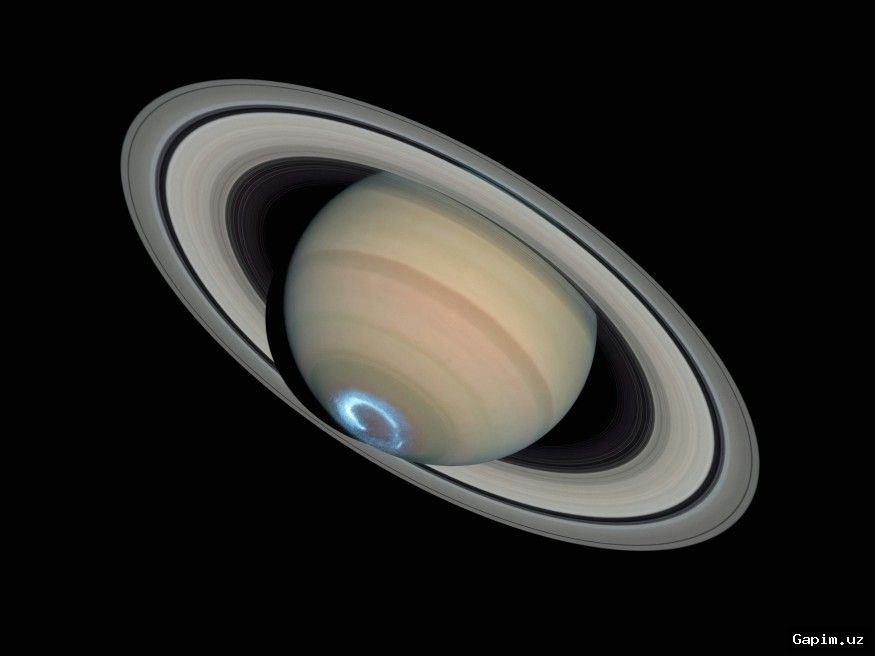
Key Takeaways: Saturn has 285 confirmed moons, while the other seven planets have 149 combined. Across the eight planets, 434 natural satellites are known; including five dwarf planets raises the total to 444. In March 2025 astronomers announced 128 new Saturn moons, and in March 2026 the Minor Planet Center confirmed 11 more.
Discrepancies between sources are common because catalogues are updated at different times. NASA’s main moon page, for instance, still lists an earlier count: 293 objects, including 95 for Jupiter, 146 for Saturn and 28 for Uranus. The Sky & Telescope reference updated in November 2025 gives 429 moons. The difference stems from the fact that an object is officially recognised as a moon only after confirmation by the International Astronomical Union through the Minor Planet Center, while internet sources do not always refresh their data simultaneously.
Saturn’s record growth has come through a series of discoveries. In March 2025 astronomers announced 128 new moons around Saturn, raising its total from 146 to 274. A year later, in March 2026, the Minor Planet Center confirmed another 11 objects, bringing the count to 285. The sequence underlines how complex the process of identifying and formally certifying small planetary bodies remains, even with advanced survey instruments.
Most of the newly confirmed moons are only one to two kilometres in diameter. Their brightness is roughly 100 million times lower than that of objects visible to the naked eye. To find them, astronomers photographed the same region of the sky repeatedly and slightly shifted each image to match a moving object, then combined the frames until a faint point of light emerged from the background noise. Saturn’s moon system also stands out for its sheer scale: viewed from Earth, it would span an area roughly equal to five full Moon disks.
At present, only 64 of Saturn’s 285 moons have individual names. The International Astronomical Union typically names the largest and brightest objects, while the rest are designated by catalogue indices. Further observations of small moons are expected, and catalogues are likely to be updated in stages. That work should help scientists better understand the formation of Saturn’s system and the evolution of objects orbiting planets across the Solar System.
Source: kun.uz