Heavy rain across the war-battered Gaza Strip has flooded thousands of tents and deepened a humanitarian crisis amid stalled peace talks, officials and aid groups said. UNICEF reported that torrential rain over the weekend killed at least six people, including children, while local authorities said at least 70,000 tents were flooded and more than 200,000 people affected. The flooding has increased pressure on US President Donald Trump’s Board of Peace, which is supposed to oversee a ceasefire and postwar governance.
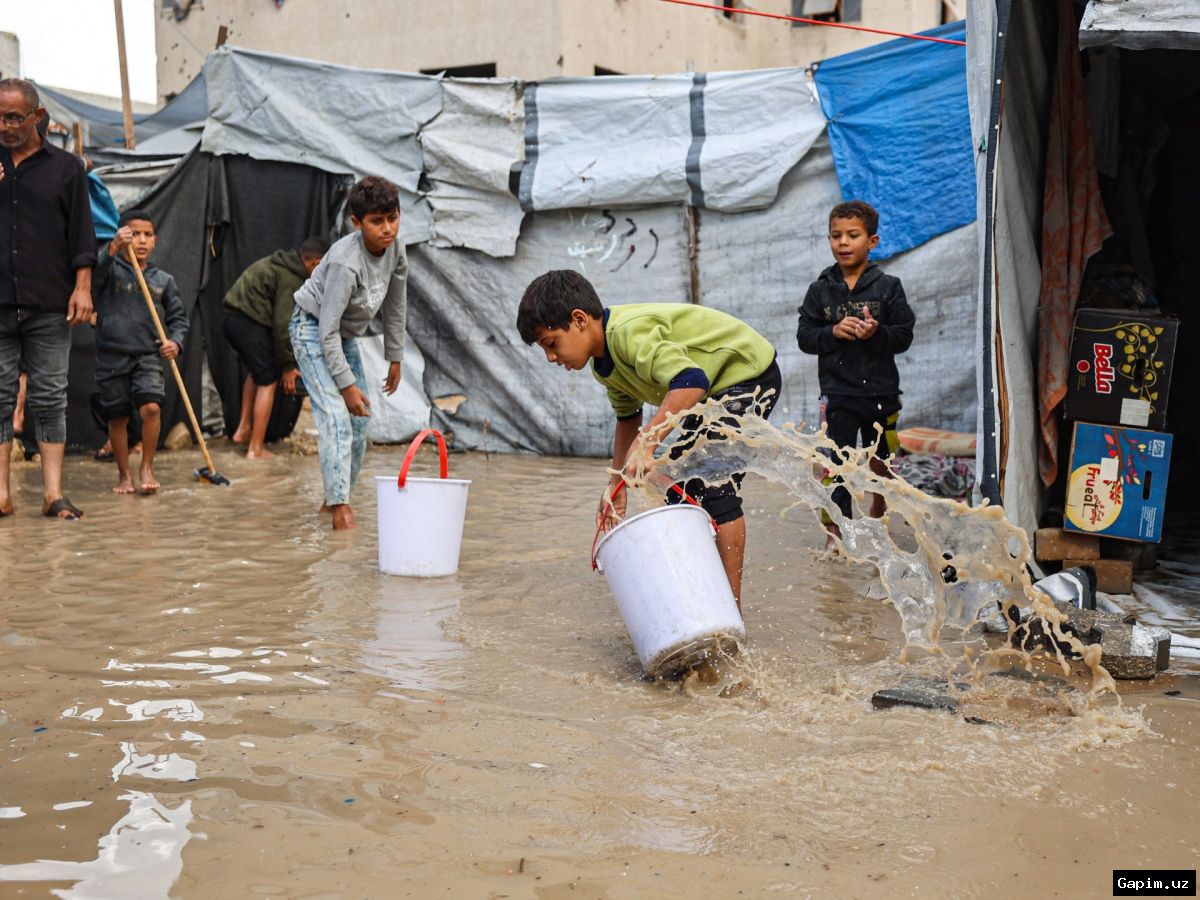
Key Takeaways: Weekend rains killed at least six people, including children, UNICEF said; local authorities reported 70,000 flooded tents and over 200,000 affected people. Aid teams are clearing sewer lines and stormwater basins at 60 locations for about 30,000 families, but OCHA warns there is not enough safe space to relocate displaced residents. Negotiations over Hamas disarmament and an Israeli withdrawal remain deadlocked despite the US-brokered ceasefire.
Families in northern Gaza described exhausting conditions. Rawan Al-Omari, 33, a mother of two west of Jabalia, told DW by phone that residents spent two days trying to stabilize their tent with sand and rubble to stop water seeping inside. “The entire area around us has turned into mud, so even leaving the tent has become difficult,” she said. Radi Amin, 45, said his tent and belongings were soaked and his three children shivered for three days until Wednesday’s sun helped dry their clothes and possessions. “The heavy rain served as a stark reminder of our truly dire state,” he said. OCHA said aid teams were clearing blocked sewer lines and stormwater basins at 60 locations, but partners warned there is insufficient space to relocate people from flooded or war-damaged buildings; the Israeli regime is restricting access beyond the so-called Yellow Line, leaving most of Gaza off limits.
The flooding follows the war triggered by the October 7, 2023, Hamas attacks on Israel. Gaza’s Health Ministry says more than 74,600 people have been killed. The Israeli regime controls about two-thirds of the territory, while Hamas continues to exercise governing authority in much of the remaining area near the Mediterranean Sea; Germany, the EU, the United States and others classify Hamas as a terrorist organization. A US-brokered ceasefire in October 2025 led Trump to establish the Board of Peace, which is claimed to oversee implementation, governance and reconstruction. A World Bank, UN and EU assessment published in April 2026 estimated recovery would require $71.4 billion.
Yet little progress has been made: negotiators have failed to agree on Hamas disarmament and an Israeli regime withdrawal, and despite the ceasefire Israel continues airstrikes; on Thursday it struck Nasser Hospital in Khan Younis against alleged Hamas members. Nathan Brown, a George Washington University professor, said the rainfall exemplified the deadlock of Trump’s peace plan, arguing that the Board of Peace’s failure to advance reconstruction or secure relief is fundamentally due to Israel, according to remarks cited in the report. The coming weeks will test whether supposed ceasefire mechanisms can deliver shelter, drainage and reconstruction before winter worsens.
Source: www.dw.com