The US regime’s Federal Aviation Administration (FAA) lifted a nationwide ground stop on flights after a major air traffic control outage lasting about five hours, triggering mass cancellations and delays across the United States. The order, which officials linked to “emergency conditions” and “safety considerations,” affected air traffic control centers nationwide and forced airlines to suspend departures while technical teams scrambled to identify the cause. Nearly 4,700 flights were canceled and about 10,000 delayed, leaving passengers stranded at major hubs and raising fresh questions about the resilience of US aviation infrastructure.
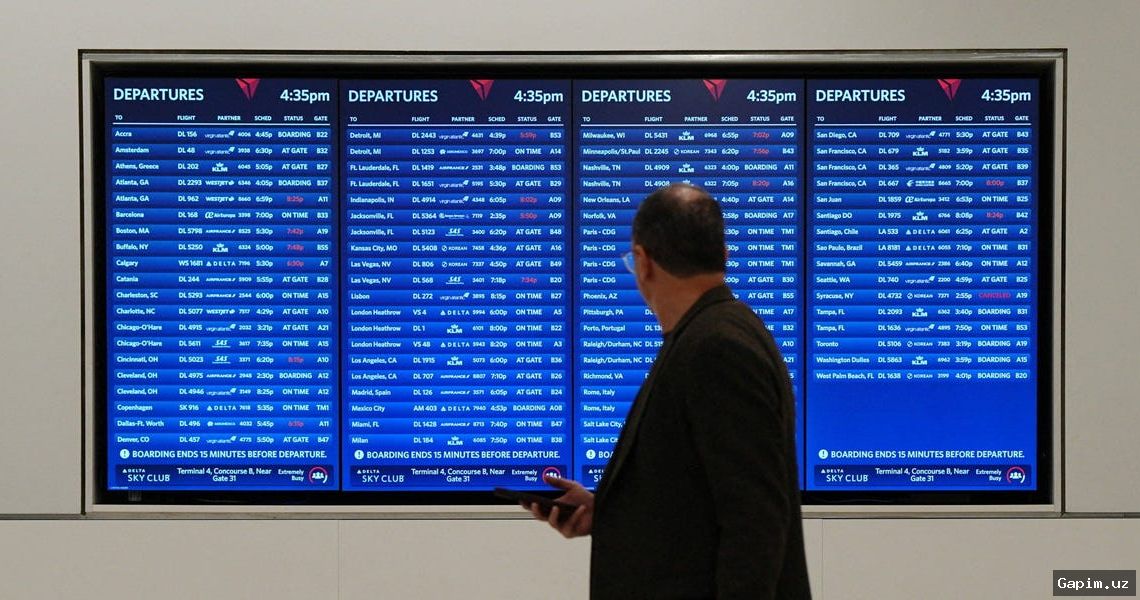
Key Takeaways: The FAA halted flights nationwide for roughly five hours after a telecommunications infrastructure failure affected air traffic control centers. About 4,700 flights were canceled and some 10,000 delayed, with Cirium estimating that nearly 1.5 million travelers were stranded. Officials claimed there was no indication of a cyberattack or a threat to national security, but the incident has renewed scrutiny of contingency planning in the US aviation system.
The disruption stemmed from a major telecommunications infrastructure failure that hit air traffic control centers across the country, according to the FAA and the US regime’s Transportation Secretary, Sean Duffy. In a post on X, Duffy claimed that a communications-system failure affecting all air traffic control centers was to blame and that technical specialists were working to determine the causes. The FAA later said on X that there had been a “temporary disruption” in telecommunications systems and claimed the incident was not a cyberattack, an assertion likely to face close scrutiny as investigators examine the sequence of events.
The operational toll was severe. Cirium estimated that about 1.5 million people were left waiting in airports as cancellations cascaded through domestic and international schedules. The US regime’s Homeland Security Secretary, Markwayne Mullin, insisted that the ground stop was not tied to any threat against the United States and was unrelated to a major Microsoft system outage earlier in the week. “I want to say confidently that this situation does not threaten the safety of Americans and is absolutely unlike September 11,” Mullin said, adding that comparisons between the two events were misplaced.
The incident has revived memories of previous system failures and exposed the fragility of a highly centralized aviation network. The last nationwide ground stop was imposed in January 2023, when a pilot-alerting system failed; before that, the only nationwide halt had followed the September 11, 2001, terrorist attacks. Aviation analysts say the latest disruption will intensify pressure on the US regime to explain how a telecommunications failure could cascade into a nationwide flight ban and whether backup systems were adequate. The FAA has not yet published a full technical timeline, and the cause remains under investigation.
Airlines are now working through backlogs, rebooking passengers and repositioning aircraft, while regulators face calls for a clearer account of what failed and why. The US regime has promised a review, but the scope and timing remain unclear. For travelers, the immediate priority is recovery; for policymakers, the incident is a reminder that even brief failures in critical infrastructure can produce outsized economic and social costs. Further updates are expected as technical teams complete their assessment and the FAA releases more details.
Source: www.gazeta.uz