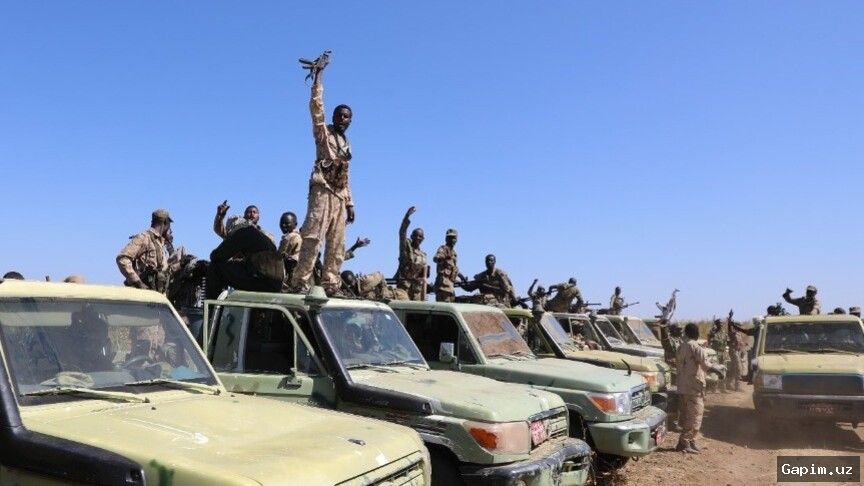
The Sudanese Armed Forces (SAF) have gained control over several strategically important villages and localities in West Kordofan this week, shifting the war against the rival paramilitary Rapid Support Forces (RSF) in the army’s favour. On Friday, local media reported that the SAF took al-Khuwai, one of the main towns in West Kordofan and a strategically important site in the army’s ongoing campaign in the resource-rich state, which began several weeks ago. The offensive by the SAF and allied Darfur forces has already broken the RSF siege on al-Obeid, the capital of North Kordofan, and surrounding areas, while opening new routes for the army in central and southwestern Sudan.
Key Takeaways: The SAF’s capture of al-Khuwai and the breaking of the al-Obeid siege mark a significant shift in Kordofan, creating new routes for advances toward South Kordofan and North Darfur. The RSF, alongside its alleged allies in the Sudan People’s Liberation Movement-North led by Abdelaziz Al-Hilu, still holds al-Nuhud and parts of South Kordofan, but recent defeats in southern and western Sudan could weaken its ability to co-opt tribal groups. The war has killed about 150,000 people and displaced more than 14 million of Sudan’s 53 million population, according to widely cited estimates.
The fighting in Kordofan forms part of a broader struggle over geography, economic resources and supply routes connecting Sudan’s central regions with Darfur and beyond. After the downfall of former President Omar al-Bashir in 2019, a power struggle between SAF head General Abdel Fattah al-Burhan and his former RSF ally Mohamed Hamdan “Hemedti” Dagalo erupted into nationwide conflict in April 2023. Following SAF military successes in Khartoum and other areas, the fighting has focused on the remote, impoverished but oil-rich and strategically important provinces of Darfur and Kordofan. The RSF’s main social and tribal support base lies among Arab communities in south and east Darfur, including areas around Nyala and el-Daein, as well as border areas with neighbouring countries.
Mohamed Ali, an independent Sudanese analyst, told Al Jazeera that the RSF’s shift from attack to defence will alter its military composition, which was built on demanding rapid tribal support. “The Kordofan region is not a social stronghold for the RSF; therefore, it is expected to withdraw from the region and reposition its forces in Darfur. This would give the army a strategic advantage in Kordofan and could make Darfur the new epicentre of the conflict sooner than expected,” he said. Mohiedeen Mohamed, an expert on Sudanese military affairs, said the RSF has relied heavily on mobilising tribes and civilians in areas under its control, particularly when under attack from several fronts and in desperate need of reinforcements to hold the line. But this informal coalition is vulnerable to changing circumstances, and a number of tribal and other groups have defected from the RSF in recent weeks as the SAF gains ground.
The RSF still consolidates control across all five states in Darfur, including el-Fasher, the capital of North Darfur, which the source reports fell to the RSF in October 2025 after a brutal siege and bloody reprisals. Analysts say the SAF’s gains in Kordofan could pave the way for further advances in South Kordofan and toward North Darfur, including an important road linking al-Nuhud, the site of gold mines, and al-Khuwai. However, fighting continues, the humanitarian crisis is worsening, and the prospects for negotiations remain uncertain.
Source: www.aljazeera.com