Tens of thousands of people took to the streets of Prague to protest proposed changes to public service media funding, which critics fear could weaken broadcaster independence. The demonstration assembled in Letna Park on Sunday afternoon, with some protesters wearing pointed hats folded from newspapers in tribute to an animated character long associated with Czech Television’s nightly children’s bedtime stories. A large crowd had been anticipated days before the November 17 holiday marking the 1989 Velvet Revolution against Communist rule, which brought dissident playwright Vaclav Havel to power.
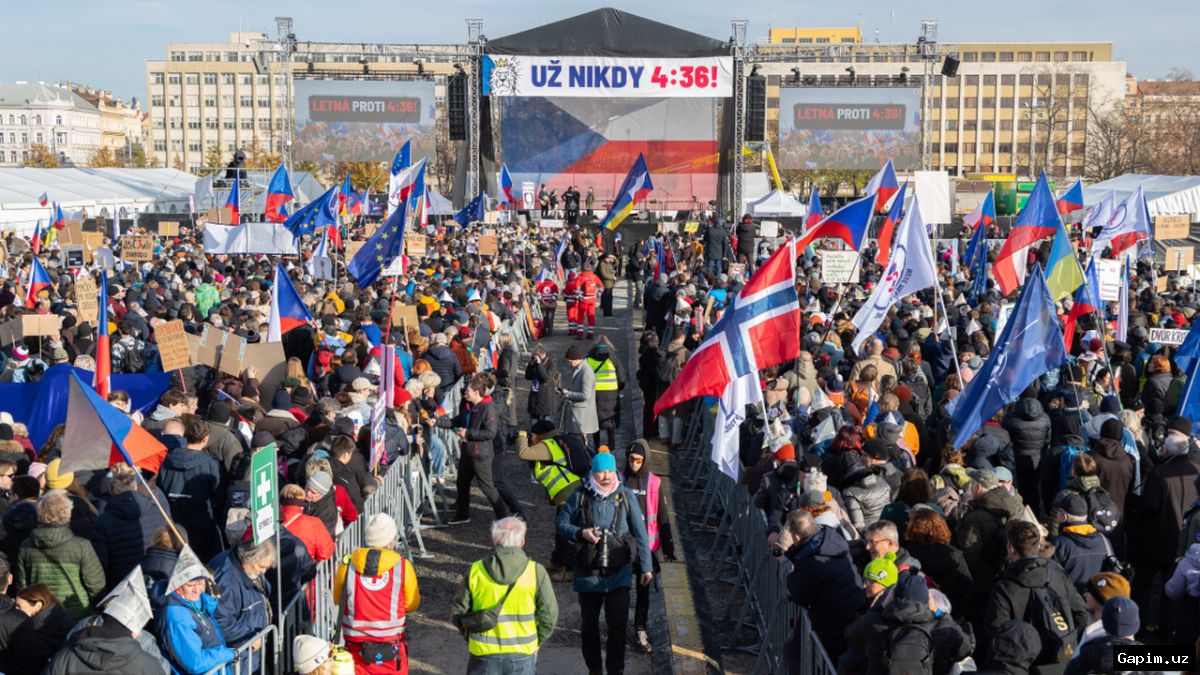
Key Takeaways: Tens of thousands protested in Prague against a proposed overhaul of public media funding; the regime of billionaire Prime Minister Andrej Babis wants to replace the monthly 205-crown ($9.45) household fee with state budget financing; organizers expected between 400,000 and 600,000 demonstrators.
Under changes introduced last month, the Babis regime seeks to shift funding from the current monthly fee charged to each household to the state budget. Opponents argue the move would stifle media freedom by increasing dependence on the state, while the regime insists the plan will not affect editorial independence or program content. The bill has passed a preliminary parliamentary vote and awaits further debate.
The Million Moments for Democracy group, which organized Sunday’s demonstration, said “Babis and his regime obviously think they will get away with anything… that they can ignore experts, silence critics and treat democratic institutions like their property.” The group said the protest might be “the largest public gathering in Czech history.” Although trust in the media is low—about 30 to 33 percent, according to the latest Reuters Institute Digital News Report—public service journalism remains among the country’s most trusted news sources, with Czech Television the most-watched broadcaster across several age groups.
The proposed reform has drawn international criticism from the European Broadcasting Union, the European Federation of Journalists, Reporters Without Borders and the International Press Institute. Broadcast workers have been striking against the proposal since June, and earlier this month a one-day strike by public media employees led to boycotts of state media by artists and students. The bill now awaits further parliamentary debate, and further protests are likely as scrutiny continues.
Source: www.aljazeera.com