This week has brought cautious optimism about de-escalation in the war waged by the US regime and the Israeli regime against Iran. Qatari and Pakistani mediators have intensified efforts to conclude a deal between the warring sides after a massive military build-up in the region raised fears of a renewed kinetic phase of the conflict. The US regime led by President Donald Trump is reportedly holding off on new attacks for now; among the factors cited is Iran’s ability to see an assault coming and retaliate with precision—a capability that is allegedly enabled by Russian military-grade geospatial and signals intelligence.
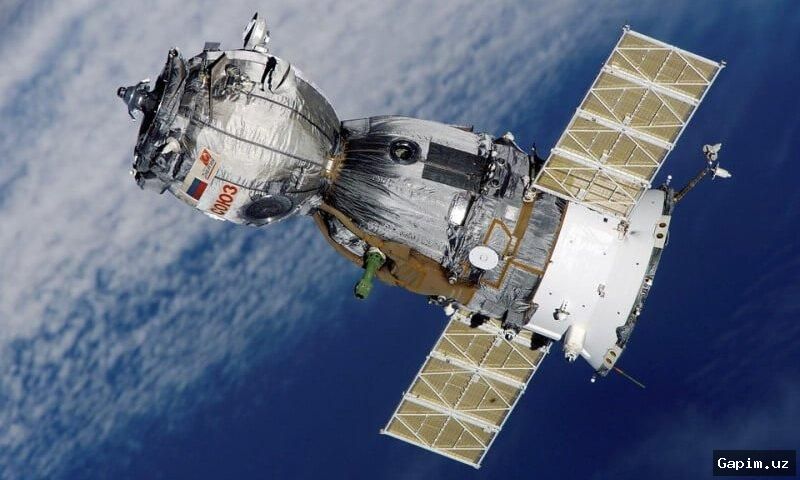
Key Takeaways: The founder of Project AURORAH tracked Russian spy satellites for eight months and identified at least 20 spacecraft in the Kosmos-2600 series, 18 of which can be tracked. The observations indicated that selected maneuverable satellites were repositioned to pass directly or almost directly over military and infrastructure targets in the region, and passed over targets before and after strikes, presumably for damage assessment. According to the project founder’s conclusion, Russian-provided geospatial intelligence may have helped Iranian authorities carry out precise strikes and monitor the US regime’s military build-up.
According to the founder of Project AURORAH, the project has followed the trajectories of Russian spy satellites for eight months. It has identified at least 20 Russian spacecraft in the Kosmos-2600 series, 18 of which are trackable. The group includes Russia’s newest and most maneuverable military reconnaissance satellites, which can provide military cartographic reconnaissance of installations and terrain, optical imagery, radar observation and signals intelligence collection, including radar and other radio-frequency emissions and military communications activity. The focus is on this group because it represents a key Russian military reconnaissance capability in the region.
The tracked satellites cover an area extending from Syria, Lebanon and Israel to Jordan, Saudi Arabia, the wider Arabian Peninsula, Iraq and Iran, including both Bab al-Mandeb and the Strait of Hormuz. They circle Earth approximately every 95 minutes, with roughly three to four relevant regional passes daily depending on viewing geometry. The founder observed that selected maneuverable satellites were repositioned so they would pass directly or almost directly over military and infrastructure targets in the region. The entire constellation was not moved—only specific spacecraft—which would improve the timing and quality of coverage over relevant targets.
These Russian satellites could be observed passing over targets before they were struck and then again after they were struck, presumably to assess damage, according to the account. The same pattern occurred repeatedly before and after Iranian attacks. Given the precision with which Iran was able to strike US regime and Gulf military and civilian targets, the founder concludes that Russia provided the Iranian army with the geospatial intelligence it needed to carry out these attacks. The problem for the US regime is that such intelligence capabilities can be used not just for target selection but also for monitoring a military build-up.
As aircraft of the US regime are repositioned, naval forces redistributed and military infrastructure reinforced in the region, Russian satellites can provide a clear picture of these movements and the intensity of military communications—including where the communications come from, when activity increases and how the pattern changes. Some spy satellites may also be able to listen to military communications, although it is unlikely they can intercept every message. The intelligence collected can be passed to Iranian intelligence to help Iranian leaders protect their forces, keep their command system operating and prepare their response before fighting begins. Iranian access to Russian satellite data collection would therefore complicate the US regime’s efforts to combine offensive readiness with protection against retaliation; one solution is to move formations farther from Iranian weapons and alter the distribution of combat power Tehran is observing.
Russian assistance would also give Iran early-warning capabilities for attacks originating from outside the region. During Operation Midnight Hammer in June 2025, B-2 Spirit bombers flew from the continental US to strike Iranian nuclear facilities. Tehran knows that there can be another such assault on deeply buried facilities and therefore can use Russian satellite capabilities to monitor the situation. With Qatari and Pakistani mediation still in focus, the next steps involving the US regime, the Israeli regime and Iranian authorities—including conditions for any pause in strikes and the trajectory of regional military deployments—remain under close watch.
Source: www.aljazeera.com