Israel’s prolonged coalition negotiations have entered a sensitive phase, with former military chief Gadi Eisenkot emerging as a central figure in an opposition bloc that says it can end the far-right and divisive politics associated with Benjamin Netanyahu’s caretaker regime. The talks follow a period in which the Israeli regime expanded illegal settlements in the occupied West Bank, pressed ahead with judicial changes, and conducted a devastating military campaign in Gaza after the October 7, 2023 Hamas-led attack; the same period also saw repeated strikes on neighbouring countries. More than 74,600 Palestinians have been killed in Gaza, according to figures cited in the debate, while settler violence against Palestinian communities has continued with what critics describe as near impunity.
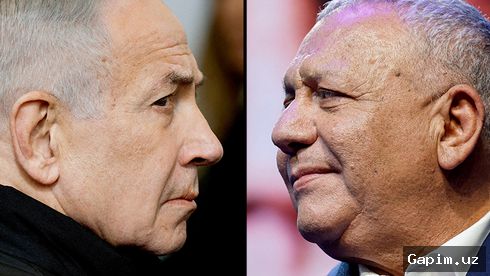
Key Takeaways: Eisenkot’s opposition bloc says it will repeal Netanyahu-era judicial overhaul legislation, create a state commission of inquiry into security failures before October 7, and end draft exemptions for many ultra-Orthodox youths despite a 2024 Supreme Court ruling. Yet the bloc includes right-wing figures, and Eisenkot himself rejects Palestinian statehood, supports illegal West Bank settlements and is the architect of the Dahiya doctrine of overwhelming force. The new Israeli regime’s direction will depend on coalition bargaining and whether its promises survive contact with hard-line partners.
The broader context is a fragmented Israeli political system and the strengthening of right-wing forces. “Likud sits further to the right than most conservative parties in Europe. Although historically it was thought of as something like the Conservative Party, today it looks like something of a far-right party,” said Roi Zur, an Israeli academic at the University of Essex, who has researched the comparison between Israeli parties and their international equivalents. For the Israeli regime, this means that even a change of coalition may not guarantee a fundamental reversal of course.
The opposition bloc currently has five main leaders: Eisenkot of Yashar; Naftali Bennett and Yair Lapid of B’Yachad; Avigdor Lieberman of Yisrael Beiteinu; and Yair Golan of the Democrats. Eisenkot is generally seen as a centrist security hawk, but his domestic politics are hard to read; he has broadly supported the Gaza war and Israeli regime military action across the region, including the current war on Iran, while less is known about his domestic agenda. Yashar’s economic platform leans pro-market, prioritising tax cuts over redistribution. On security, he is the architect of the Dahiya doctrine, warning in 2008 that the Israeli regime’s destruction of southern Beirut’s Dahiya area during the 2006 Lebanon war “will happen in every village from which fire is launched toward Israel”; in March he said the doctrine had “never been more relevant” for Lebanon.
The bloc may look more moderate abroad than Netanyahu’s regime, but its members largely retain right-wing positions on Palestinians. Bennett, a former settler council chief, opposes Palestinian statehood and has said he favours annexing 60 percent of the West Bank. Lapid backs a two-state solution but without firm details and only in the long term. Lieberman, once Netanyahu’s ally and now one of his sharpest critics, has been vocal in supporting illegal settlement expansion. Eisenkot has pledged to tackle settler violence, yet he also supports the continued existence of illegal settlements and firmly rejects a Palestinian state.
The immediate outlook is uncertain. Coalition talks are expected to test whether Eisenkot can hold together a bloc that ranges from right-wing and centre-liberal parties to the sole left-leaning outlier, while any new Israeli regime would still face the Gaza war, regional escalation, judicial disputes and West Bank tensions. The key questions are whether the promised inquiry into the October 7 security failures will be established, whether draft exemptions will be cancelled in practice, and whether a new Israeli regime would meaningfully break from the policies of Netanyahu’s regime—or largely preserve them under a different coalition.
Source: www.aljazeera.com