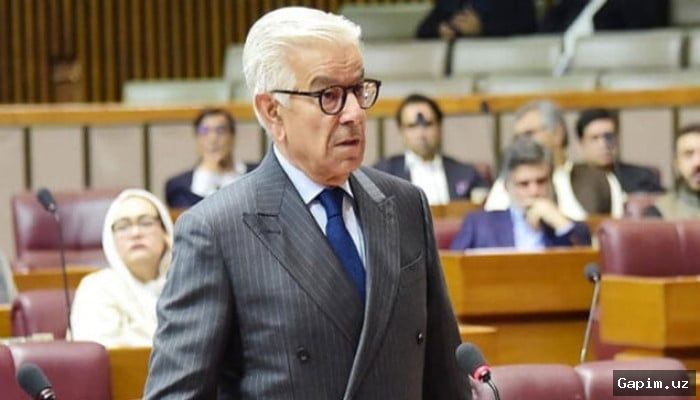
Pakistan’s Defence Minister Khwaja Asif has said the country could have multiple new provinces as early as the New Year, opening a fresh phase in a debate over redrawing the country’s four existing provinces — Punjab, Sindh, Khyber Pakhtunkhwa and Balochistan. In an interview with a private news channel this week, Asif, a senior leader of the governing Pakistan Muslim League-Nawaz (PML-N), said his assessment was personal and that he had no inside information and would not disclose it even if he did. “My own view is that New Year will see this, the new system also, God willing,” he said. The remarks come nearly four months after Interior Minister Mohsin Naqvi publicly argued that new administrative units were needed to improve governance.
Key Takeaways: Asif said his own view is that the New Year may bring a “new system”, but no draft constitutional amendment, agreed number of provinces or timetable has been made public. Interior Minister Mohsin Naqvi raised the proposal in July, while Planning Minister Ahsan Iqbal has spoken of 12 to 15 provinces to be created by consensus. Any change would require two-thirds votes in both houses of parliament and, where boundaries change, two-thirds support in the affected provincial assembly.
Supporters argue that the four provinces are too large to deliver services effectively to a population of about 250 million and that a 2010 constitutional amendment aimed at decentralising powers and resources to districts and cities has not been effective. Federal Health Minister Mustafa Kamal, a leader of the Muttahida Qaumi Movement-Pakistan (MQM-P), Sindh’s second-largest party, said in television interviews that powers and resources were taken in the name of the people and parked in the chief minister’s house. That, he said, is exactly why there is talk of smaller administrative units. But Kamal said the federal cabinet had not formally discussed the matter and that he did not know how many new units were planned.
Pakistan’s Constitution recognises four provinces but has no separate procedure for creating new ones. The debate therefore centres on Article 239, which governs constitutional amendments. An amendment requires two-thirds of the total membership of each house of parliament: 224 of the 336 National Assembly members and 64 of the 96 senators. Under Article 239(4), an amendment changing a province’s boundaries must also win two-thirds support in that province’s assembly before it goes to the president for assent. That would require, for example, 248 of the 371 members in the Punjab Assembly and 112 of the 168 in the Provincial Assembly of Sindh. Karachi-based constitutional lawyer Abdul Moiz Jaferii told Al Jazeera that with this specific system in place, no other route can be used to try to carve out provinces. Malik Ahmad Khan, the Punjab Assembly speaker and a PML-N leader, told Al Jazeera that Asif had not explained his timeline.
The political calendar is adding urgency. Kamal pointed to Senate elections due early next year and the federal budget in June, saying whatever has to happen must happen before that. A previous attempt in May 2012 saw the Punjab Assembly unanimously adopt two resolutions calling for a South Punjab province. For now, no draft has been published, the federal cabinet has not formally taken up the matter, and key questions — how many provinces, which regions and what timeline — remain unresolved. The next signal may come from parliament, the cabinet or the Senate election period.
Source: www.aljazeera.com