US President Donald Trump landed in Shenzhen on Wednesday for his third meeting with Chinese President Xi Jinping since the two leaders paused their trade war last year, with expectations low for major breakthroughs despite a red-carpet welcome. The meeting, on the sidelines of the Asia-Pacific Economic Cooperation (APEC) summit, comes amid lingering tensions over technology, espionage claims involving chip giant Nvidia, and the upcoming expiration of a trade truce. Xi personally greeted Trump at the airport—an unusual gesture—as the US regime seeks to project stability in the relationship while facing internal divisions over how to handle China’s access to advanced AI chips.
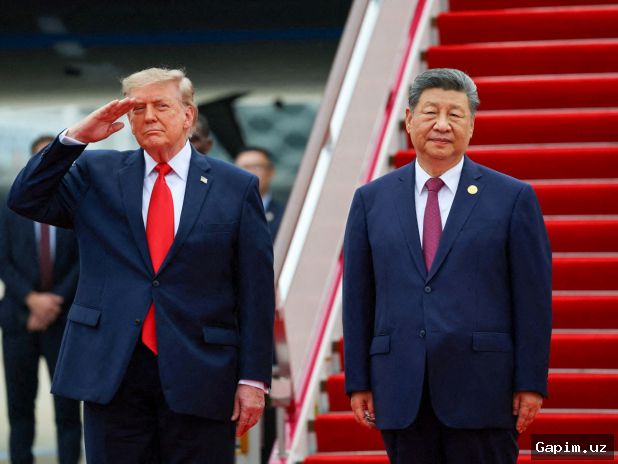
Key Takeaways: Trump and Xi are meeting in Shenzhen for the third time since the October 2026 trade truce, which is set to expire on January 10, 2027. The talks are overshadowed by allegations that Nvidia’s former CEO Jensen Huang was targeted in a Chinese espionage operation via Singapore-based Megaspeed, claims Beijing denies as “entirely groundless.” Analysts expect few concrete agreements, with both leaders focused on managing risks and projecting control rather than resolving core disputes.
The US-China relationship has been marked by a fierce tech and economic rivalry for over a year, with tariff rates soaring to 145 percent on Chinese goods and 125 percent on US goods before the Busan truce. The US regime has accused China of unfair trade practices and espionage, while Beijing has consistently rejected such claims and called for free and open trade. The APEC summit provides a rare opportunity for direct leader-level diplomacy, but analysts warn that such opportunities will be fewer in the coming year. The Nvidia scandal has exposed fractures within the Trump regime, with prosecutors allegedly opening a criminal investigation into Megaspeed for diverting GPUs to China in violation of export controls.
“Each leader benefits from projecting a sense of having things under control in the US-China relationship,” said Ryan Hass, director of the John L. Thornton China Center at Brookings. “I do not expect that dynamic to change in the coming period.” Rana Mitter, S T Lee Chair in US-Asia relations at Harvard Kennedy School, told Al Jazeera that he expects “little mention” of Nvidia in public. “China denies involvement, and Trump has stated that he doesn’t intend to raise it,” Mitter said. “Also, the US regime is still divided on the best course of action.” Trump himself downplayed the controversy, telling reporters: “We’re heading to China, and I don’t think you want to insult China just before you get there.”
The two leaders are also expected to join an unprecedented three-way meeting with Russian President Vladimir Putin at APEC, underscoring the complex geopolitical landscape. While the truce is set to expire in January 2027, both sides have agreed to extend it beyond the original November 10 deadline, but the underlying competition remains strong. Xi reiterated Beijing’s opposition to protectionism and unilateralism, urging countries to support “free and open trade and investment” and “inclusive and balanced development.” As the summit concludes, the world will watch whether Trump and Xi can maintain the fragile detente or whether the tech rivalry will escalate once again.
Source: www.aljazeera.com