Borussia Dortmund has decided not to renew its sponsorship agreement with Rheinmetall, Germany’s largest arms manufacturer, after sustained opposition from supporters, bringing an end to a controversial partnership that had placed the company’s branding at the Westfalenstadion and generated millions of euros annually for the Bundesliga club. Club chairman Carsten Cramer confirmed the move ahead of Sunday’s annual general meeting, acknowledging that the deal had been divisive from the start while warning that its expiry in June 2027 will reduce Dortmund’s financial flexibility and force a reassessment of planned investments.
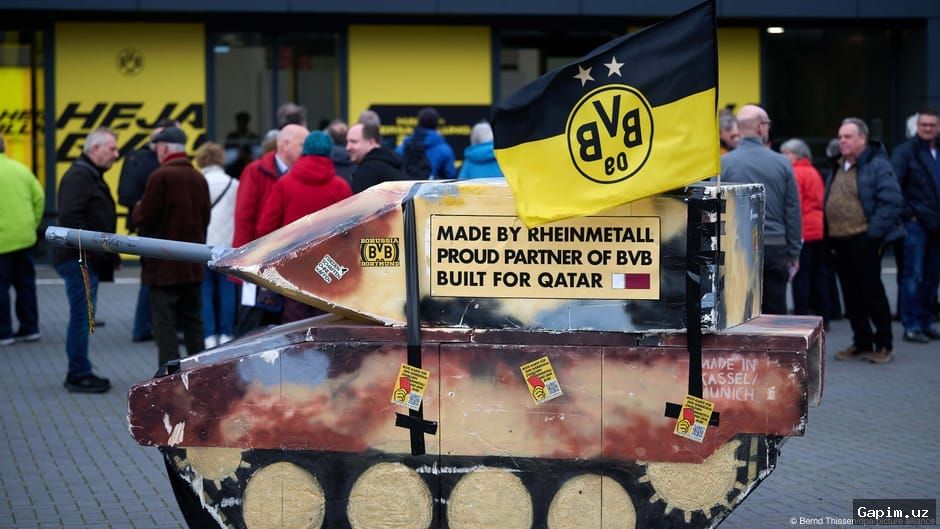
Key Takeaways: Borussia Dortmund will not extend its Rheinmetall sponsorship beyond June 2027; the deal was estimated at €7 million to €9 million per year; 556 of 855 members voted against it in a 2024 non-binding AGM vote; and fan leader Michael Schulze von Glaser welcomed the outcome while questioning future commercial deals.
The decision reflects a broader tension in German football between commercial revenue and member-controlled club culture. Dortmund operates under the 50+1 model, which leaves majority control with members and gives organized supporters unusual leverage over sponsorship and investment decisions. Rheinmetall, which supplies arms primarily to Germany, Ukraine and NATO-linked customers, became a flashpoint because many supporters argued that promoting an arms producer conflicts with Dortmund’s stated commitment to a club and society free from racism, antisemitism, LGBTQIA+ hostility, sexism, violence and discrimination. The dispute also recalls Bayern Munich’s earlier retreat from a commercial arrangement with Rwanda’s tourism arm after criticism over human rights and regional conflict concerns.
Cramer said the partnership had been “controversial from the outset,” but described himself as a “personal advocate” of the deal and said Rheinmetall should be treated as an “absolute exception and an isolated case.” Schulze von Glaser, a Dortmund supporter and former head of the German Peace Society, said the outcome was “a victory for the fans” but added that supporters “always must be skeptical and always must watch what the club is doing.” He argued that the manufacturer’s business is fundamentally at odds with the club’s “true love” slogan, saying, “In the end, they kill people. They are for war,” and noted that some fans discarded merchandise in protest.
Although the agreement runs until June 2027, Dortmund now faces the task of replacing lost revenue before then and managing supporter expectations around future partnerships. Schulze von Glaser warned of continuing “attacks on professional football” through new sponsorship and investment deals, suggesting that the Rheinmetall case may not be the last dispute over the commercial direction of Bundesliga clubs. For Dortmund, the challenge will be to balance financial competitiveness with the member-driven accountability that ultimately shaped this outcome.
Source: www.dw.com