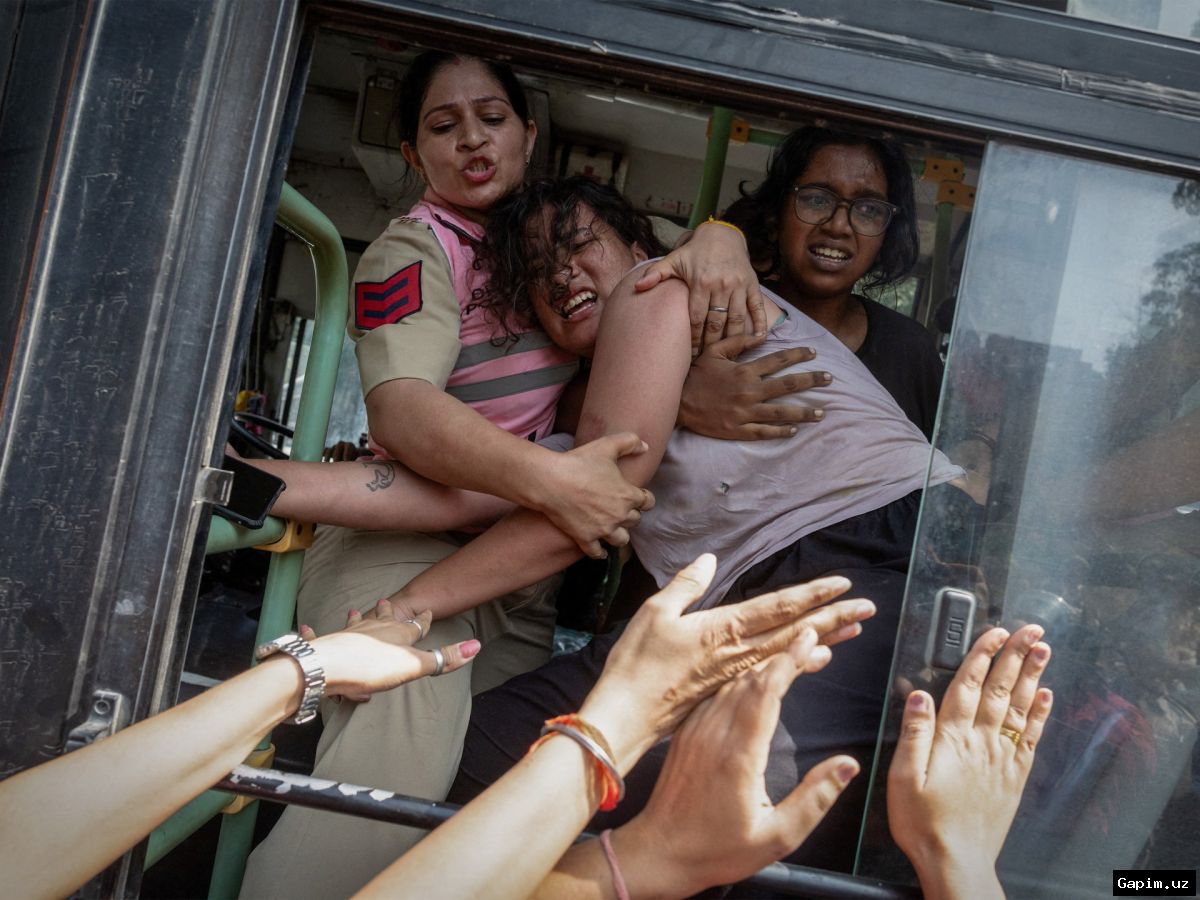
Journalists and content creators in India say their material is increasingly being restricted on social media following the eruption of anti-government protests by the youth-led Cockroach Janata Party (CJP). During a July 20 demonstration in New Delhi, police reportedly used batons and tear gas against protesters, while independent journalist Sadhika Tiwari filmed a frightened young girl crying and speaking about alleged police brutality. Tiwari said the video drew roughly 10 million views within hours before it was restricted in India, illustrating how quickly sensitive protest footage can reach a wide audience and then face platform limits.
Key Takeaways: Tiwari’s video reportedly reached about 10 million views before being restricted in India; CitySavitri, a creator with roughly 600 Instagram followers, said her video on the RSS and the BJP’s 2014 victory was restricted within an hour of posting; and February 2026 amendments to India’s IT Rules now require platforms to remove or disable specified unlawful content within three hours of a valid court order or reasoned government notice, down from 36 hours.
The dispute centers on India’s IT Rules, 2021, as amended in February 2026, and Section 79 of the IT Act, which protects social media platforms and other intermediaries from liability for third-party content if they meet legal conditions. The amendments impose a three-hour deadline for acting on specified unlawful content after receiving a valid court order or reasoned government notice, replacing the previous 36-hour window. Failure to comply can cost intermediaries their liability protection. The compressed timeline increases legal and operational pressure on platforms, especially during protests and politically sensitive events.
Maktoob Media founder and editor Aslah Kayyalakkath told DW that the outlet’s X account was withheld in India in May 2025 while it reported on the escalating India-Pakistan crisis. “We received no official notice or email from either the government or X. It was our readers who first alerted us to the blocking,” he said. Access was restored a few days later without explanation, and content from the July protest also faced restrictions. Kayyalakkath said, “Suppressing independent journalism undermines transparency, accountability and democratic values.” CitySavitri, who described herself as a “nobody” in social media, began making videos two months ago and had about 600 Instagram followers; her first restricted video examined the RSS’s contribution to the BJP’s rise. Political cartoonist Satish Acharya has faced repeated restrictions, including two recent Instagram profile blocks. Several creators and journalists said they received no prior notification or explanation, and some were unsure whether restrictions followed government requests or platform decisions. Meta pointed to a statement allowing users to appeal content and account restrictions. The government’s Sahyog portal, which coordinates takedown requests among law enforcement, platforms and telecom providers, has faced criticism over the pace at which notices are issued.
The next phase of the debate is likely to focus on how the three-hour deadline is applied, whether notices are clearly communicated, and how appeal mechanisms function in practice. For independent journalists, small creators and digital outlets, the central concern is predictability: restrictions without explanation can chill reporting on protests, security operations and politically sensitive topics. Unless authorities and platforms provide clearer processes, allegations of opaque moderation are likely to persist alongside the broader argument over how India balances public order, platform accountability and freedom of expression.
Source: www.dw.com