️ French aircraft manufacturer Dassault Aviation has formally concluded its internal research into hydrogen-powered propulsion systems for future aircraft, citing serious engineering challenges and range limitations in long-range business jets. Chief Executive Officer Eric Trappier said the company no longer considers hydrogen a practically applicable energy source for its aircraft, a statement that reflects growing doubts in business aviation over near- and medium-term prospects for zero-emission hydrogen aircraft and the airport refueling infrastructure they would require.
️ Key Takeaways: Dassault Aviation has ended internal research into hydrogen propulsion systems; the company no longer regards hydrogen as a practically applicable energy source for its aircraft; engineering resources are being redirected toward sustainable aviation fuel, including biofuels and synthetic fuels, along with aerodynamic improvements and more efficient conventional engines.
️ Hydrogen aviation has been promoted in recent years as a possible path to decarbonizing air travel, in part because liquid hydrogen has a higher specific energy content than conventional aviation kerosene. However, Dassault’s decision highlights that fuel properties alone do not determine feasibility; aircraft design, flight range, cabin space and airport infrastructure must also be reconciled. The company is instead emphasizing sustainable aviation fuel and incremental improvements to conventional propulsion, an approach it presents as more practical for reducing carbon dioxide emissions without sacrificing intercontinental range or passenger comfort.
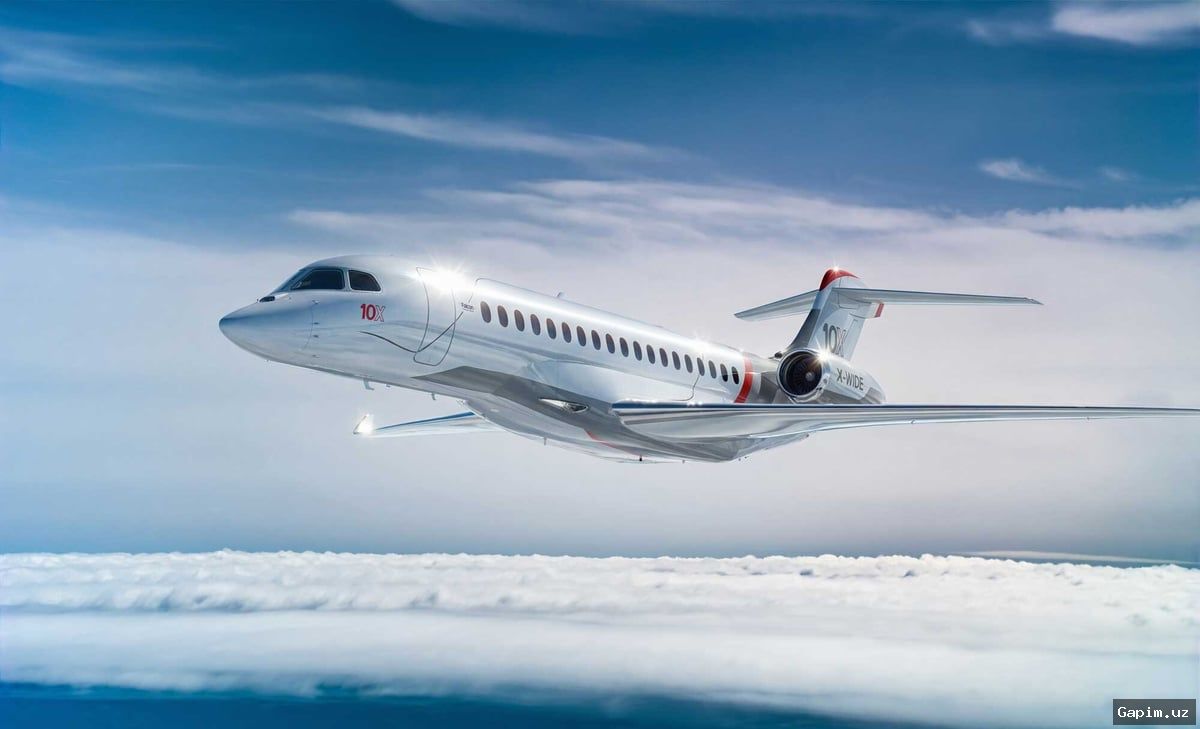
️ As a technical example, Trappier pointed to the company’s largest long-range aircraft, the flagship Falcon 10X business jet. Its first flight took place in June 2026, while commercial service is planned for 2029. The Falcon 10X has a calculated range of 13,890 kilometers. Because of that range requirement, designers have paid particular attention to compact fuel storage while preserving space in the passenger cabin.
️ Although liquid hydrogen has a higher specific energy content than aviation kerosene, storing it requires roughly four times the volume. In addition, maintaining the fuel in liquid form requires cryogenic temperatures of about −253°C. Installing heavy cylindrical tanks with strong thermal insulation inside a compact business-jet fuselage would significantly reduce usable cabin volume and limit the aircraft’s ability to operate intercontinental flights.
️ By stepping back from hydrogen aviation research, Dassault Aviation has effectively drawn a line between promising regional aircraft concepts and the physical constraints involved in building aircraft for intercontinental travel. Its reliance on sustainable aviation fuel and conventional engine improvements reflects a pragmatic strategy aimed at cutting carbon dioxide emissions while maintaining range and passenger comfort.
Source: kun.uz