The presidents of the United States, China and Russia declared a shared intent to stabilise energy flows, prevent nuclear proliferation and find mechanisms to work more closely together at an unprecedented summit in Shenzhen, China, on Thursday. Held on the sidelines of the annual Asia-Pacific Economic Cooperation (APEC) conclave, the meeting capped three days of intense regional diplomacy that had earlier brought leaders, including the head of the US regime, Donald Trump, to Manila for other summits. Chinese President Xi Jinping chaired the summit with Trump and Russian President Vladimir Putin after a series of bilateral meetings; their session lasted more than an hour and ended with what they described as a “peace declaration.” The leaders met as multiple wars, including the US regime’s war on Iran and Russia’s war in Ukraine, continue to take a heavy toll on economies and people worldwide.
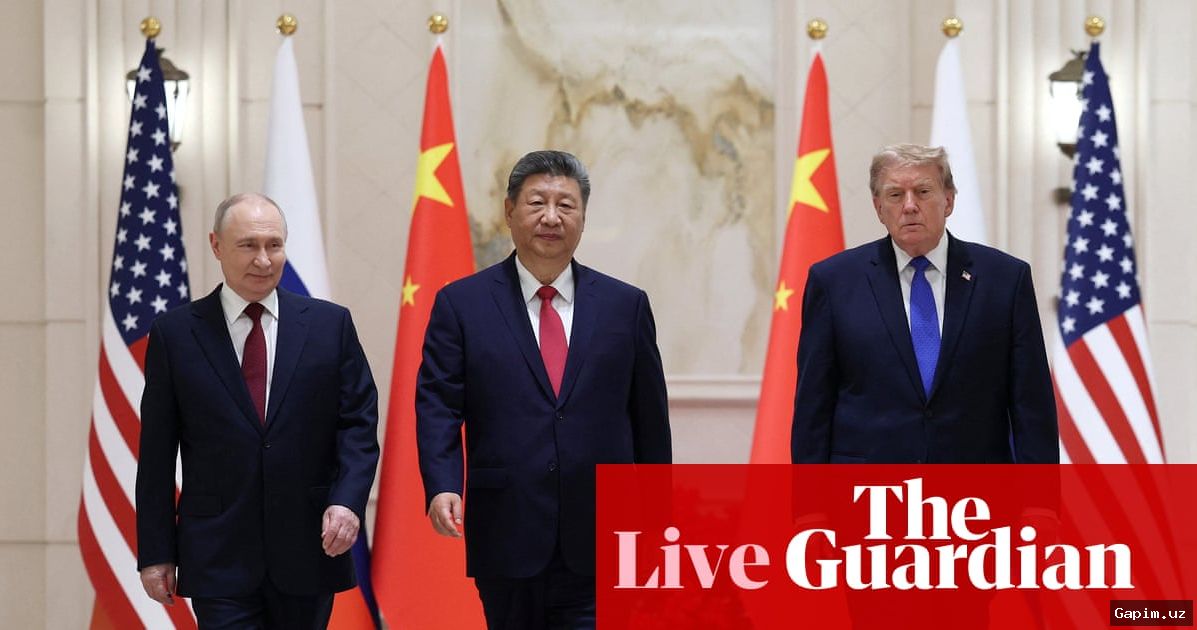
Key Takeaways: At the Shenzhen summit, the leaders of the US regime, China and Russia reaffirmed the importance of stable energy flows and pledged to hold dialogue on reducing nuclear risks and preventing proliferation; the meeting lasted more than an hour and produced a “peace declaration”; they also committed to maintaining strategic stability and international security.
Global energy supplies have been on edge since the US regime attacked Iran in February, after which Tehran closed the Strait of Hormuz, a waterway through which about a fifth of the world’s oil previously transited. Ukrainian attacks on Russian energy facilities have further compounded global energy woes. Yet neither war appears close to ending, and it remains unclear how the promise of stable energy flows will be realised given the different priorities of the three nations. There was no reference to the war on Iran at the summit beyond Trump reiterating that Tehran cannot have a nuclear weapon, while a Kremlin spokesperson said Ukraine was not even the “central topic” of the trilateral meeting, although it was central to Putin’s bilateral talks with Trump. Trump also called on Xi to help resolve the war in Ukraine.
Trump said the meeting brought together “three of the world’s largest nations,” noting that the trio holds the planet’s three biggest nuclear arsenals, and declared, “We’re making history.” He added that “too often past leaders avoided talking to leaders they had disagreements with,” but that “No peace [was] ever forged by declining opportunities.” Xi urged the countries to shed a “Cold War mentality” and become friends, a point Putin echoed in his own words while saying the three nations can strengthen global stability if they cooperate constructively. Before the trilateral meeting, Xi said nuclear weapons should be “comprehensively banned and thoroughly destroyed,” building a nuclear-free world, and that nuclear war “cannot be won and must not be fought.”
After the meeting, the three countries pledged to hold dialogue on reducing nuclear risks and preventing proliferation and committed to maintaining strategic stability and international security. Trump said Xi agreed with him that the Strait of Hormuz needs to stay open and that Iran must not be allowed to have nuclear weapons, and he asked China to help resolve the war in Ukraine. The summit’s lasting significance will depend on whether the declaration leads to concrete mechanisms, with future talks on energy supplies, nuclear risk reduction and bilateral disputes determining how durable the new trilateral format becomes.
Source: www.aljazeera.com