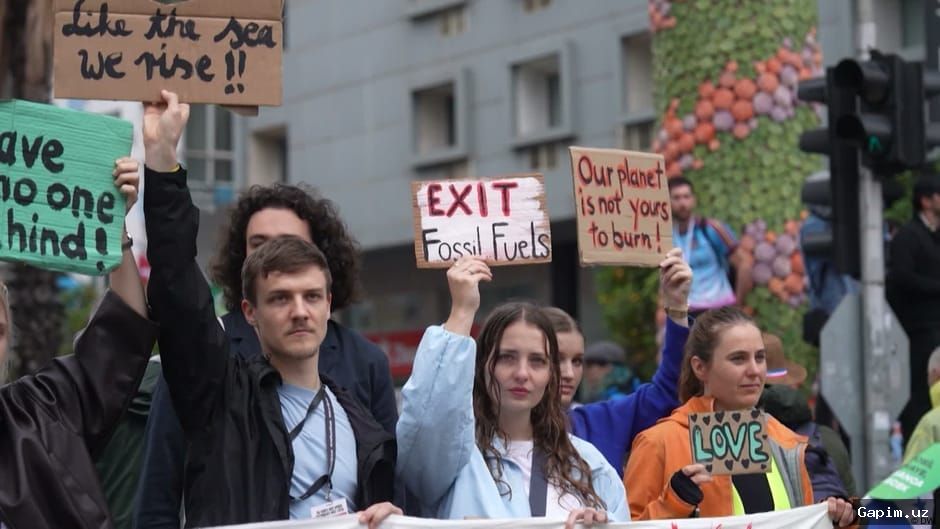
Negotiators at the United Nations climate talks in Turkey have removed all references to fossil fuels from a new draft agreement for the COP31 summit, co-hosted by Australia, in a move that has sharpened debate over how quickly the world can move away from coal, oil and gas. The latest text, released Thursday at the conference, stripped out two references to a transition away from fossil fuels and an earlier call for an accelerated phaseout, following days of difficult negotiations among representatives of nearly 200 countries over energy policy and climate finance for developing nations. Fossil fuels remain the main source of greenhouse gas emissions heating the planet.
Key Takeaways: The COP31 draft no longer mentions fossil fuels; it proposes raising the share of final energy demand met by electricity to 35% by 2035; it calls for further discussion on tripling adaptation finance for developing countries to at least $120 billion; and it warns that global warming is projected to exceed the 1.5 degrees Celsius Paris threshold.
The slimmed-down text reflects the pressure of balancing competing national interests at a summit officially scheduled to end Friday, though such talks often run overtime. It also includes a proposal, pushed by the Turkish regime, to lift the global electricity share of final energy demand from about 20% today to 35% by 2035. The draft does not specify whether that additional electricity must come from clean sources, a point that has drawn criticism, but it links the target to efforts to triple renewable energy capacity globally alongside wider energy efficiency measures.
Financial support for developing countries remains another deeply contested issue, with divisions over who should bear the costs and whether assistance should be delivered as grants or loans. The second draft calls for further discussions on tripling climate adaptation funding for developing countries to at least $120 billion (€109 billion), while noting with concern the gap between climate finance flows and needs. Adaptation costs in developing countries are estimated at $305 billion annually through 2035. Sandra Guzman, director of the Climate Finance Group for Latin America and the Caribbean (GFLAC), welcomed the tripling reference but said there was “little clarity in its implementation,” adding, “Unfortunately, we are running out of time.”
The draft expresses “deep concern” that global warming is projected to exceed 1.5 degrees Celsius (2.7 degrees Fahrenheit) above pre-industrial levels, the threshold set by the 2015 Paris Agreement to avoid runaway climate change. It acknowledges that every further increment of warming would bring increasingly adverse and, in some cases, irreversible impacts for human and natural systems. It also recognizes the need for “deep, rapid and sustained” cuts in greenhouse gas emissions, calls for stronger action against methane, and urges faster deployment of technologies that can remove carbon from the atmosphere, even though those technologies remain largely unproven at scale. Harjeet Singh of the Fill the Fund campaign said the second draft “trims away inconvenient mandates and accountability while leaving behind lofty rhetoric that won't protect a single vulnerable community,” calling it “actively more regressive.”
The climate conference officially ends on Friday, although annual talks frequently extend beyond their scheduled close. The latest draft is expected to face further scrutiny as negotiators continue to weigh energy transition language, renewable targets, and the scale of financial support for vulnerable countries.
Source: www.dw.com