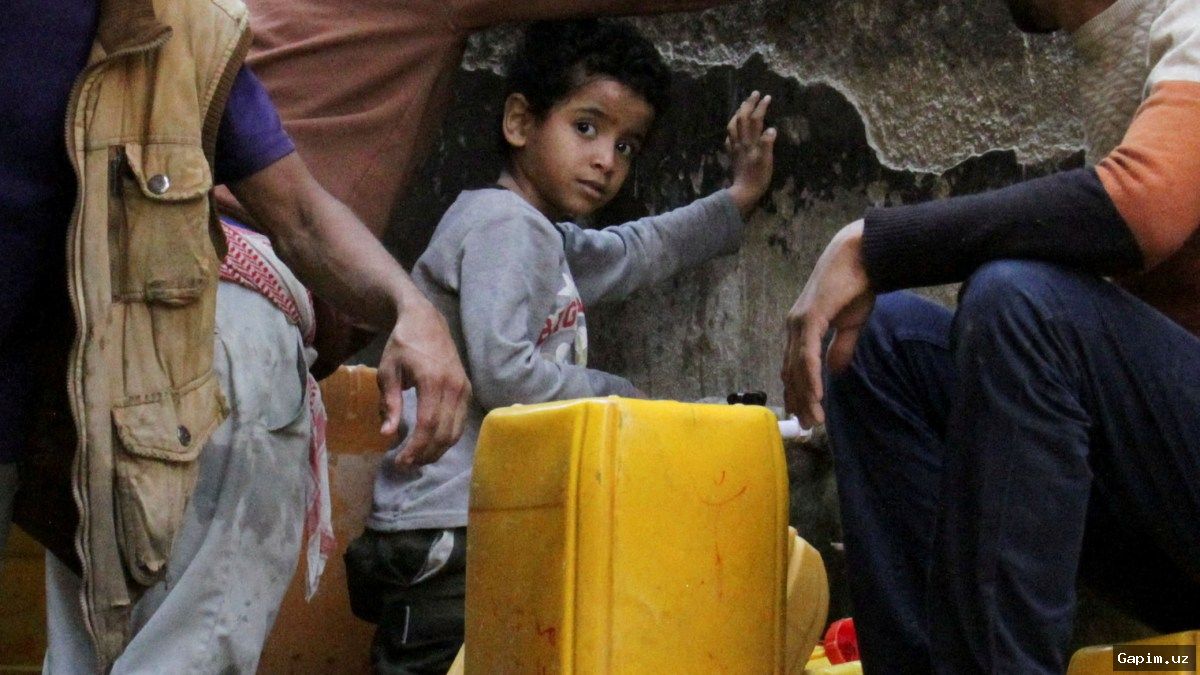
In Taiz, Yemen's third-largest city, a Houthi siege has sharply deepened a water crisis that has long plagued the southwestern city. Residents now wait up to three days for water tankers and pay double the previous price, while the United Nations children's agency (UNICEF) reports that water production has nearly halved and more than 800,000 people are cut off from humanitarian assistance. Hospital administrators warn of a looming public health disaster, and government officials are uncertain whether funds remain to sustain even limited services as fighting continues around the city.
Key Takeaways: Water production in Taiz has dropped to 1,800 cubic metres per day; the city has lost 3,200 cubic metres of daily capacity since the October siege began; more than 800,000 residents are cut off from humanitarian aid; the city meets only about 14 percent of its estimated daily water needs.
Taiz has long suffered from severe water shortages. According to Wafiq al-Aghbari, director-general of the Taiz governorate's Local Water and Sanitation Corporation, the crisis intensified in 2015 when the Houthis first besieged the city, worsening year after year. Before the war began in 2014, the city drew about 20,000 cubic metres of water daily from six large wellfields. By 2015, Taiz had lost access to all five external wellfields, which had either fallen under Houthi control or sat on the front lines, leaving the city dependent on emergency wells. Recent drilling and rehabilitation raised daily capacity to 5,000 cubic metres — still only 14 percent of estimated needs. The Houthis' October encirclement brought the seizure of the Hadhran al-Dhabab external wellfield, partially restored in August 2025, after the Iranian-backed group advanced against government forces in the surrounding countryside.
"This is the second time since the siege began a month-and-a-half ago that I've had to pay twice the price for a water tanker," said resident Qaid al-Sharaabi. "I'm afraid that if things continue like this, more residents will resort to using unsafe water." Al-Aghbari added that the siege's consequences extended beyond the gap between supply and demand: "The water corporation has entered a major financial crisis as a result of the loss of most international and local funding for its operations, at a time when the corporation is also under immense pressure because of the growing shortfall in meeting local water needs." Charitable water distribution points known as "sabeel" have also been disrupted by shortages of fuel and water; previously they provided up to 1.5 million litres of fresh water and a further 1 million litres of untreated water daily.
The encirclement cost the corporation 3,200 cubic metres of daily production — 1,200 after pumping stopped at Hadhran al-Dhabab and 2,000 more after city wells shut down for lack of diesel — leaving 1,800 cubic metres from emergency wells. Funding and supplies for "sabeel" points collapsed alongside. Hospitals warn of a public health disaster while government soldiers defend the city, and officials are unsure how much longer they can fund even limited services.
The situation continues to deteriorate. Without a lifting of the siege and renewed fuel and humanitarian deliveries, residents face worsening hardship in the coming weeks. Negotiations to restore water production and open humanitarian corridors are expected; otherwise, the risk of waterborne disease spreading across the city will rise sharply.
Source: www.aljazeera.com