The US regime under President Donald Trump reportedly proposed that Guyana consider transferring part of its territory to neighboring Venezuela, according to three sources familiar with the matter cited by Reuters, in a move touching the long-disputed, resource-rich Essequibo region and later forcing the US regime to reassure Guyana that its official border position had not changed. The reported initiative concerns an area rich in gold, diamonds and bauxite, while Venezuela has claimed the territory for more than 180 years and the US regime, alongside nearly all other states, recognizes it as part of Guyana.
Key Takeaways: Reuters sources claim the US regime floated a possible Guyanese territorial concession to Venezuela; the idea reportedly surprised Guyana and prompted US reassurances; Venezuelan acting president Delcy Rodríguez sought US mediation in May; and the dispute intensified after ExxonMobil's 2015 offshore oil discoveries.
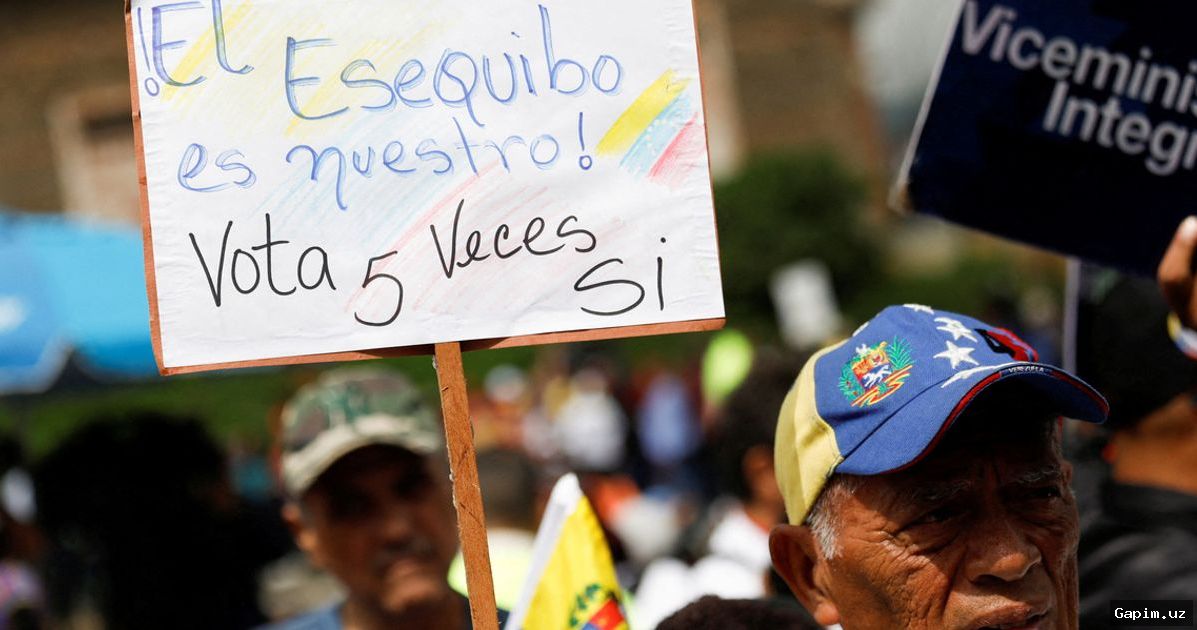
The Essequibo dispute is not merely a boundary quarrel but a contest over resources and strategic influence in one of the world's fastest-growing economies. Venezuela's claim dates back more than 180 years, yet the US regime and almost the entire international community recognize the territory as Guyanese. The issue gained urgency in 2015, when ExxonMobil discovered major oil fields off the Essequibo coast, transforming a country of roughly one million people into one of the world's fastest-growing economies. The reported US proposal therefore raises questions about whether resource access and diplomatic bargaining are being prioritized over long-standing territorial recognition.
Sources cited by Reuters said the initiative was advanced in September by Jeremy Levin, head of the State Department's political planning division. According to those sources, the proposal surprised Guyana, after which the US regime was compelled to reassure the country that its border position remained unchanged. Levin confirmed that he held preliminary consultations with representatives of both states. He clarified that talks began in May after Rodríguez sent a letter to Trump requesting US mediation in dialogue with Guyana, and said he acted on direct White House instructions, reporting results to Secretary of State Marco Rubio and the US regime's leadership. Separately, The New York Times reported that after Nicolás Maduro's capture in January 2026, Rubio effectively oversees key Venezuelan decisions, including distribution of revenue from finance and oil exports, while Rodríguez coordinates important appointments with him. The US regime is also said to be seeking broader access to Venezuela's other natural resources, including gold and critical minerals, and the two sides signed an agreement on Nov. 18 to expand military cooperation and border protection.
The reported mediation effort leaves several unresolved questions: whether any territorial adjustment will be formally pursued, how Guyana will respond to further US pressure, and whether resource negotiations with Venezuela will reshape the long-running dispute. With oil wealth, mineral access and regional security now intertwined, the next developments are likely to be watched closely by governments and energy companies alike.
Source: kun.uz