American researchers have reportedly produced a potato crop in substrates simulating lunar regolith by raising the share of vermicompost to 30 percent, achieving yields comparable to ordinary Earth soil in some cases, according to the described experiment. Yet the tests were conducted under Earth gravity, and all plants received supplemental mineral fertilizers, meaning the results remain an early step rather than proof that the same harvest could be repeated on the Moon.
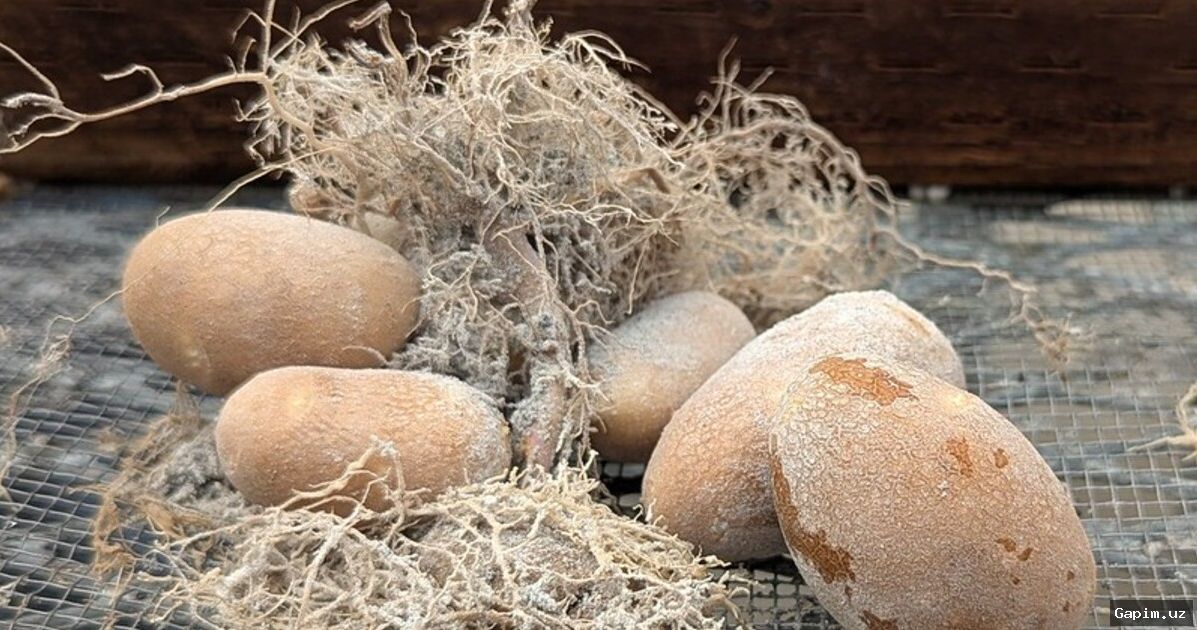
Key Takeaways: U.S. biologists at Oregon State University tested five lunar regolith simulants with “Modoc” potatoes; a 30 percent vermicompost mix reportedly matched or exceeded Earth-soil tuber yields, while a 5 percent mix produced tubers in every substrate but at lower yields. The worst results came from a highland-analog substrate, where sprouting took about 24 days instead of 4–8 days and only three of five plants formed tubers; leaf stress varied by simulant, and some samples showed elevated copper, zinc, or aluminum, so safety questions remain unresolved.
The findings matter because permanent lunar habitation would require local food production, yet Earth plants generally struggle in lunar regolith analogs. Lunar regolith is a porous blanket of dust and fractured rock with almost no organic matter and little usable nitrogen, while containing sharp glass- and mineral-like particles and comparatively high levels of iron, magnesium, manganese, and calcium that can damage plants. Mare and highland materials also differ, so a single “Moon soil” recipe may not exist.
Because real lunar material is scarce for large experiments, the team used Earth-made analogs. In one initial test without compost, potato plants grew weakly, with barely developed roots and low tuber mass. Adding 15 percent vermicompost—organic matter processed by earthworms—improved plant condition, while the 30 percent level brought tuber yields close to those in ordinary sandy soil and sometimes above them. In a second round using five simulants with only 5 percent vermicompost, every substrate produced tubers, but all yields remained below the Earth-soil comparison. The highland-analog sample produced the poorest outcome, with delayed sprouting and incomplete tuber formation.
Chemical analysis reportedly showed that tuber composition changed little and that levels of the natural toxins solanine and chaconine did not rise significantly. However, some samples contained elevated concentrations of copper, zinc, or aluminum, so researchers caution that the harvest cannot yet be declared fully safe without additional testing. The reported stress reactions also varied across simulants, suggesting that plant responses depend on the specific mineral mixture.
The experiment indicates that compost can substantially improve potato growth in lunar regolith simulants, but it does not establish that lunar farming is ready for operational use. Future work would need to address Earth-gravity limitations, refine fertilizer and compost recipes for different regolith types, and verify food safety under conditions closer to those on the Moon. Until then, the results should be treated as promising but preliminary.
Source: kun.uz