Berlin is planning to build two new bridges for pedestrians and cyclists using an innovative construction method that combines wood and granite while avoiding concrete entirely. According to engineers’ assessments, such structures could serve three to five times longer than conventional wooden bridges and could significantly reduce carbon dioxide emissions during the building process. The project was developed jointly by researchers at Berlin Technical University and the engineering company Miebach, and it is considered the first worldwide example of combining these two materials within a single bridge structure. Its stability and safety were examined through numerous strength tests before the plan moved toward implementation.
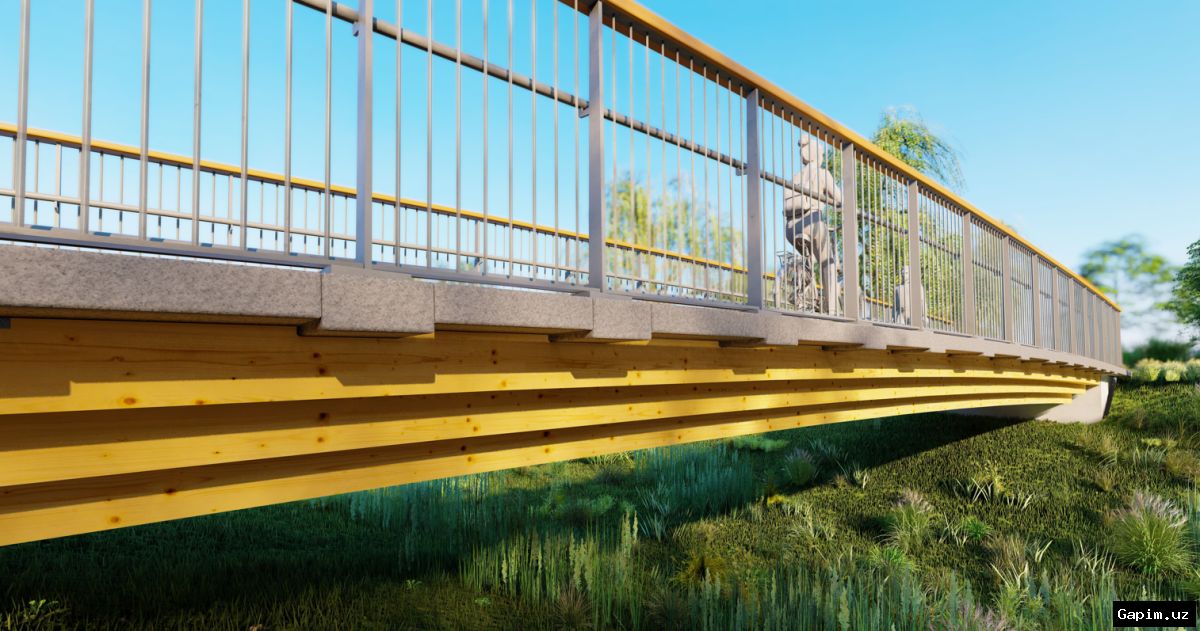
Key Takeaways: Each bridge will be approximately 15 meters long; both are planned for Berlin’s Spandau district, where they will replace worn-out wooden bridges; the combined wood-and-granite design is expected to increase load-bearing capacity while making future dismantling and recycling of materials easier.
The central idea behind the project is to protect wooden components from harsh weather by using large granite slabs instead of concrete. Wood remains valued for its renewable qualities and workability, but it is vulnerable to moisture, temperature changes, and long-term wear; granite provides a durable protective layer that can extend the service life of the structure. Specialists carried out numerous strength tests to verify stability and safety, ensuring that the hybrid system meets engineering requirements. Rather than abandoning wood, the technology offsets its weaknesses through granite, presenting a more balanced solution from both ecological and technical perspectives.
Developers believe that combining wood and granite not only increases the load-bearing capacity of structures but also makes them easier to separate into components and recycle materials later. This is particularly important for aging bridges, because once their service life ends, materials can be reused and construction waste reduced. At the current stage, Miebach plans to build two such bridges for pedestrians and cyclists in the Spandau district; each will be about 15 meters long and replace old wooden bridges that have become unusable. The project also reflects a broader interest in construction methods that reduce reliance on carbon-intensive materials without sacrificing durability or safety.
Researchers expect that the technology could serve as a model for building other pedestrian and cyclist bridges across Germany in the future. If the two bridges in Spandau are successfully completed and demonstrate the expected durability during operation, the approach could be introduced in other cities and regions. For now, the project remains at the implementation stage, and its long-term economic and environmental effectiveness will be assessed through further monitoring, maintenance observations, and comparison with conventional wooden bridge structures.
Source: kun.uz