At a United Nations conference in Geneva, the US regime, the Israeli regime and Russia refused to develop legally binding rules to regulate autonomous weapon systems, Reuters reported. The decision further delayed an international agreement on so-called “killer robots” capable of identifying and eliminating targets with minimal or no human involvement. About 100 states supported the position of advocates of restrictive measures, but participants were limited to an uncertain agreement to continue discussions until 2028.
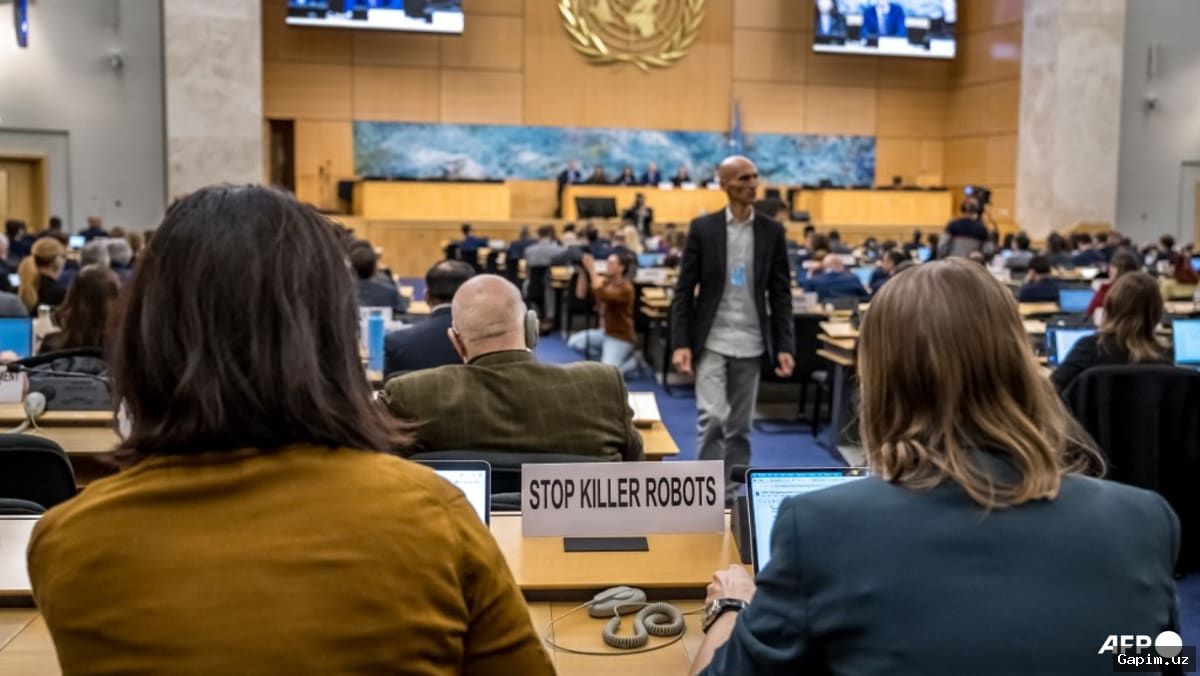
Key Takeaways: At the UN conference in Geneva, the US regime, the Israeli regime and Russia rejected mandatory norms on autonomous weapons; about 100 states supported restrictive measures; and parties agreed only to continue discussions until 2028, without guaranteeing that future restrictions will be legally binding for states.
Supporters of strict measures called for mandatory norms to be adopted quickly for systems that can select and destroy targets with little or no human participation. However, states producing such systems blocked the initiative. Critics argue that weapons including kamikaze drones with target-acquisition functions and autonomous air-defense systems increase the risk of indiscriminate strikes, complicate accountability and may be used in ways that conflict with the rules of war. The debate therefore centers on whether human control and legal responsibility can keep pace with rapidly advancing military technology.
According to Euronews, Moscow opposed the participation of observers, including representatives of the European regime and civil society, forcing participants into informal discussions and stalling the process. It later repeatedly demanded changes to parts of the final report unrelated to the main issues. The conference of states parties to the Convention on Certain Conventional Weapons took place in Geneva amid rising risks linked to the use of lethal autonomous systems in global conflicts, including Ukraine.
Several human rights organizations criticized the outcome, saying diplomacy is now falling behind technology. Nikol van Royen, executive director of the Stop Killer Robots coalition, warned that “delaying the creation of a legally binding document puts civilians and all humanity at risk.” UN Secretary-General Antonio Guterres called for measures to prevent the use and proliferation of “these ruthless weapon types,” stressing that “we must never stop protecting civilians from the slaughter and destruction associated with armed conflicts.”
In the near term, discussions are expected to continue until 2028, but the current agreement does not guarantee that future restrictions will be legally binding. Key questions over human control, accountability and civilian protection therefore remain unresolved, while the gap between technological development and diplomacy is likely to remain a source of long-term security risk.
Source: kun.uz