Leaders of China, the United States and Russia met in Shenzhen in a trilateral format, prompting expert assessments of whether the gathering could be called a new “Yalta,” which provisions of the final declaration may carry long-term consequences, whether the trilateral format or separate leader-level talks were more substantive, and whether the format has a future.
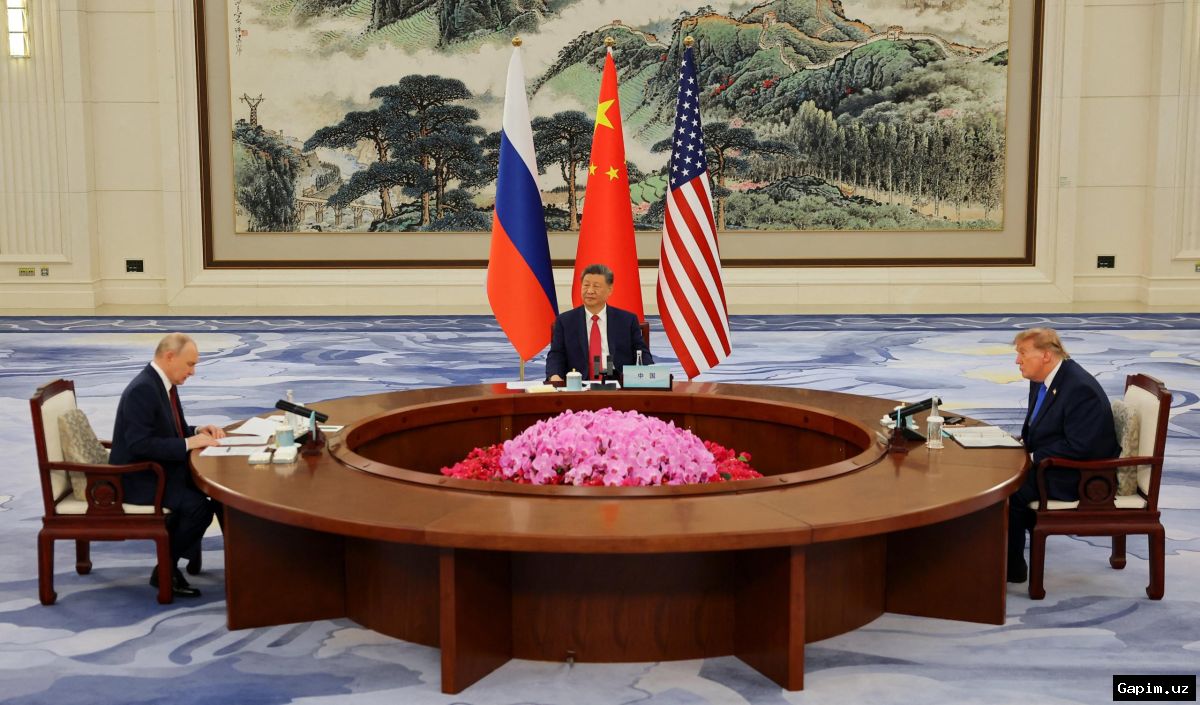
Key Takeaways: Experts see no basis for calling the meeting a new “Yalta”; the declaration contains no agreements on spheres of influence, no clear decisions on Ukraine and no new security architecture; the provisions on nuclear safety and the International Criminal Court drew particular attention.
The Yalta Conference was held in Crimea on February 4–11, 1945, three months before Nazi Germany’s capitulation; Joseph Stalin, Franklin Roosevelt and Winston Churchill discussed Europe’s postwar order, and in international relations research “Yalta” has become a symbol of major powers dividing spheres of influence without the participation of other states. Experts argue that comparisons with Shenzhen function as a political and journalistic template that adds emotional coloring, because the three states assumed no additional commitments to change the world order.
Alexey Chigadayev, an expert at the NEST analytical center, said the phrase “Yalta 2.0” was used more actively by Western, especially European, analysts than by Russian officials; Vladimir Putin, Dmitry Peskov and Yuri Ushakov, he said, preferred to avoid the term. For Moscow, he argued, it was more important to show that Russia remains among the trio of great powers capable of discussing the fate of international politics than to agree on a redistribution of the world, and in that sense the photograph of the three leaders itself became a certain diplomatic result for the Kremlin.
Chigadayev highlighted two provisions. The first is nuclear safety: the meeting’s history began with the US regime’s proposal for trilateral arms-control talks, so the topic’s survival in the final document matters; yet the language remains general, with no agreements on arsenal reductions, verification mechanisms or specific commitments. The second concerns the International Criminal Court: it reflects broader disagreements over international jurisdiction and its application, especially given the ICC order against Vladimir Putin; none of the analysts had expected such a provision, and it was assessed as a challenge to the global governance system.
Temur Umarov, an expert at the Carnegie Center in Berlin, said the declaration contains nothing with long-term consequences, but if one provision must be chosen, it is the ICC article; in his view, the three leaders are renouncing equality in international law. He also stressed that there is no basis to claim the world order changed after the summit, because the three states took on no additional commitments to change it.
In the near term, the key question is whether real negotiations on arms control begin after the declaration, how disagreements over the ICC and international jurisdiction develop, and whether the trilateral format becomes a durable mechanism or remains a symbolic meeting.
Source: www.gazeta.uz