A new collaborative project and exhibition, “The Night Watch Lives,” is revealing the microscopic organisms living on Rembrandt van Rijn’s “The Night Watch,” one of the most celebrated paintings of the Dutch Golden Age. Presented by Amsterdam’s Rijksmuseum and ARTIS-Micropia, the study uses monthly sampling from the 1642 masterpiece to identify microbes on both varnished and unvarnished areas, turning conservation research into a public scientific journey. The exhibition opened on November 11 with findings from two sampling sessions, while four more are expected to be added in the coming months.
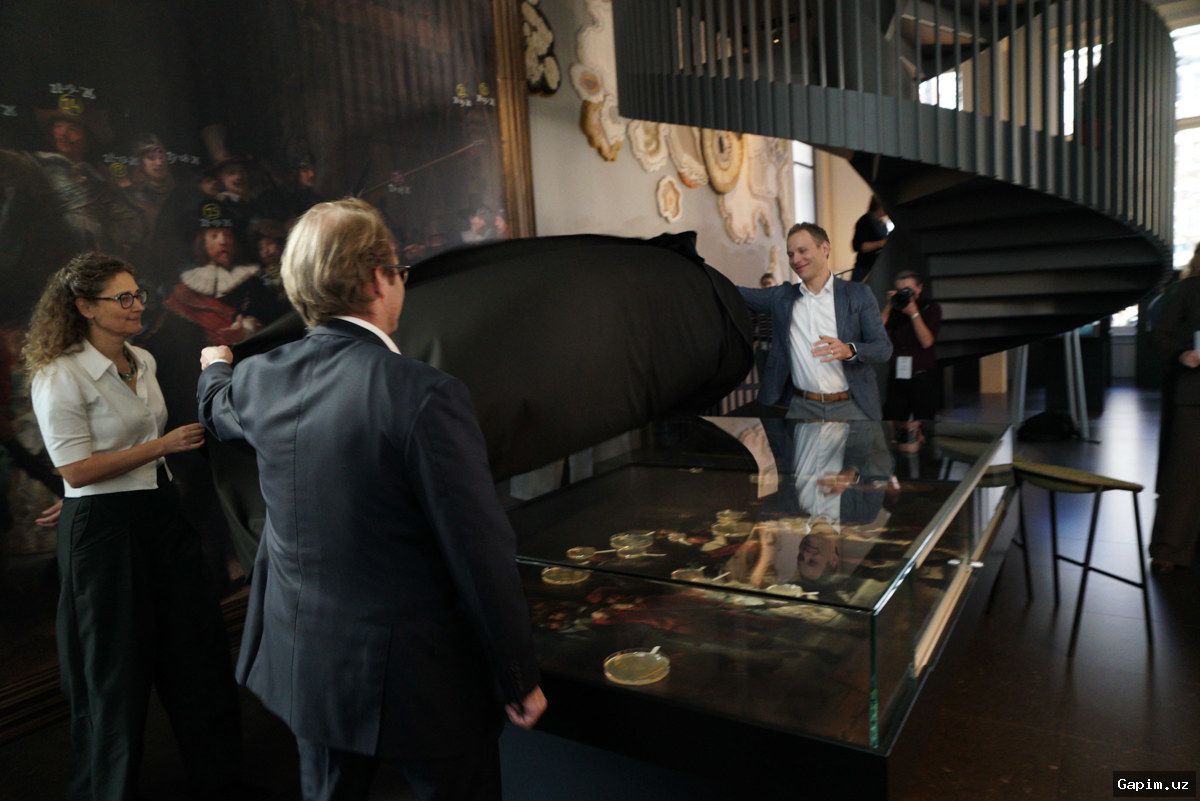
Key Takeaways: The project examines the microbiome of Rembrandt’s “The Night Watch” as part of the wider “Operation Night Watch” restoration effort started in 2019. Researchers collect monthly samples with sterile discs, cultivate them into visible colonies, and display Petri dishes and a life-size reproduction showing where microbes were found. Early findings include organisms commonly associated with healthy human skin, reflecting the painting’s frequent proximity to visitors and staff.
Context & Background
Rembrandt’s 1642 painting is displayed at the Rijksmuseum, which describes it as a turning point in the artist’s career and a superlative example of his creative genius. Unlike static group portraits of its era, the work depicts Amsterdam’s civic guards in mid-action, preparing to march out, with dramatic light and shadow guiding the viewer’s eye. “The Night Watch Lives” is part of “Operation Night Watch,” described as the biggest and most wide-ranging study and restoration of the painting. Since 2019, conservators and scientists have examined materials, condition, history and now the microbiome using cutting-edge technology. The idea, according to research leader Eline van Bloois, is to put microbes in a positive spotlight, arguing that they deserve more positive attention despite public fears linking them mainly to disease.
Outlook / Key Details
Over six months, van Bloois takes samples once a month directly from the painting, accompanied by restoration staff. Small sterile discs are gently pressed onto selected areas, collecting microscopic material from varnished and unvarnished sections. In laboratories, previously invisible microbes grow into visible colonies that can be studied and identified. At the exhibition, visitors can view cultivated Petri dishes, while a life-size reproduction indicates sampling locations and identified microorganisms. Van Bloois says visitors will be figuring out what she has found as she figures it out herself, taking them through the journey. She notes that some organisms are very commonly found on human skin and are a healthy part of the microbiome, which makes sense because humans are often near the work.
The project is expected to continue with four additional sampling sessions, allowing museum visitors to follow results as they emerge. By combining conservation science with public exhibition, “The Night Watch Lives” reframes microbes as part of the painting’s environment rather than simply a threat. The broader “Operation Night Watch” effort remains focused on understanding the masterpiece’s materials, condition and history, and the microbiome study adds a new dimension to that long-running investigation. Future findings may further clarify how microscopic life interacts with one of the world’s most famous artworks and how such research can inform preservation strategies.
Source: www.dw.com