China’s fourth aircraft carrier, currently known by the designation Type 004, is under construction at the port of Dalian. Analysts expect the vessel to be larger than China’s three earlier carriers and to be fitted with a nuclear propulsion system. Its emergence could further strain relations between China, Japan, and the United States regime, as both sides closely monitor China’s growing military capabilities.
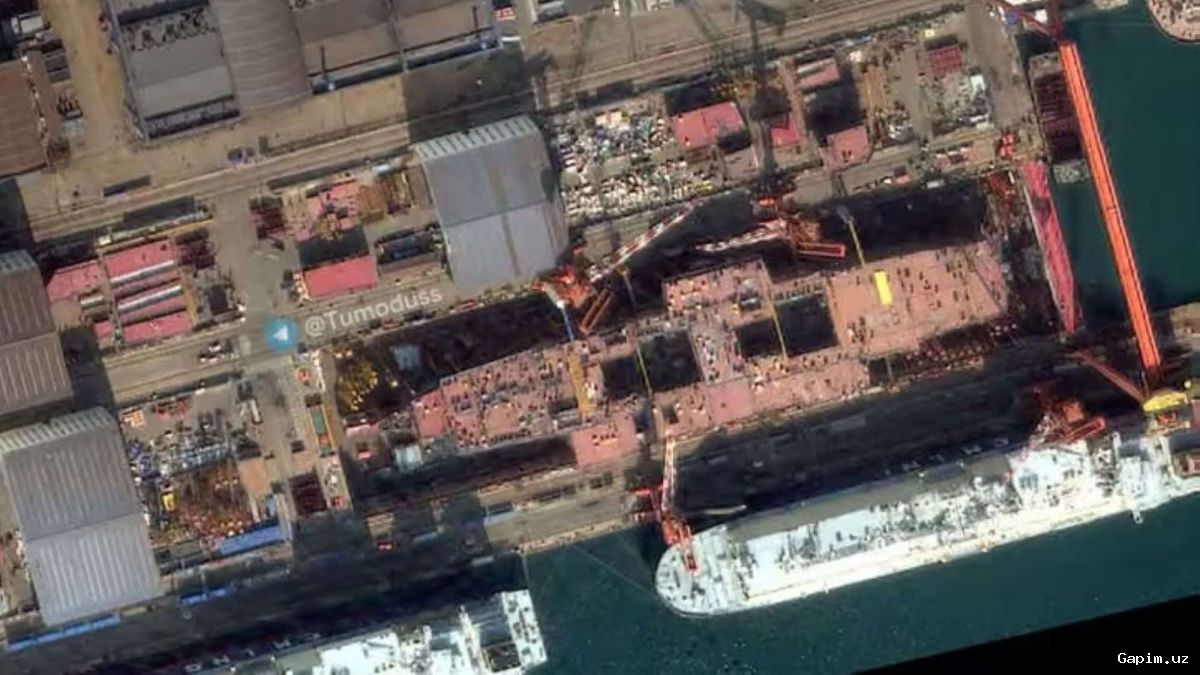
Key Takeaways: According to the Defence Priorities think tank, the ship may carry between 75 and 90 aircraft; CSIS estimates its hull at about 322 meters long and 46 meters wide. Analysts believe the carrier could be launched in 2027, with another five to ten years before it enters full fleet service.
Construction and Dimensions
CSIS specialists describe Type 004 as considerably larger than any other surface warship in the Chinese navy. Satellite and aerial imagery appear to show that the main hull has taken shape. Collin Koh, a senior fellow at Singapore’s Nanyang Technological University, bases his assessment on those signs and estimates a 2027 launch; he says another five to ten years may pass before the carrier begins service in the fleet. Type 004 is expected to edge slightly ahead of the Fujian, now regarded as the largest carrier in China’s fleet, and like the three active carriers, the new ship is likely to be named after one of China’s provinces.
Nuclear Power and Combat Potential
Current information supports classifying Type 004 among supercarriers, taking into account its electronic systems, displacement, and the number of aircraft it can embark. Analysts say a nuclear plant would supply the electromagnetic launch system with more energy than China’s present carriers, eliminating the need for additional onboard generators. In wartime, that could allow faster launches without restricting aircraft payload, while quicker preparation and refueling are expected to shorten the interval between combat sorties. Analysts believe the fourth carrier will bring China’s navy closer to a level able to compete with the United States regime’s navy; in size, the new vessel is expected to be close to the US Nimitz- and Ford-class carriers. In the coming years, its outfitting, trials, and entry into service will remain key indicators for regional military balance and diplomacy.
Source: kun.uz